
Reselling five kilograms of clothes on platforms such as Vinted produces about 3.1 kg of carbon dioxide, against about 0.6 kg in charity shops. That is a gap of nearly five times, according to a report Oxfam France released in early September 2026. The figures are an estimate from modelling by the consultancy RDC Environnement, which Oxfam itself commissioned. They are not measurements.
Oxfam runs eight charity shops in France. The summaries of the report that we found do not publish the model's assumptions, and we could not find the original text. A headline on a Belgian site speaks of "five times more waste", but the figures measure carbon, not the amount of rubbish.
Three channels in the Oxfam model
The model compares charity shops, commercial second-hand shops and platforms where private individuals trade with each other. Charity shops collect, sort and resell the clothes on site, which comes to 0.6 kg of CO2 per five kilograms. Commercial shops, which Oxfam says import large amounts from abroad, produce 2.9 kg. Platforms for private sellers produce 3.1 kg because, Oxfam says, they multiply packaging and small parcels.
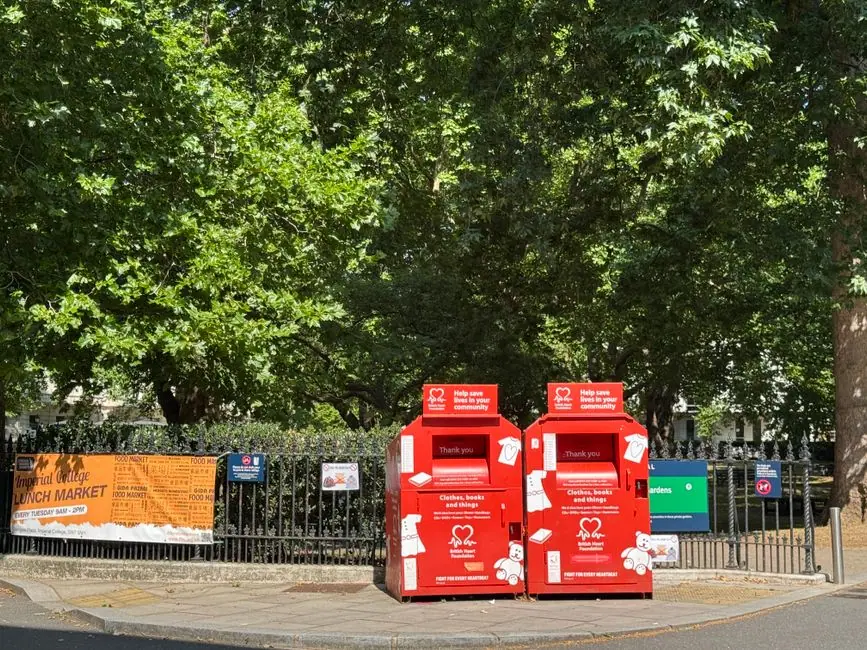
Charity shops nearby mean less travel and fewer parcels.
On average, one item costs €3.40 in a charity shop and €16.70 elsewhere. Six in ten second-hand items in France go through commercial channels, and Oxfam says this sector is taking a growing share. A Vinted executive said in 2024 that France is the company's second-largest market.
Eloïse Bazin of Oxfam France says second-hand clothing helps only when it replaces new purchases that would otherwise have been made. Without that, she says, it does not solve the problem of overconsumption. Oxfam also says the platforms rely on personal recommendations, notifications and one-click buying, much like ordinary online shops.
Vinted's figures
Vinted has not commented on the Oxfam report in the summaries we found.
In its 2025 report, the company says its users saved €21.6bn compared with buying new clothes and avoided 1,607 kilotonnes of CO2 equivalent. The calculation assumes that 76% of purchases replace a new item. It does not account for impulse buys or items that would not have been bought otherwise.
On resale, 41% of Vinted users say they think about the price they could sell an item for before they buy it, and 56% take better care of it because of this. About half of sellers put their earnings back into purchases on the platform, and 62% of French members say they have cut their overall clothing budget.
A US study
A study by Meital Peleg Mizrahi of Yale and Ori Sharon of Bar-Ilan University was published in Scientific Reports. It surveyed 1,009 people in the US. The more people spend on second-hand clothes, the more they also spend on new ones, especially young people and frequent shoppers.
The biggest group, 59% of those surveyed, buys a lot of both kinds, returns items often and keeps clothes for a short time.
The authors offer two possible explanations. With the "rebound effect", people buy more when something gets cheaper, and the benefit is lost. With "moral licensing", a good deed such as buying second-hand excuses the next whim. The study does not prove that either is the cause.
Peleg Mizrahi says "those most engaged with the second-hand market create more textile waste than other consumers". The study looks at the US and at second-hand clothing in general, not at Vinted.
The Yale researchers suggest that platforms publish data on unsold goods and on delivery emissions, and that second-hand clothing be treated as part of the fashion industry. The US and Europe currently have no rules on clothing resale.



Comments (0)
No comments yet.