
Four of the world's biggest fashion firms – Adidas, H&M Group, Inditex and Bestseller – began a two-year trial in early October 2026 to work out who should pay for used clothes that reach Ghana from rich countries. The group, called the Apparel Recovery Coalition (ARC), was launched at Kantamanto market in Accra.
The Or Foundation says the market puts about 25 million garments a month back into use and employs tens of thousands of people. About 15 million garments arrive in Ghana every week, most of them for Kantamanto. The first figure covers clothes that are resold, repaired and reworked. The second is what comes in from abroad.
From the donation bin to the bale in Accra
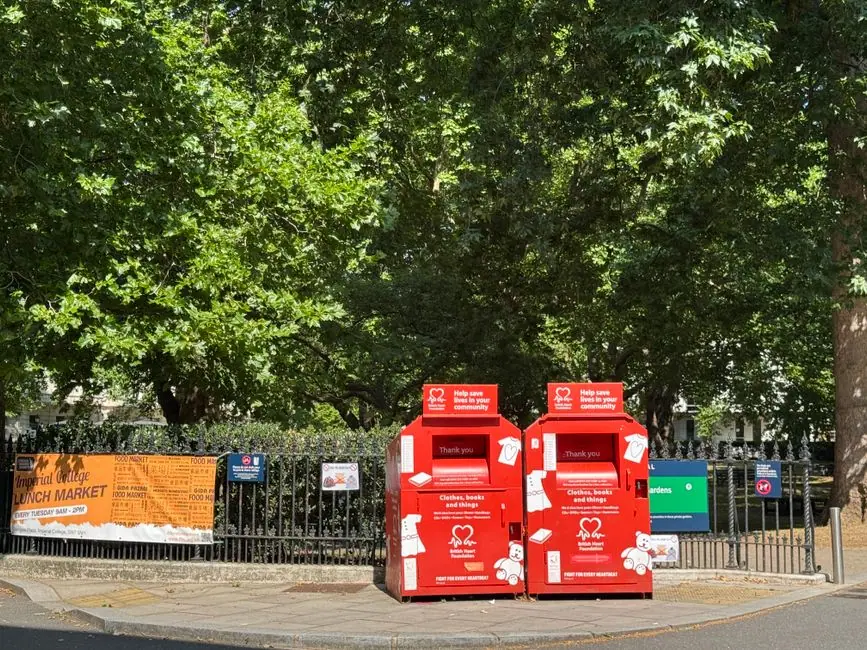
Many of the clothes start out as donations in Europe and North America. CNN reports that charities sell only about 10% of what they receive themselves. The rest passes through a chain of traders, and markets such as Kantamanto sit at the end of it.
Traders buy clothes in bales without knowing what is inside. CNN says labels often do not match the contents, and one seller at the market thinks only about 20% of a bale can be sold. "For many people it is a gamble," a local seller says.
The Or Foundation estimates that about 40% of the clothes leave the market as waste. It also says fewer than 20% of traders make a profit. Unusable items go to Old Fadama, about three kilometres from the market, where the foundation says at least 80,000 people live. From there the waste reaches the sea through the Korle Lagoon. The foundation pulls about 30 tonnes of textiles and plastic a month from the Accra coast.
On 1 January 2025, a fire destroyed more than 60% of the market. More than 10,000 people lost stalls, tools and stock. Rebuilding will take at least $5m.
What extended producer responsibility means
The idea is simple: the brand that puts a garment on the market also pays for what happens when it is no longer worn. That means collecting, sorting, reusing and recycling it. In the EU this is already law. Directive 2025/1892 was published on 26 September 2025. Member states must bring it into national law by 17 June 2027, and textile schemes must be running by 17 April 2028.
This is the catch the coalition wants to test. Such systems usually focus on the first market, while the clothes often end up elsewhere. Hilde van Duijn, head of Circle Economy, who speaks for the coalition, says studies show most textile waste collected and sorted in the EU is exported outside the bloc.
What the coalition will test
The aim is to build and test a model of producer responsibility that also covers clothes that cross borders. Brands, producer responsibility organisations, sorters, recyclers, policymakers and affected communities will take part. Circle Economy is the coalition's secretariat.
The plan has three strands: whether money and practical help can boost collection, sorting, reuse and recycling in the countries that receive the clothes; how communities can set priorities; and what lessons to pass on to brands and policymakers. The first project is in Accra. It includes upgrades to Kantamanto's infrastructure, clean-ups of polluted sites and training. A second project is planned in another country that receives many used clothes.
The four companies will give voluntary funding, but the amount has not been announced. Liz Ricketts, co-founder of The Or Foundation, says: "ARC is testing how to make globally accountable extended producer responsibility a reality."
The market's reaction is cautious. Reverend Opoku Afre, president of the traders' association KOBA, expects the coalition to build on the community's "existing knowledge, skills and ingenuity" rather than replace them. He also wants traders and workers to have access to infrastructure and investment.
The sources also include criticism. An ESG Dive report sets the initiative against growing criticism of how much brands produce: Inditex reports 705,554 tonnes of raw materials used, up from 678,596 tonnes earlier, and H&M reports 364,093 tonnes of goods made in 2025.
For people who donate clothes, the facts are plain. A donation does not guarantee the clothes will be worn again, because charities sell only about a tenth. The fewer clothes people buy and the longer they wear them, the fewer end up in bales where only a fifth can be sold. The sources give no advice to shoppers, so this is a conclusion drawn from the figures.
The coalition said it will look for more companies and partners, and the results of the pilot projects should help brands and policymakers.



Comments (0)
No comments yet.