
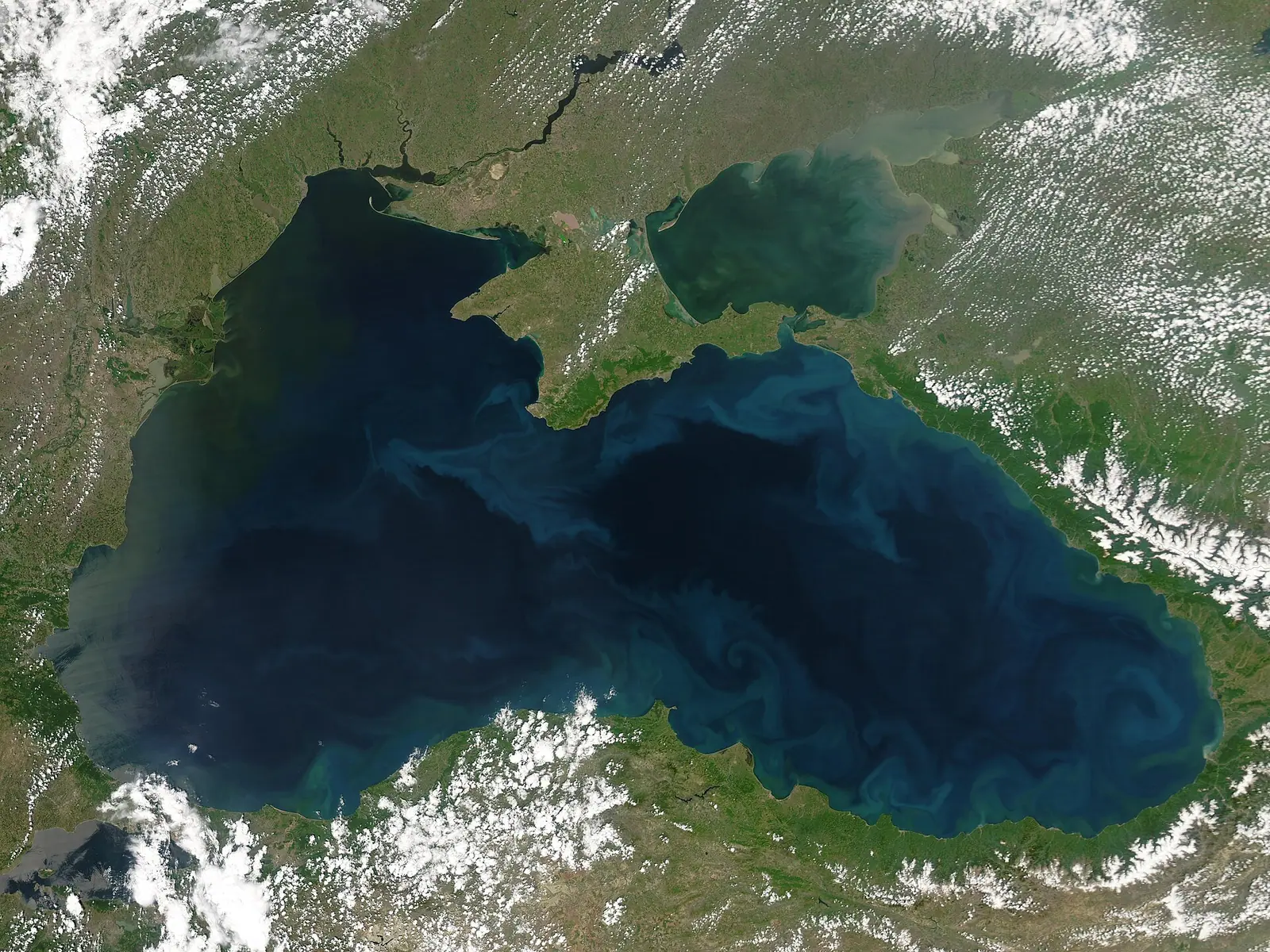
Greenpeace Bulgaria recommends an aerial survey of cetaceans across the whole Black Sea after the war in Ukraine, to show how the conflict has affected their population, the organisation's press office said. The recommendation is in the report "Cetaceans in the Black Sea and the Threats to Them" by scientist Pavel Goldin.
The report names underwater noise and military action as causes of stress for marine mammals. Other threats include pollution, damage to habitats and accidental catches in fishing nets.
Three species of cetaceans live in the Black Sea: the harbour porpoise, the common dolphin and the bottlenose dolphin. The International Union for Conservation of Nature classes them as vulnerable or endangered.
An aerial survey in 2019 put the number of harbour porpoises at 258,000, common dolphins at 119,000 and bottlenose dolphins at 22,900.
Goldin says clearing mines is vital for the health of the cetaceans and of the whole marine ecosystem, in both the short and the long term. His recommendations also include new protected marine areas. He names education and raising public awareness of the Black Sea ecosystem as effective steps.
Attacks on ships, explosions and the risk of pollution from oil and gas production put more strain on a marine ecosystem that is already in danger, says Martin Tomov, coordinator of the "Living Black Sea without Oil and Gas" campaign at Greenpeace Bulgaria. He says scientific research, effective protection of important marine areas and joint action by the Black Sea states are needed.
In early August, the icebreaker Arctic Sunrise docked in Varna for two days in support of the Greenpeace campaign to stop oil and gas production in the Black Sea.

Comments (0)
No comments yet.