
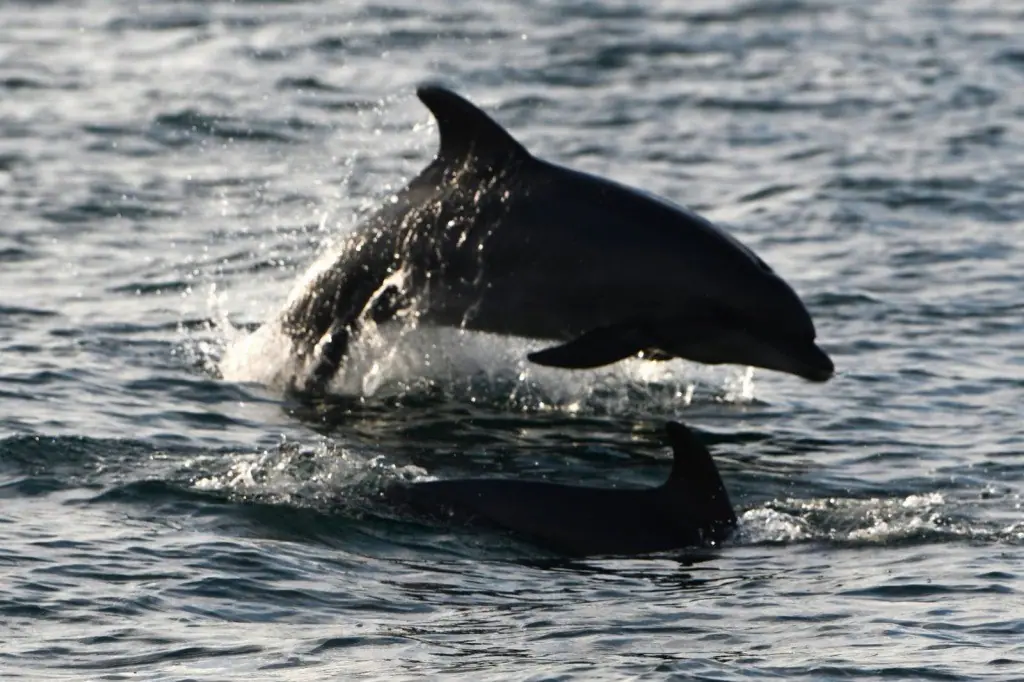

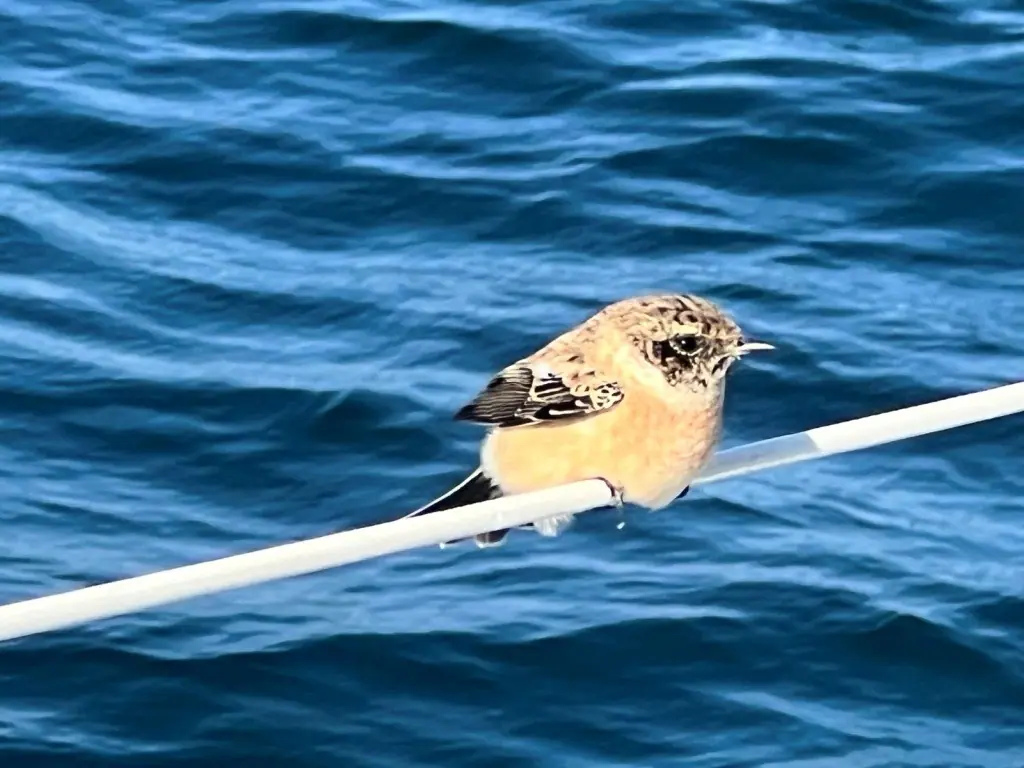
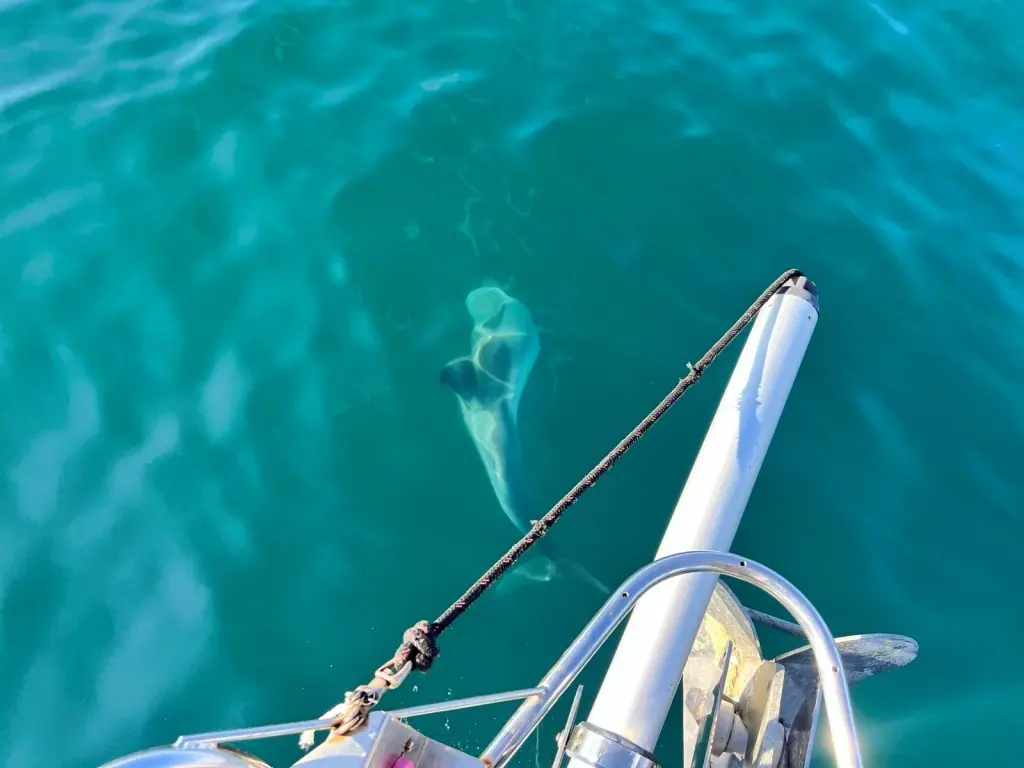
Scientists from Burgas "Prof. Dr Asen Zlatarov" University took part in the tenth consecutive expedition to study whales and dolphins in the Bulgarian part of the Black Sea, the university said. The team saw all three species that live in the Black Sea: the common bottlenose dolphin, the common dolphin and the harbour porpoise.
They saw bottlenose dolphins most often, 25 times. Common dolphins were seen 20 times and harbour porpoises 14 times.
The expedition lasted seven days, with a short break for bad weather. The researchers worked from a research yacht. They sailed at a set speed along routes planned in advance, known as transects, at different distances from the coast.
The university's Faculty of Natural Sciences sent Assoc Prof Dr Nikola Todorov, head of the Ecology and Environmental Protection department, Assoc Prof Dr Svetla Dalakchieva and doctoral student Desislava Geneva. Dr Dimitar Popov led the expedition.
The survey is part of a long-term programme by the conservation group Green Balkans to study and protect marine mammals. The Swiss foundation OceanCare backed the expedition. The university says its part in the trip continues its joint work with Green Balkans.
The university says the new data will help work out more precisely how many animals of the three species live in Bulgarian territorial waters, and how densely. Ten years of observations will show how the populations are developing and how their range is changing.
The university says that a full assessment of whales and dolphins in the Black Sea needs research teams from all Black Sea countries to work together actively. It says that lecturers and doctoral students taking part continues this joint research and adds to studies in marine ecology and the protection of biodiversity.
Dr Popov and part of the team will study seabirds and marine mammals in the Atlantic Ocean with scientists from the university in Cork, Ireland. The Irish government is funding the study, which also includes aerial surveys over the sea.
More joint expeditions involving the university's Ecology and Environmental Protection department are planned. The university wants them to widen its international research ties and its exchange of experience with scientists from other countries.





Comments (0)
No comments yet.