
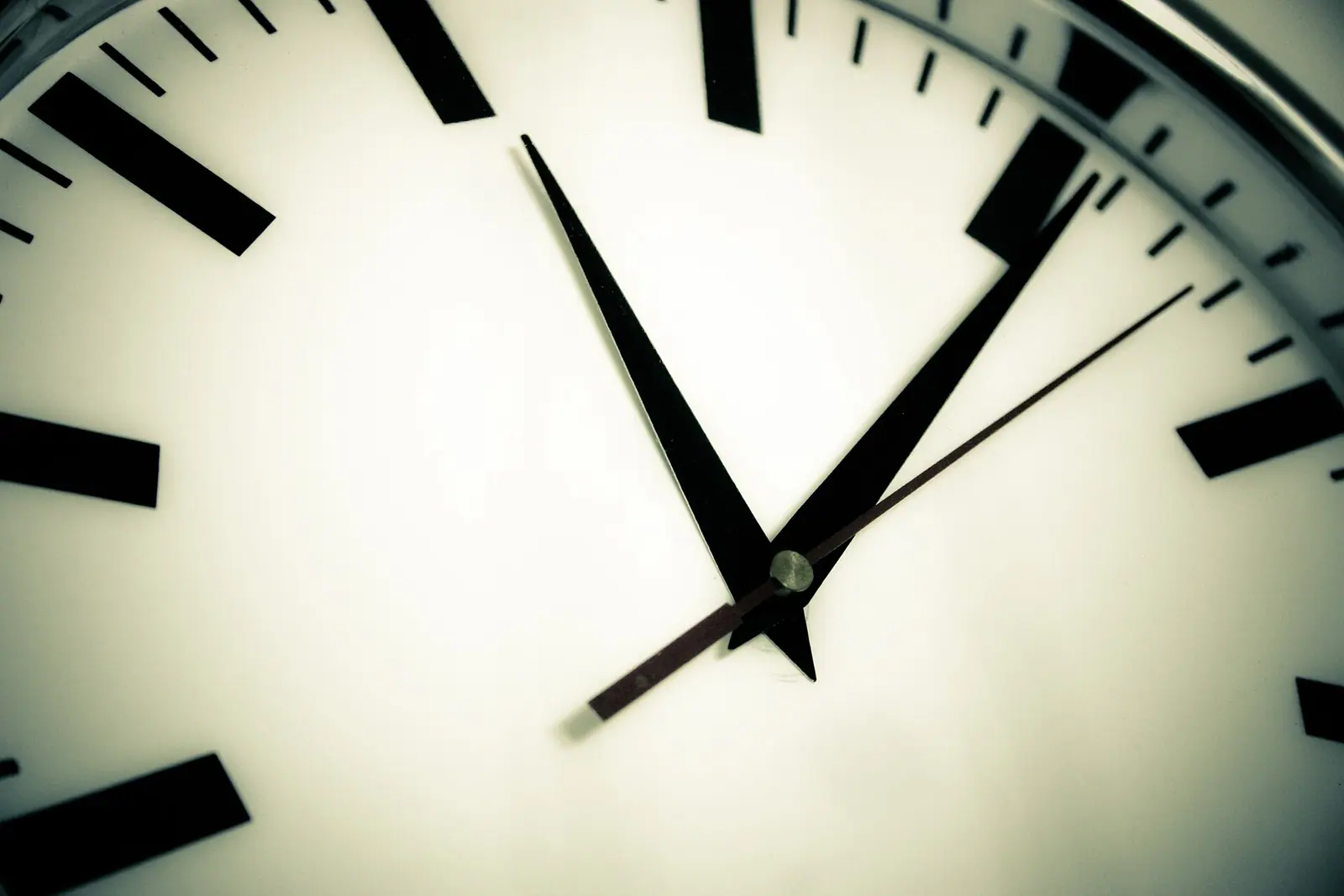
Most European countries will put their clocks back one hour in the night to Sunday, 25 October. The twice-yearly change stays because EU countries have not yet agreed which time to keep all year.
People who do not work nights will get an extra hour of sleep. Mornings will get light earlier, and evenings will get dark earlier.
The autumn change is traditionally on the last Sunday of October. It ends Central European Summer Time, and most European countries go back to Central European Time, which many people call winter time.
Portugal and the UK also change their clocks. Their local time is one hour behind most of continental Europe. In the United States, daylight saving time does not end until 1 November. Morocco, Thailand, Japan, Argentina and South Africa do not change their clocks.
The European Commission proposed ending the clock change twice a year. The European Parliament backed the plan in 2019 by a wide margin, 410 votes to 192. The change was first due to take effect in 2021.
There is still no final law. The proposal must also pass the Council of the EU, which represents member states, and they have not approved it so far. They disagree on whether to keep summer time or winter time all year.
If each country picks for itself, Europe could have different time zones side by side. That could cause problems for business and daily planning. So the change waits for a joint decision, and until then it is on hold.
The COVID-19 pandemic and Russia's full-scale invasion of Ukraine pushed the issue down the agenda.
In an EU survey in 2018, 84% of those who took part backed ending the clock change. Many now see the argument that summer time saves energy as out of date.
France brought in summer time in 1976 during the oil crisis, to save energy. In 1980, West Germany and other EU countries did the same so they would share the same time as their neighbours.
The clock change is not the only time rule in question. The leap second was also scrapped recently.
Radio-controlled clocks and alarm clocks that pick up the DCF-77 signal will switch on their own in the night to Sunday, with no manual setting needed.
To remember which way the clocks move, many people use the English saying "spring forward, fall back". Another way is the 2-3-2 rule: in spring the clock jumps from 2 to 3 o'clock, and in autumn it goes back from 3 to 2 o'clock.





Comments (0)
No comments yet.