
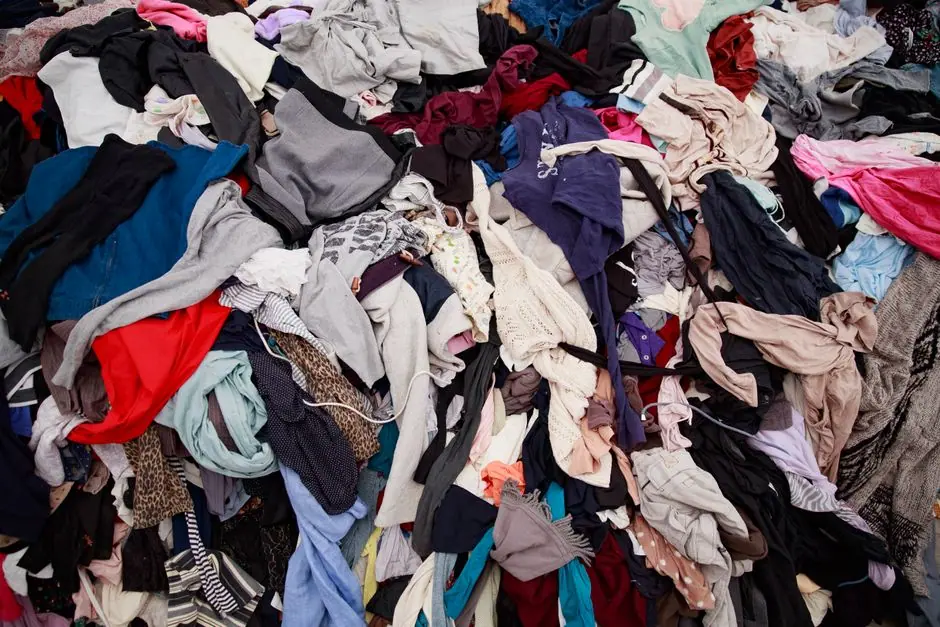
Of 200 items of clothing thrown away in Denmark, Finland, Iceland, Norway and Sweden, 71% were last detected in Europe when tracking ended after six months. Poland (30%) and Slovakia (18%) were the most common last stops, and 9% of the items reached Africa. That does not mean the clothes stayed there for good.
The consulting firms Eunomia and Mepex carried out the study. The Norwegian Retailers' Environment Fund, the Nordic Council of Ministers and the Shape foundation paid for it. It was presented in Brussels on 4 November 2026. Tracking devices followed the clothes through 23 countries, and by the end some items had not yet reached their final stop.
Poland, Slovakia and Pakistan
Pakistan was the third most common last stop, with 14% of the sample. Two thirds of the clothes (66%) stayed in the EU or the European Economic Area, while 34% ended up outside it. Besides Africa, 18% reached Asia and the Pacific, and 3% reached the Middle East.
This is linked to how Nordic countries collect textiles. Because wages are high, they mostly export what they collect unsorted. The centres that sort it for reuse, repair or recycling are in Poland, Lithuania, Germany, Slovakia and Bulgaria. Katrine Kirkevåg, a senior consultant at Mepex, says the results show that exports "play an important role in reusing clothes and extending their life".
Quality also matters. Of the worst grade, D, 56% were last detected outside Europe. The figure was 33% for grade C, 24% for the best grade, A, and 17% for B. Good clothes also reached both Africa and Asia. Season, style, local tastes and trade links decide where an item goes, because a winter coat is hard to sell in a warm country.
Four items reached second-hand markets in Nigeria via Benin, even though Nigeria bans imports of used clothes. The authors say this shows how hard it is to follow the trail through countries in between.
The device shows only the last signal
The device does not say whether a garment was sold, worn, cut into rags, stored or thrown away. Nor does it show that the last place detected is where the item was sold or dumped. The study does not directly document illegal dumping, burning or pollution in African or Asian countries.
Ordinary trade statistics record only the first destination. Exporters know who buys from them, but little about the onward route and the final recipient. So the authors added interviews with collectors and data from the big import markets.
In Ireland, the groups Voice Ireland and Global Shapers Dublin tracked 38 items for 10 months. They say 95% left the country, 60% reached places outside the EU, 13% were thrown away or burned, and about one in four items was reused. A black jumper from a clothing bin went through Latvia and Poland and reached an industrial area in Karachi. The authors conclude it was "discarded or destroyed", partly because of reports of dumps there. The sample is smaller and the method is different.
The 2025 textiles directive
Directive (EU) 2025/1892 was published in the Official Journal on 26 September 2025 and came into force on 16 October 2025. Producers, including online sellers outside the EU, must pay for collecting, sorting and recycling textiles. EU member states must set up the schemes within 30 months of the directive coming into force, that is, by April 2028. Micro-businesses get an extra year.
The directive has no separate rules on exports of used clothes. But producer organisations will publish each year the share of exported items that can be reused, and will report the exported amounts by weight to the authorities. According to the material on the study, the revised waste shipment regulation limits exports to some non-OECD countries from 2027.
The authors want clearer quality grades, more responsibility for exports of the lowest grades, and minimum standards for the firms that take the clothes. They say fees for producers should reward durable and repairable clothes, not larger amounts collected. People working in the system already see more cheap, damaged or dirty clothes in what is collected.





Comments (0)
No comments yet.