
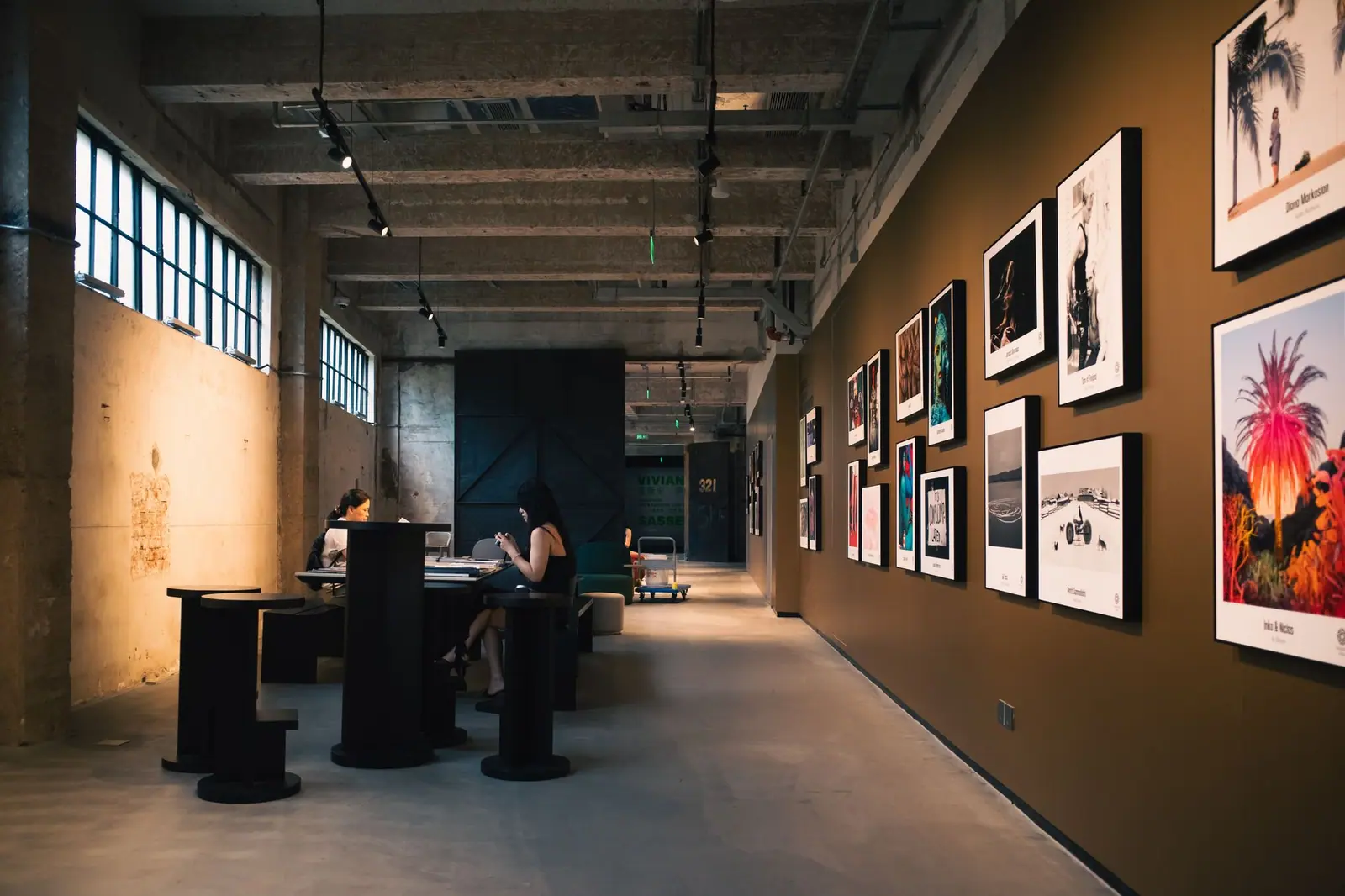
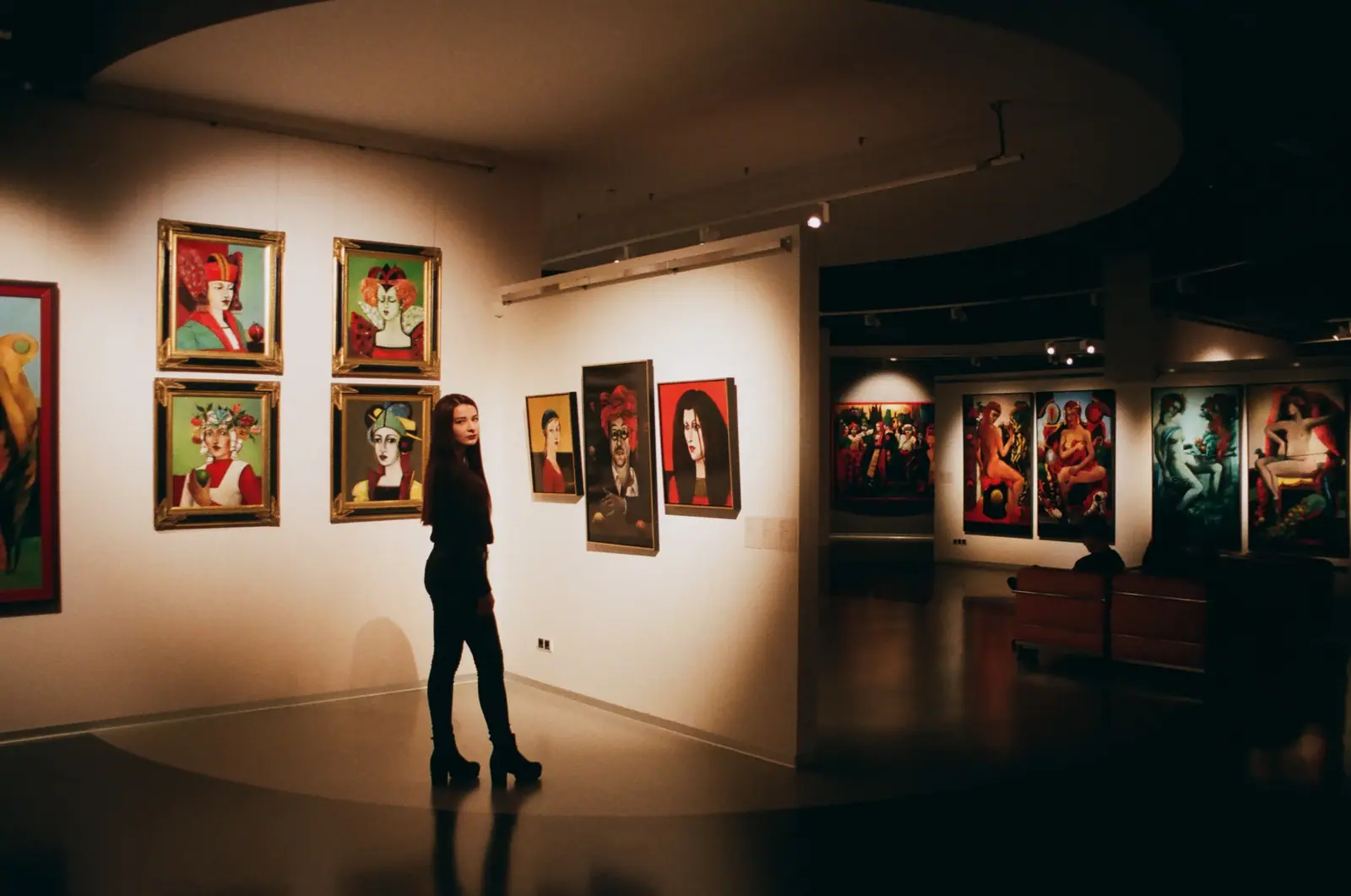
Burgas's Centre for Contemporary Art and Library is showing 30 photos by cinematographer and photographer Asen Shopov, all taken by moving the camera. Most are on show in Bulgaria for the first time.
Last Friday, organisers said "Photography Weeks – Burgas 2026" will include seven exhibitions, running in the city from October to early December. Shopov's is one of them.
How it all started: Seven photo exhibitions in Burgas run until early December
The photos are from the past 10 years. Mostly they are cityscapes of Prague, Paris, Portugal and Sozopol, but they are not documentary: the shapes dissolve into light, colour and mood. Photographer Ivan Shehlarov, Shopov's friend and colleague, introduced him at the opening.
Shopov moves the camera during the exposure, and the outlines blur, sometimes almost into abstraction. He told BTA how many tries he needs: "For every subject I choose, I take about ten exposures, sometimes more than twenty. One or two work out." He says whether the picture blurs or goes out of focus is in God's hands, and that is the analogue part. The photographer believes the unpredictable result keeps the feel of an analogue process.
Shopov favours analogue but shoots digitally, because film would cost too much. He edits the colours with standard software. For a time he made fully abstract pictures using polarised light and complex techniques. Later he found his own style in camera movement and long exposure.
He was born in Sofia in 1961. He began studying photography to become a cinematographer. It was his first love, he said, but as a step towards cinematography. In photography he looks for a form of expression different from the directness of film.
VITIZ turned him down. The school then closed for three years, and Shopov left for Czechoslovakia. In Prague he first studied editing, then switched to cinematography at the FAMU film academy. His diploma work was on the visual style of Andrei Tarkovsky's films. Tarkovsky is one of his favourite directors and strongly shaped his visual taste.
As a child he lived for three years in Moscow with his mother, a theatre scholar who was writing a dissertation on the Western theatre of the absurd. There he saw "Solaris" before the film reached a wide audience.
Sozopol is also part of his childhood. The family stayed at the artists' base there because of his stepfather, a painter. "I was raised on Sozopol from childhood," Shopov said. Some of his Sozopol pictures have already been shown alongside his book "Our Sozopol", which he published himself with help from his brother, a graphic artist.
He has lived in Prague for more than four decades. He was the cinematographer on the 2003 Czech film "Želary", which was nominated for an Oscar for best foreign-language film. Lately he has worked more often on TV productions and miniseries, including HBO's "Až po uši". His last film shot on celluloid dates from 2016. Film is rarely used today because of the cost, but it still appeals to him. On a recent film project he used old Russian anamorphic lenses, and he says their flaws are what give the picture its character.
Shopov is an associate professor of film, television and photographic art, and a member of the Association of Czech Cinematographers and the Czech Film and Television Academy. He has taught cinematography at FAMU and headed the cinematography department at the FIOFA film academy in Ohrid, North Macedonia.
He says showing his work in Bulgaria is a great pleasure, because it rarely happens. His link with Bulgaria remains strong, even though he has lived abroad for decades.
The exhibition runs until 29 November, and entry is free.
Comments (1)
Желари? И това ли го дават за изкуство сега? 😂