
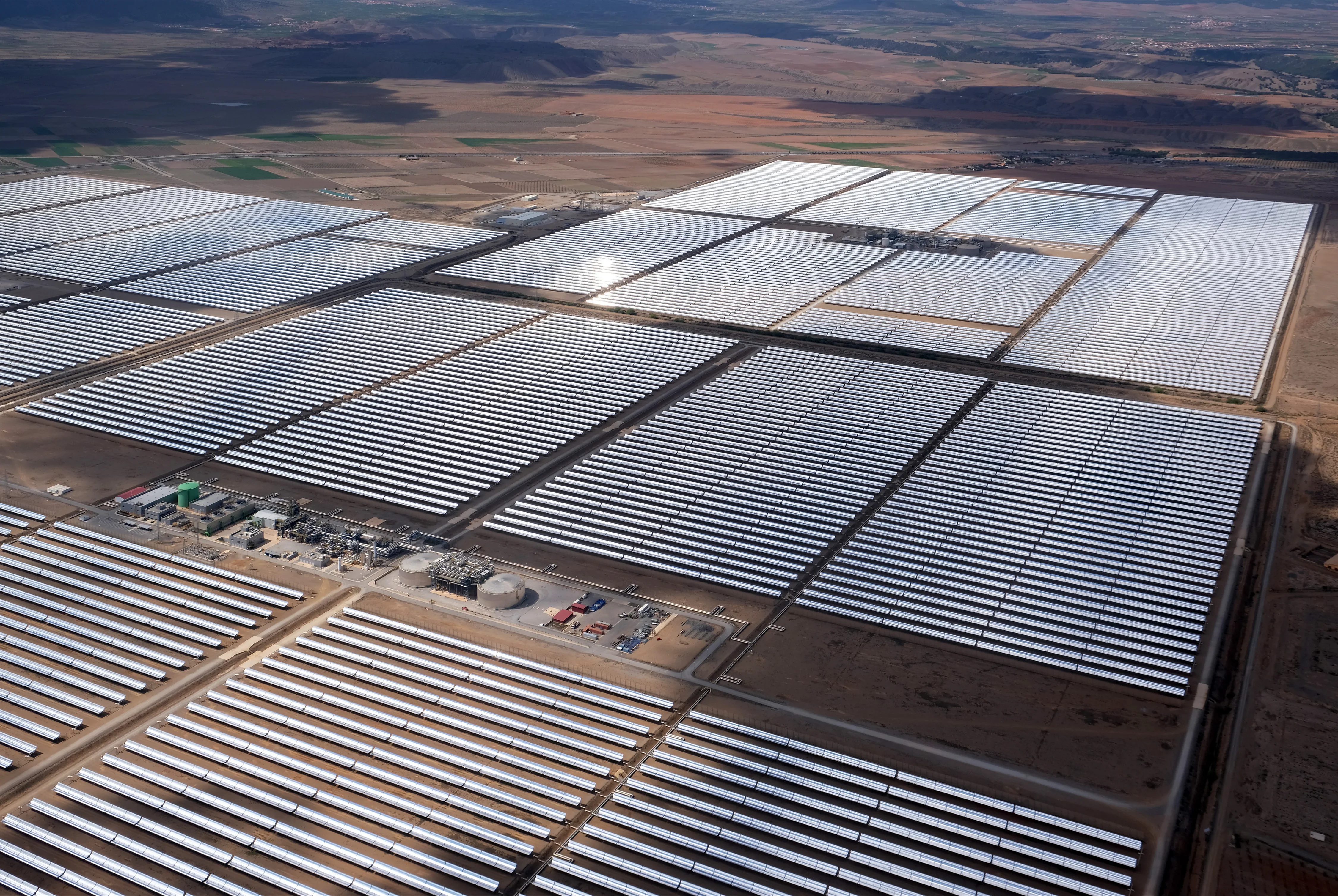
In just a few years, Bulgaria has gone from a peripheral player in the solar map of Europe to a country with one of the fastest growth rates of photovoltaic capacity in the region. The sharp rise in energy prices, European decarbonisation goals and unprecedented access to public funding have unleashed a wave of investment in solar power plants, roof installations and energy-efficient solutions. The question is no longer whether the "green economy" is coming, but whether Bulgarian business will be able to turn it into a sustainable engine for growth – or whether we will simply remain a terrain on which foreign companies are realizing their plans.
"Solar boom": numbers that reshuffle the energy landscape
Between 2022 and 2024, the country experienced a real "solar revolution". According to analyzes by energy experts, in 2023 alone, over 1300 MW of new photovoltaic capacities were introduced in our country – almost doubling all historical installations to date. In certain time slots in spring and summer, the sun already covers up to 70-80% of the current electricity consumption, which lowers electricity costs for businesses and reduces carbon dioxide emissions.
The dynamics continued in 2024–2025, and 2026 is emerging as crucial for the energy sector, according to "Solar Academy Bulgaria". In its analysis, the chairman Dr. Eng. Veselin Todorov notes that the country will either use its chance to position itself as an active participant in the new energy and industrial architecture of Europe, or will remain in the periphery, dependent on external factors and outdated models.
At the European level, the picture is just as ambitious. The updated Renewable Energy Directive (RED III) increased the target for the share of RES in the EU to a minimum of 42.5% by 2030, with an ambition of 45%, and Bulgaria has committed to a 34.1% share of RES by 2030. To this is added the "Net-Zero Industry Act", which aims by 2030 to produce 40% of the required volumes of "net-zero" technologies – including solar panels, batteries, wind turbines and hydrogen solutions – in the EU.
"From cheap electricity to green business": what this means for Bulgarian companies
The solar boom has changed not only the energy, but also the business logic. Until recently, the main conversation in enterprises was "how to survive with high electricity prices". Today, the question is increasingly "how to use cheap green energy as a competitive advantage". Factories, logistics bases, hotels, agribusiness – everyone with enough space and resources started looking at their own photovoltaic installation not just as an expense, but as a strategic investment.
Along with this, a new type of business is emerging: companies that design, build and maintain RES systems; companies that combine solar solutions with battery storage and intelligent consumption management; GreenTech start-up teams that develop software for energy efficiency, monitoring and grid balance. The transition from "cheap electricity without investment" to an active, own energy strategy is no longer an abstract concept, but a practical necessity.
"GreenTech in Bulgarian": from solar parks to an innovation ecosystem
The green economy is not limited to the construction of solar parks in the fields. In recent years, a wider GreenTech ecosystem has been formed in Bulgaria. Programs such as "Best Youth Start-up in Bulgaria" and targeted invitations to European innovation networks encourage young entrepreneurs to develop solutions in the field of clean energy, sustainable agriculture, climate technologies and the circular economy.
Competitions and accelerators for "future unicorns" and "SDG Dragons" already explicitly include categories for greentech, energy and climate, and special funding schemes allocate resources for start-ups led by women entrepreneurs in GreenTech and AgriTech – with grants of up to 50,000 euros per project. This may seem modest against the backdrop of large infrastructure projects, but it is these small, innovative companies that often bring the technologies that make large investments smarter and more efficient.
In a broader plan, an analysis by E3G on the financing of the green transition in Bulgaria emphasizes that the country has the potential to benefit from European initiatives such as the Net-Zero Industry Act and the future "Clean Industry Deal", which can direct significant capital towards clean technologies, energy storage and low-carbon industries. The question is whether national policies, regulations and administration will be able to create a predictable environment in which this capital can materialize.
"Three key challenges facing the green economy in our country"
Despite the rapid growth of RES, experts note at least three problems that will determine whether the green boom will become a sustainable engine for the economy. First, the infrastructure: the electricity transmission and distribution networks are often not ready to take on the new capacities, which leads to delays in connection, restrictions and even refusals. Without accelerated investment in the network and energy storage, the risk of "traffic jams" and losses increases.
Second, regulatory uncertainty. Frequent changes in the regulatory framework, slow procedures, different interpretations of the rules on the ground – all this discourages smaller players and start-up companies. When large investors can wait or move their project to another country, local small and medium-sized businesses do not have such a luxury.
Third, human capital. The green economy requires engineers, technicians, IT specialists, project managers and climate policy experts. In many regions of the country, businesses are already experiencing a shortage of qualified personnel, and the education system is still catching up with the new reality. Without accelerated training and requalification, some of the opportunities in GreenTech may remain unexploited.
"Can the green boom become an engine for business?"
The answer depends on whether Bulgaria will come out of the role of a passive consumer of imported technologies and will start building its own value in the chain. The green boom is already bringing measurable benefits – lower energy costs, higher energy independence, new jobs in the construction and maintenance of RES, growing interest from investors in industrial plots with access to green energy.
In order to become a new engine for business, this boom must be based on several strategic steps: a stable and predictable regulatory framework; accelerated investment in network and energy storage; targeted support for GreenTech innovation and start-up companies; partnerships between universities, businesses and municipalities; and a clear state vision of where Bulgaria wants to be in the European green economy in 2030 and 2050.
The green economy in Bulgarian can mean much more than solar panels in the fields. It can be a platform for the modernization of industry, for attracting investment, for the return of highly qualified specialists from abroad and for positioning the country as a regional center for clean technologies. But this will not happen by itself. The engine of the green economy is already on the rails – the question is whether we will get on it as passengers, or whether we will manage it.

Коментари (8)
Алоо! Бяце, четох новината за тия соларни панели и "зелени" технологии... ама аз нещо не съм убеден! 😅 Да, хубаво е, че се нароиха като гъби след дъжд, ама да видим дали ще е истински бум или само временно обяснение с цел да се сипят парички от Европа.
Ебати, пак ли? Зелена икономика... ама да не стане като с другите "реформи"! Подкрепям иде
Абе, здравейте! Интересна новина, наистина. Ама да видим все пак... дали ще е нещо трайно, а? Много пари се въртят около тия "зелени" проекти, ясно е. Важното е да не станем просто склад за чужди панели и да ни правят на смешни. Дано поне българските фирми успеят да
Абе хора, какво мислите? Сериозно ли очакваме нещо наистина голямо от тая "зелена" вълна или пак ще се окажем на опашката? Разбирам, че има интерес и европейските пари са там - това е добре. Но да не забравяме, че за да стане истински бум, трябва български фирми да имат възможност да участват активно, а не само да сглобяват чужди проекти. 👎
Абе, пичове, вие сериозно ли? Ей, четох си новината, ама ми звучи малко... оптимистично прекалено. Да, хубаво е, че има интерес към соларите и GreenTech - кой не иска да спечели от европейски пари, а тока май скоро ще струва космически суми