

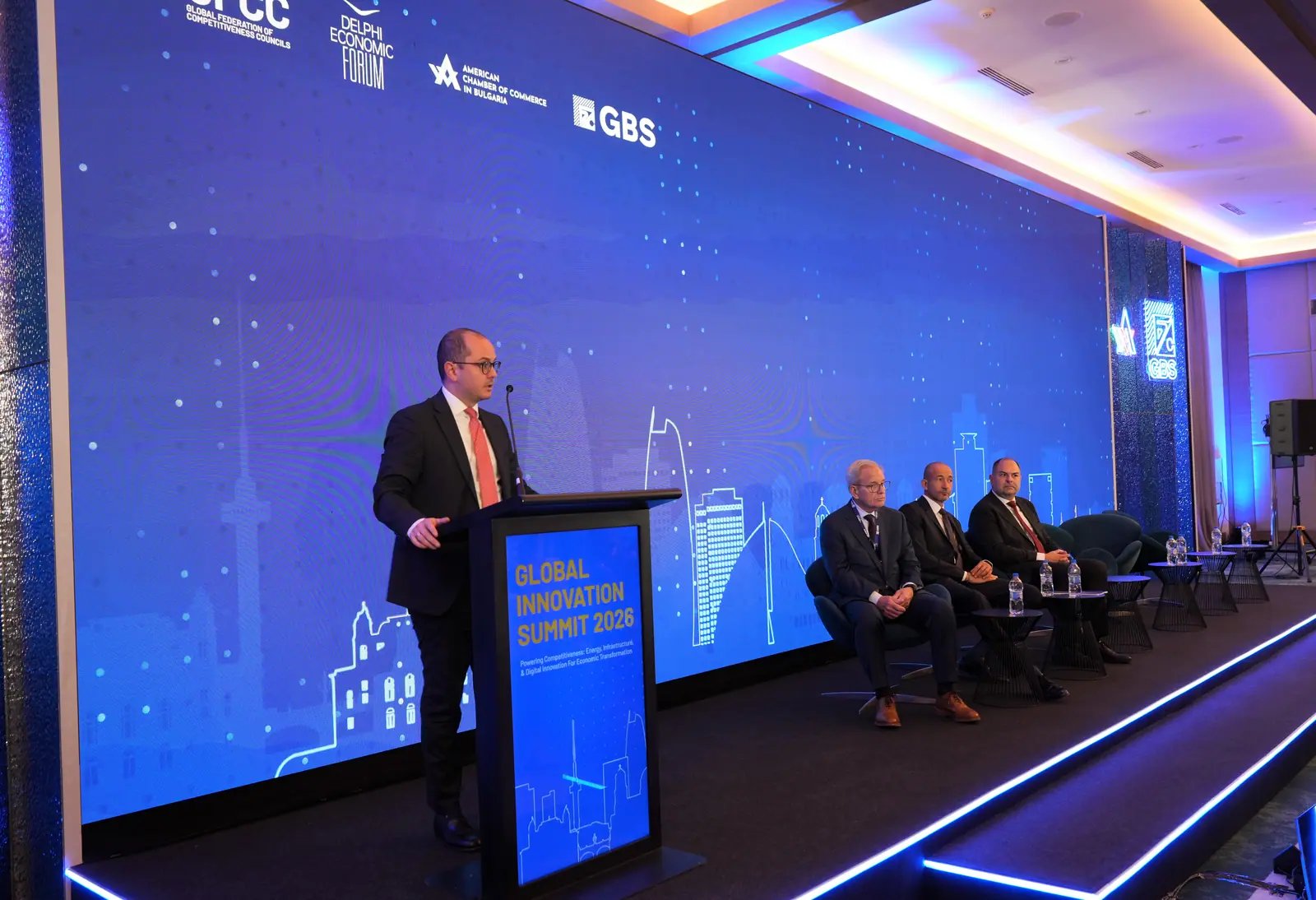
Some rules that hold back entrepreneurs in Europe should be scrapped, and this should be done in good dialogue with the European Commission, innovation and digital transformation minister Ivan Vasilev said today. He spoke at the European Innovation Council (EIC) Info Day at the Bulgarska Armia stadium in Sofia.
Vasilev said Bulgarian law is now closed to new technology. "Our focus right now is on what to regulate, not on what to deregulate, not on how to make entrepreneurs' lives freer," he said.
Vasilev took part in a joint discussion with Ekaterina Zaharieva, the EU commissioner for startups, research and innovation. He said he hopes that, together with her and the whole Commission, the work will move towards deregulation.
The minister congratulated Zaharieva in person on her idea that new technology solutions should reach state institutions at EU level, and that governments should use them. He also backed the initiative by Zaharieva and the European Commission for maximum flexibility when such technologies are put to use. As minister, Vasilev also promised to work personally to make it easier for innovative and tech entrepreneurs to operate.
He said tech companies are the tool the government can use to steer Bulgaria's economy towards industries with high added value.
Vasilev believes state and European institutions have a duty to startups and entrepreneurs. Support tools and funds exist, but it is hard to find your way around national programmes and the terms for taking part, he said. The minister said the problem affects all of Europe.
Vasilev said there is no link between science and private business. Bulgaria needs a way to transfer technology, so that scientists and researchers can take their discoveries "out of the drawers". Business, in turn, must know what Bulgarian scientists have developed, so that the products can reach the market.
Scientific discoveries should bring in revenue for the budgets of states and the EU, and the money should stay there, the minister said. Universities and institutes need incentives to turn their research and discoveries into products that sell.
Public institutions should seek out scientists, inventors and tech entrepreneurs to solve their problems. "Public institutions must set an example: we must be the first customers," Vasilev said.





Comments (0)
No comments yet.