
In June and July 2026, the number of tourists in Bulgaria saw a slight decline of about 1.5 percent compared to the same period of the previous year. This information was announced by the Minister of Tourism, Ilin Dimitrov, during a parliamentary oversight session. According to the Minister, this is "within the range of—I wouldn't call it a statistical error—but it is not something fatal for the sector."
To optimize the tourist season, a number of strategic initiatives are being planned, with one of the main ideas being the creation of a specialized fund to stimulate flights to Northern Bulgaria. The financial model of this fund would be similar to the one currently operating in Southern Bulgaria and would involve the active participation of municipalities. Its primary purpose is to ensure air traffic during the so-called "shoulder" periods of the season—its beginning and end. The goal is for the summer tourist season to start around Easter and continue significantly longer into the autumn, with results approaching those reported in the pre-pandemic year of 2019.
The Ministry of Tourism continues to implement measures to attract airlines and improve connectivity, such as:
- Implementing changes to Annex No. 5, which reduce airport fees for arriving aircraft, creating a financial incentive for carriers.
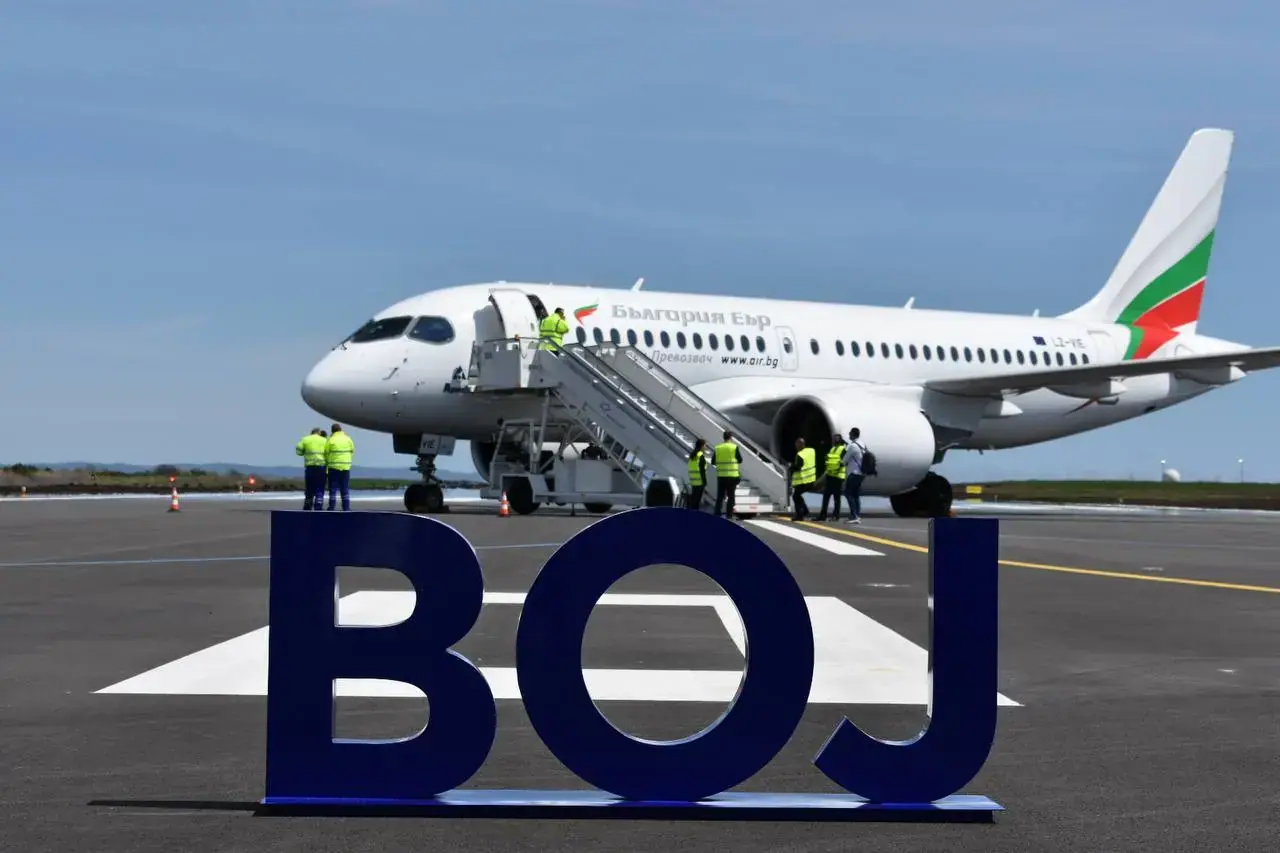
- Maintaining partnerships with low-cost airlines at the airports in Sofia, Varna, Burgas, and Plovdiv.
- Branding airports with the visual identity of the "Visit Bulgaria" campaign, featuring the faces of famous personalities.
A significant place in the strategy is occupied by preparations for the upcoming hosting of Eurovision in Burgas. A council with the participation of several ministries has been established to coordinate activities, and the Ministry of Tourism is focusing on promoting the destination through press trips. A general accompanying program with major municipalities, including Varna and Burgas, is planned. Minister Dimitrov expressed confidence that the tourism infrastructure, which has between 300,000 and 400,000 beds, will be able to handle the expected 90,000 visitors. The main challenge remains transport connectivity, which is being actively addressed. About 1,000 journalists are expected to cover the event, generating between 350,000 and 400,000 publications, which should also contribute to extending the active summer season, starting after mid-May and continuing significantly longer into the autumn.
The ministry's legislative program includes important reforms:
- Decentralization of advertising through amendments to the Tourism Act, which will frame the spending of the tourist tax. Municipalities will be legally required to allocate a minimum threshold of the collected funds specifically for marketing or improving connectivity.
- A major revision of the outdated regulation on the categorization of tourist sites, with the goal of facilitating the process by introducing a point-based system and electronic document submission, with the deadline for these changes being the end of the year.
- Developing a solution for the complex structure of the nine national resorts, where ownership is fragmented between the state, municipalities, and private individuals. The Minister noted that due to the great complexity of the case, a final decision is expected by the end of 2029, with Sunny Beach being the first point to be reviewed jointly with the Ministry of Regional Development and Public Works.
Regarding the upcoming winter season, due to limited budget funds, the ministry is relying on maximum efficiency. With a remainder of 281,000 euros from previous contracts, the agency is focusing its efforts on digital advertising channels such as Google and Meta. In parallel, efforts are being made to restore the flow of tourists from Israel, as well as to resolve visa and transport accessibility issues related to the Turkish market.


Comments (3)
Деветдесет хиляди! Наистина ли? Бургас ще е пълен! Дана всичко мине гладко и да покажем на Европа какво можем.
90 000... чакай, наистина ли са толкова много? ще се оправят ли улиците ни с толко народ?
Деветдесет хиляди... наистина ли това са офертата? Няма да повярвам ако е вярно.