
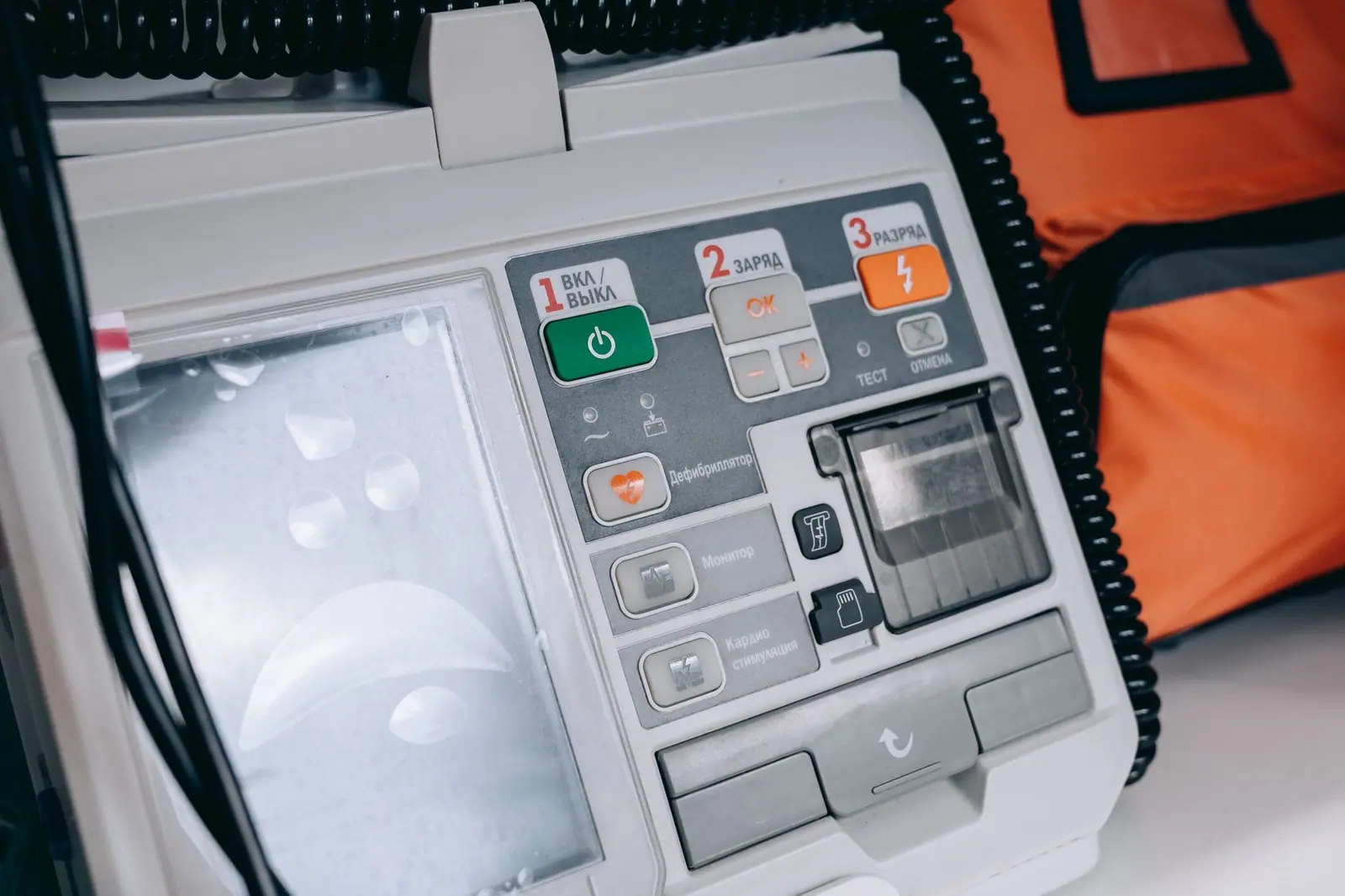
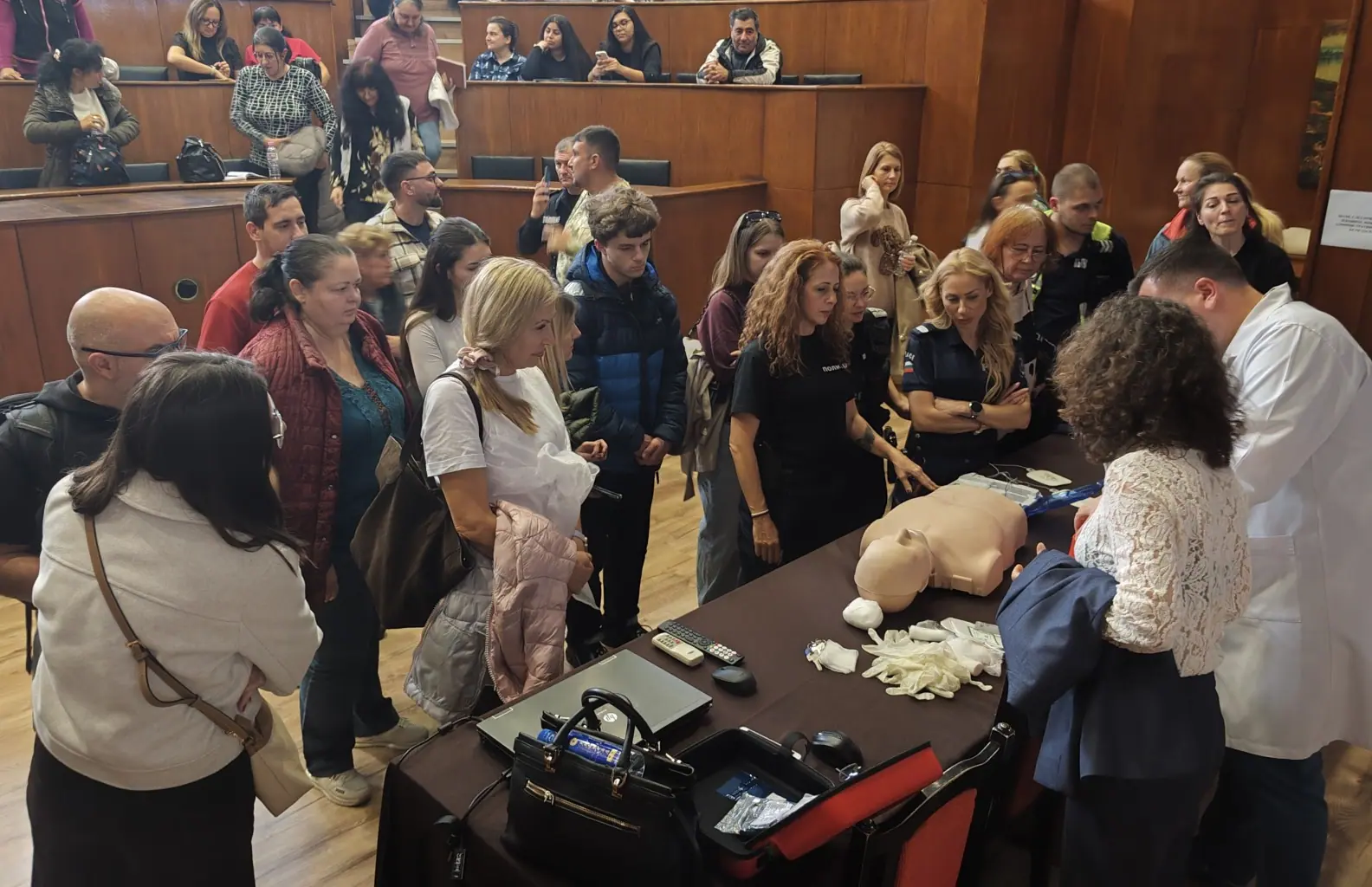
More than 150 people learned how to use an automated external defibrillator when someone's heart suddenly stops, and heard which common first aid myths do harm. The training at University Hospital Burgas was free, the hospital said.
Residents, schoolchildren, medical students, police officers and Burgas council staff attended. Dr Svetoslav Todorov led the session. He is a neurosurgeon, deputy director of the hospital and a first aid trainer with the Bulgarian Red Cross.
The organisers say the training is most useful for police officers, because they are often among the first at the scene. If they know how to use the device, it could make the difference in the minutes before an emergency team arrives.
Interest was high, especially in the hands-on practice with the defibrillator. Everyone who wanted to tried it and learned the steps. The device checks the heart rhythm itself, decides whether a shock is needed and gives voice instructions, so people with no medical training can use it.
Residents of Burgas can use the external defibrillators already installed in the city. Pupils and teachers can use those in schools.
Topics included loss of consciousness, stopped breathing, severe bleeding, choking, injuries, heart attack and stroke. Dr Todorov said many wrong practices come from old advice, false beliefs and films.
Do not tilt the head back during a nosebleed, because the blood runs down the throat. The head should be slightly forward, with the nostrils pinched. Pulling a person's hair when they faint has no healing effect.
It is also dangerous to try to "pull out" the tongue of an unconscious person, as this can cause more injuries. A person cannot really swallow their tongue, but when unconscious the tongue can block the airway. So the head is tilted back and the jaw is pushed forward.
The pulse should be checked with two or three fingers, not the thumb, because the thumb has its own pulse. Dr Todorov warned that tobacco on a wound and other folk remedies do not help and risk dirt and infection.
Participants also learned the rule of the four "Os" (in Bulgarian): make safe, assess, alert, give help. First, check that the area is safe, then assess the victim's condition and call 112. Only after that do life-saving actions begin.
The training is part of a series of free events by University Hospital Burgas to teach health awareness and practical emergency skills to the public.
From next year, police patrol cars are expected to carry automated defibrillators.


Comments (1)
Над 150 ли? Сигурен ли си?