
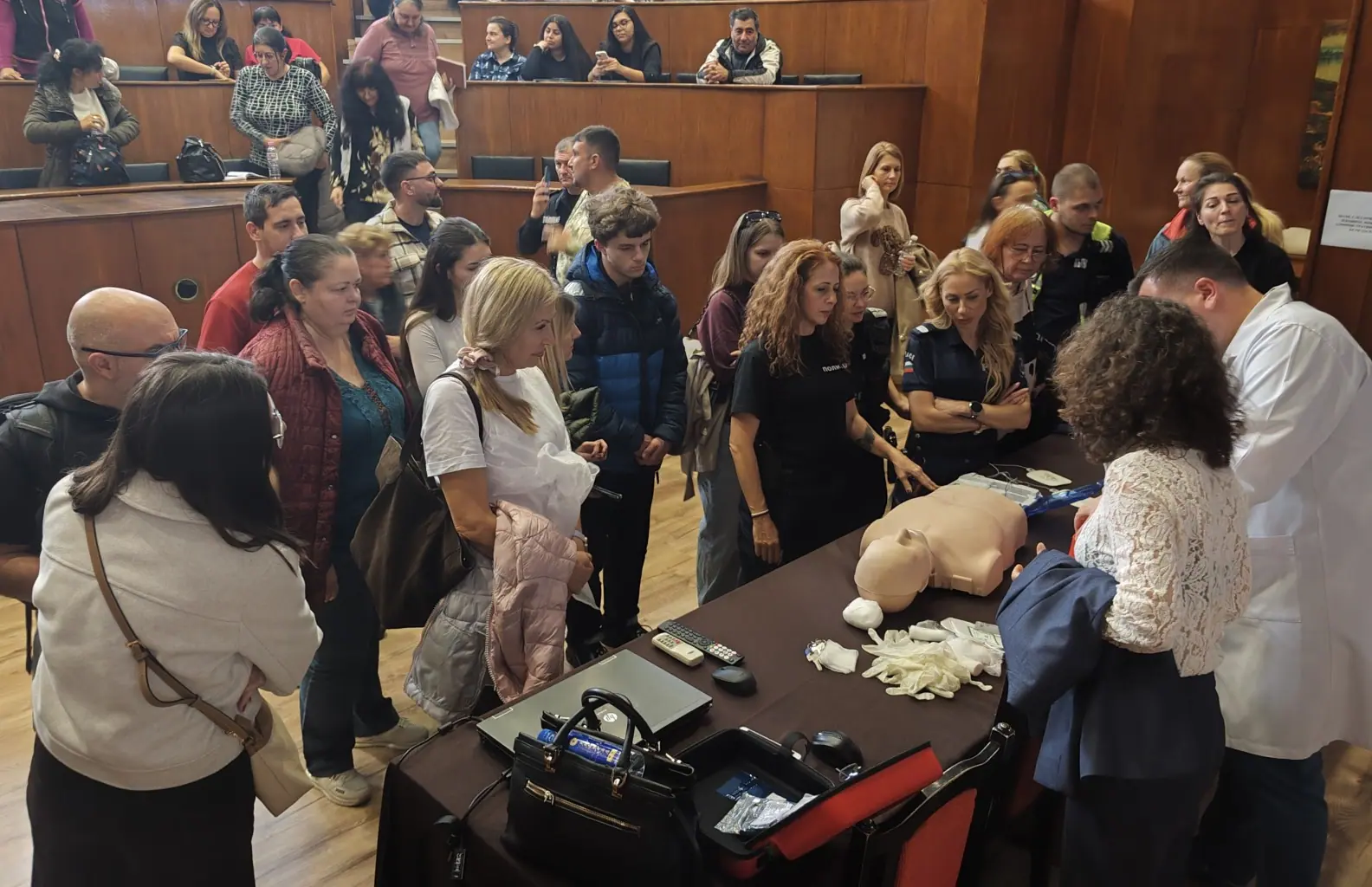
More than 150 people came to the latest free first aid class at University Hospital Burgas. Doctors busted common myths and showed how to use an automated external defibrillator, the hospital said.
We reported on the previous lecture in the series yesterday, 12 November. Dr Svetoslav Todorov spoke then about cardiac arrest and how to use a defibrillator.
Earlier on this story: Second first aid lecture in Burgas: how to act in case of cardiac arrest
He also led this session. Dr Todorov holds a doctorate in medicine. He is a neurosurgeon, deputy director of the hospital and a first aid trainer for the Bulgarian Red Cross. Police officers, medical students, schoolchildren, Burgas council staff and local residents filled the hall.
The hospital runs the series so that more people know what to do in an emergency and which mistakes to avoid. It said the right response in a critical moment saves lives.
The defibrillator practice drew the most interest. The device is used when the heart suddenly stops. Everyone who wanted to try it went through all the steps in order.
The device checks the heart rhythm itself, decides whether an electric shock is needed and gives voice instructions, so people with no medical training can use it. Burgas residents can use the external defibrillators already placed around the city. Pupils and teachers can use the ones in schools.
The organisers said the training is especially useful for police officers, because they are often among the first to reach the scene of an incident. Knowing how to use a defibrillator can be decisive in the minutes before an ambulance crew arrives. From next year, police patrol cars are due to be fitted with automated defibrillators.
Participants learned how to help when a person loses consciousness, stops breathing, bleeds heavily, chokes, or suffers injuries, a heart attack or a stroke. Dr Todorov presented a four-step rule, built on four Bulgarian words that start with the same letter: make the scene safe, assess, call for help, give aid. The helper first checks that the place is safe and assesses the victim's condition. Then they call 112 and start life-saving action.
The doctors said mistakes come from outdated advice, wrong beliefs and methods seen in films. With a nosebleed, the head should not be tipped back, because blood can run into the throat. It should lean slightly forward, and the nostrils should be pinched. Pulling the hair of a person who has fainted has no healing effect.
The phrase "swallowed tongue" is a myth, because the tongue cannot literally be swallowed. But in an unconscious person it can block the airways that carry air to the lungs. Trying to pull the tongue out risks further injury. The right way is to tilt the head back and push the jaw forward.
Do not check the pulse with your thumb, because the thumb has its own pulse that can be felt. Use two or three fingers instead.
Dr Todorov also warned against folk remedies such as putting tobacco on a wound. They do not help, and they can dirty the wound and cause infection.


Comments (0)
No comments yet.