
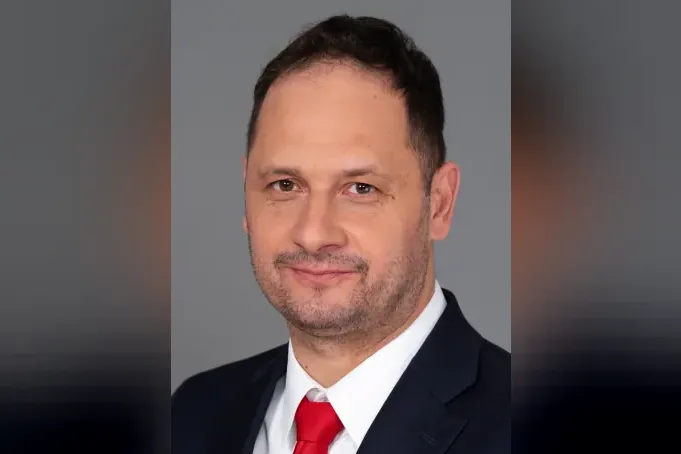
The prosecution service should not be used as a "club", said judge Assoc Prof Dr Ivan Ranchev, a candidate for the Supreme Judicial Council (SJC) under the parliamentary quota. He spoke at a hearing of the legal affairs committee in the National Assembly.
Progressive Bulgaria put Ranchev forward. The committee is hearing 20 SJC candidates under the parliamentary quota on a schedule set in advance, from 2 to 6 November. The hearings can be watched live on the National Assembly website and on the BTA website.
Asked by We Continue the Change about the Corporate Commercial Bank (KTB) case, Ranchev said he was answering as a citizen. He called the case an unpleasant example of the prosecution service stepping straight into an area that is not really its job. The judge said the economic consequences for the state were very severe.
"The chance for such interference must be stopped, so that the prosecution service is not used as a 'club', because certain political and economic interests stood behind it," the candidate added.
Ranchev has worked with former prosecutor general Sotir Tsatsarov, a judge from Plovdiv, but the two are not in touch. He said the hard parts of choosing a prosecutor general are drawing up a profile, keeping the procedure open and weeding out unsuitable candidates. Ranchev said a psychological profile could be drawn up so that the prosecutor general is fit to head the service. He added that the future profiles of the heads of the Supreme Court of Cassation and the Supreme Administrative Court also matter.
Asked by GERB-SDS about pressure, Ranchev said that over the years he has built a standard and a profile of a magistrate who does not give in to influence. If pressure is applied, a report should go to the relevant committees and bodies, he said. The judge said he has been invited to "interest clubs" for years but does not accept.
Ranchev insisted that SJC reports on circles of influence in the judiciary should be published. He said the council is not an investigating body but should look for a way to check. The prosecutor general sits on the SJC, and the Commission for Countering Corruption can also help.
Asked by Democratic Bulgaria, the candidate said the SJC must take account of decisions by the general assemblies of judges and review the career records of candidates.
Ranchev said his priority is the link with the community of magistrates and with non-governmental and professional organisations in the field. He sees problems in slow competitions, a lack of competition for administrative head posts and outside influence on procedures. He called the secondment of magistrates to other posts a big problem too, and said he does not back the automatic closure of courts.
"The workload of magistrates is also important, and I propose an annual workload map," Ranchev said. Asked by Progressive Bulgaria which problems are urgent, he named expert examinations and court experts, where there are not enough people. On funding, he said fees need to change and the system needs to be streamlined.
Ranchev said the current SJC model, with a professional and a parliamentary quota, works well, but he would like more judges on it. He explained that an overhaul like the one at the Constitutional Court would need very strong political backing and would be hard to achieve.
The Inspectorate model is good, but its performance is not, the candidate said when asked by Vazrazhdane. He proposes that inspectors answer to the Ministry of Justice, which would require a change to the Constitution.
Ranchev graduated in law from the Interior Ministry's Higher Institute in Sofia in December 1990. He has worked as an investigator, a judge at the Plovdiv Regional Court, deputy chairman of the Military Court in Plovdiv and a judge at the Plovdiv Court of Appeal. He teaches at the law faculty of Paisii Hilendarski University.
MPs from DPS asked Ranchev no questions. The day before, they had no questions for any of the four lawyers heard.



Comments (0)
No comments yet.