
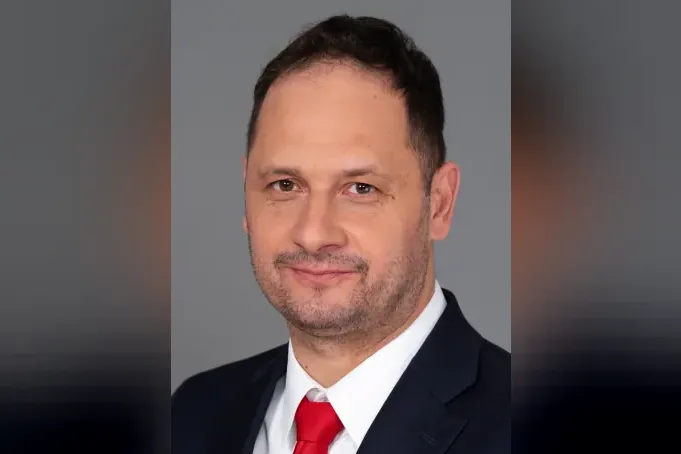
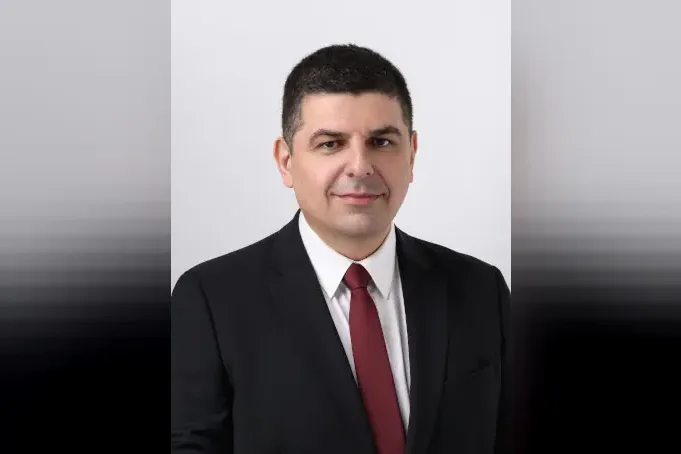
Next year's budget will be presented on Friday, Petar Vitanov, head of the Progressive Bulgaria parliamentary group, told BNT's "The Day Begins". He denied that electricity and heating prices will go up. He said the energy regulator KEVR has stated that prices will not rise before the end of next heating season, on 30 June 2027.
On Sunday evening, after voting closed in the run-off, exit polls showed Iliana Yotova with a clear lead over Andrey Gyurov. Vitanov and MP Dimitar Zdravkov said then, on behalf of the party, that they did not expect a turnaround.
Where it began: Progressive Bulgaria expects no upset after exit polls show Yotova ahead
"Heating will not go up before the end of the heating season, and neither will electricity, sorry," Vitanov told BNT.
Gas prices are rising, he admitted, but he called this a trend across Europe. In Bulgaria, he said, gas costs 40% less than on the TTF exchange, which makes Bulgarian gas more competitive and will help Bulgarian firms.
The decision to hold prices is political, not the regulator's. KEVR is independent, Vitanov said. The governing parties are looking for ways to make up for the rise in gas prices.
Vitanov denied that politicians summoned the head of KEVR. He said it is natural for the regulator's chief to talk to political leaders, because the money for compensation "has to come from somewhere".
The gap will be covered by the Energy System Security Fund, which helps consumers, including businesses, when prices get too high. Vitanov said PP-DB drained the fund while they were in power, and now the aim is to find a way to refill it.
Businesses are unhappy that the electricity compensation payments have been put off. GERB proposed paying the money at once. Vitanov called the proposal populist.
Parliament is now choosing the members of the Supreme Judicial Council (VSS) from its own quota. Progressive Bulgaria has started talks on this with We Continue the Change and Democratic Bulgaria.
The parties have already drawn up rules for choosing the council, and Vitanov said all of them agreed on them. Now they are discussing the profile of the candidates, mostly who they should not be.
Seats on the VSS will not be shared out by quota, Vitanov said. His party will seek the widest possible agreement with parties that have spoken out against the status quo and against what he called a "captured judicial system".
In his view, the political quota should not include investigators or prosecutors, or Supreme Court judges with relatives in the judiciary. That would make it harder for anyone to influence them.
Vitanov hopes the parties will not all seek maximum influence over the judiciary. Progressive Bulgaria is ready to discuss candidates put forward by its opponents to reach broad agreement.
"So for us there are no sacred cows, we are not defending anyone. If we can agree on a name, it would simply be more than wonderful," Vitanov told BNT.
He wants the VSS vote taken "out of brackets" and normal, rational and sensible dialogue to return among the parties. The council must be chosen first, Vitanov said, because it can take the first step towards judicial reform.
The choice of a new chief prosecutor is not part of the current VSS talks. If a new council is elected, the procedure for chief prosecutor will start in the spring. Vitanov rejected fears that the elected council and its decision on chief prosecutor could disappoint.
The host asked whether Progressive Bulgaria is "overeating on power" after the elections. Vitanov said no and pointed to four times in the past 35 years when the president came from the ruling party.
He said Yotova will be president of all Bulgarians. The results of the first round were very worrying, Vitanov admitted, but the mistakes have been fixed.
He claims there was an "understanding and a deal" for DPS-New Beginning to back Andrey Gyurov, and links this to what he expects from We Continue the Change in the VSS vote. At the start of last week, Vitanov said publicly that such a deal existed. He now believes it came true a week later, and cites the results in Kardzhali as evidence. In his view, PP should be glad, because the candidate of Borisov and Peevski was not elected president.
Progressive Bulgaria had expected New Beginning to back Gyurov, but not on that scale. The party's analysis found that several factors limited the support, including a lack of vote buying and weaker dependence.


Comments (0)
No comments yet.