
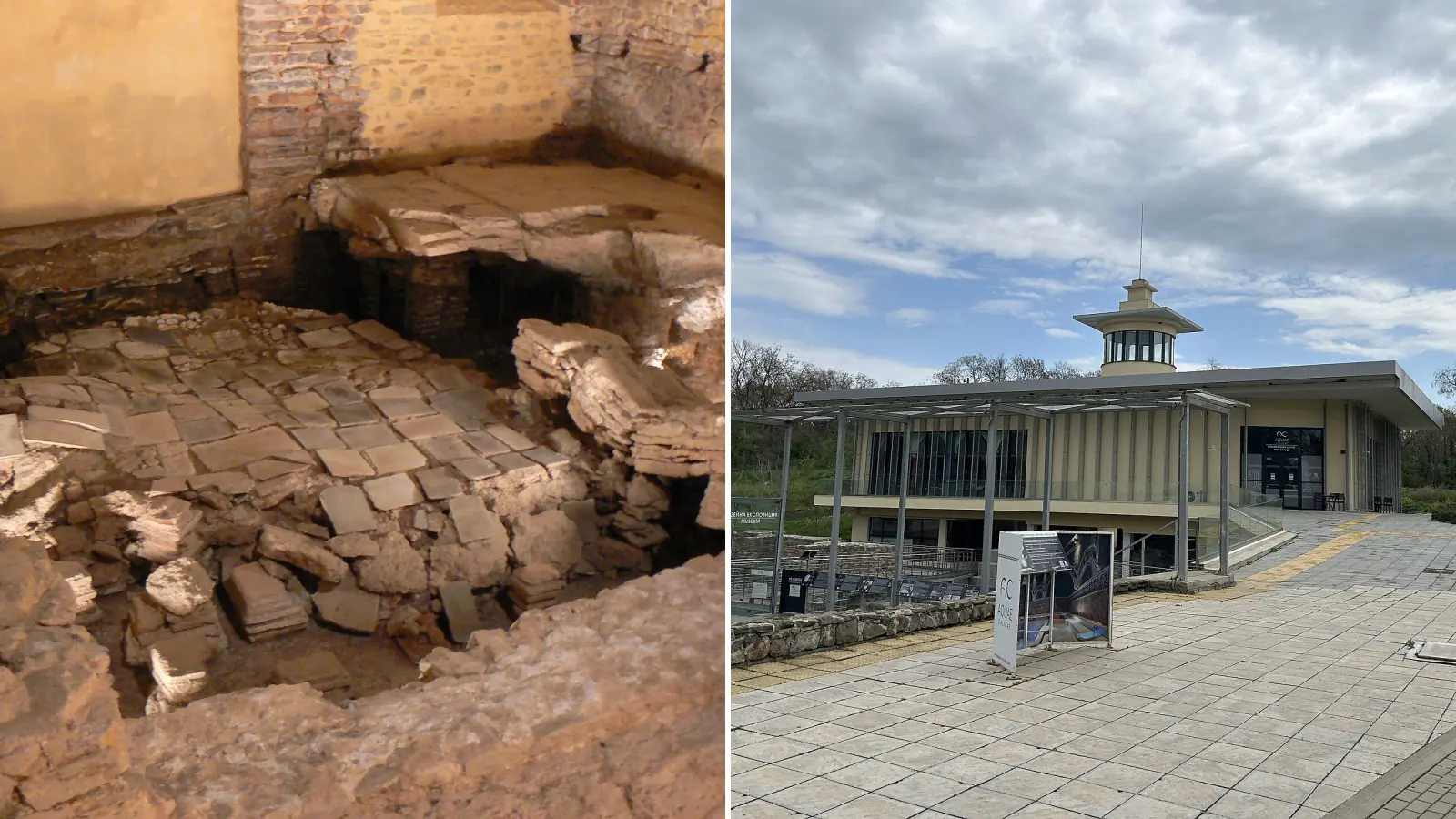
Dr Nikolay Sharankov, an epigraphist at Sofia University "St Kliment Ohridski", has read and interpreted the Latin inscription on the base of a statue of Emperor Trajan. It was found this year at the ancient Aquae Calidae thermal complex.
The statue went up in 100 AD on the orders of the city council of the colony of Deultum, which was modelled on the Roman Senate. The remains of the colony lie near the village of Debelt.
The inscription came to light during conservation and restoration work. Assoc. Prof. Dr Dimcho Momchilov leads the research at the site.
The text opens with Trajan's full list of titles, as was the custom in Roman times. He ruled from 98 to 117 AD. The inscription names his predecessor, the divine Nerva, who adopted him, as his father. His titles include emperor, Caesar, Augustus, Germanicus for his victories over the German tribes, chief priest, holder of tribunician power and "Father of the Fatherland". It also mentions his fifth consulship, which fixes the exact year.
The inscription is in Latin, which shows the colony's link with Rome. Latin was the language of Roman rule and administration. In this part of Thrace people mostly spoke Greek, and most inscriptions at Aquae Calidae are in Greek.
Researchers say the site for the statue was chosen for a reason. The Roman baths, built under Emperor Nero (54–68 AD), were among the most visited in Thrace. People came from all over the empire, including senior officials and Roman officers.
The timing also matters. Trajan's war against the Dacians, north of the Danube, began in 101 AD, and the roads leading there had been very busy before that. So Deultum honoured the emperor at Aquae Calidae, where the statue would be seen by the most people.
Researchers say the finds show that from the first decades of Roman rule Aquae Calidae was tied to imperial power and was one of the most important places in Thrace.
It is the latest Latin inscription from the site. An inscription from Nero's time about the building of the baths was found there in 2015, and an altar to the nymphs by Marcus Obsequens in 2022.
Updated (26.10, 16:27): Burgas council said the inscription has been deciphered and interpreted by scientific methods. The remains of the Deultum colony are in Sredets municipality. In August 2024, archaeologists found part of a nymphaeum in the area of the early Roman bath at Aquae Calidae.

Comments (0)
No comments yet.