
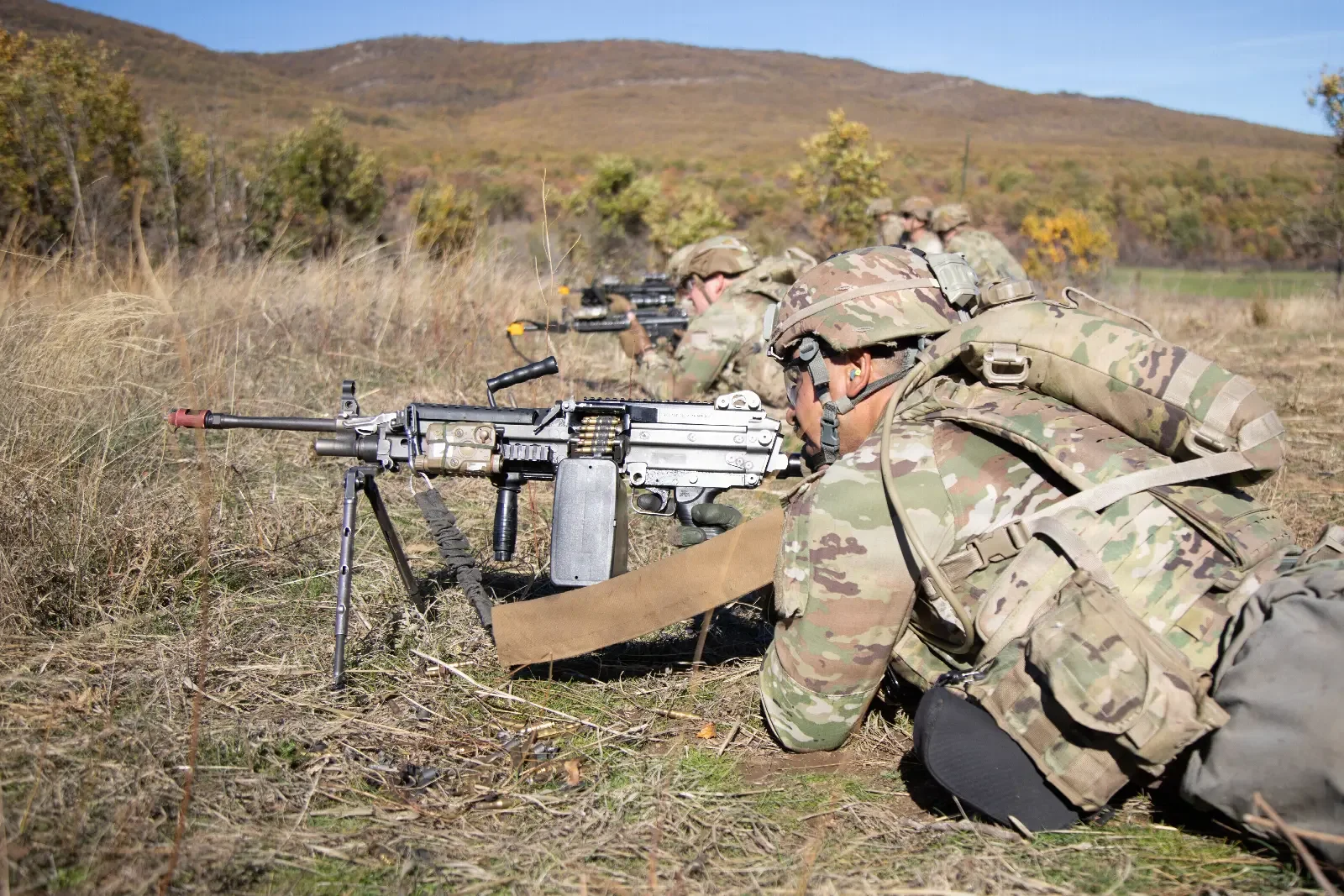
The Novo Selo training area plays a key role in NATO's presence and readiness on the Alliance's eastern flank. The area combines three main areas of operation for U.S. Army Garrison Black Sea – combat training, multinational interaction, and partnership with communities in the region.
This combination allows U.S. military personnel, allied formations, and Bulgarian institutions to maintain deterrence capabilities and develop their coordination in a realistic training environment.
Training near the base
For U.S. units, the training ground is an important base for maintaining constant combat readiness. The commander of the 1st Battalion, 36th Infantry Regiment, Lieutenant Colonel Blair Downey, emphasizes that the ability to train near the point of deployment has great operational value.
"The ability to build combat readiness close to the base, without wasting time and resources moving a battalion across the entire continent to train, is invaluable," Downey points out.
The shooting ranges, the live-fire complex, and the maneuver areas are located in close proximity to one another. This allows formations to devote more time to training instead of traveling between separate training areas.
"Our ranges, live-fire complex, and maneuver areas are located a short march from our base, so we spend our time training rather than traveling. This proximity allows us to carry out a training calendar that few units in Europe or the continental United States can compare to," says the commander.
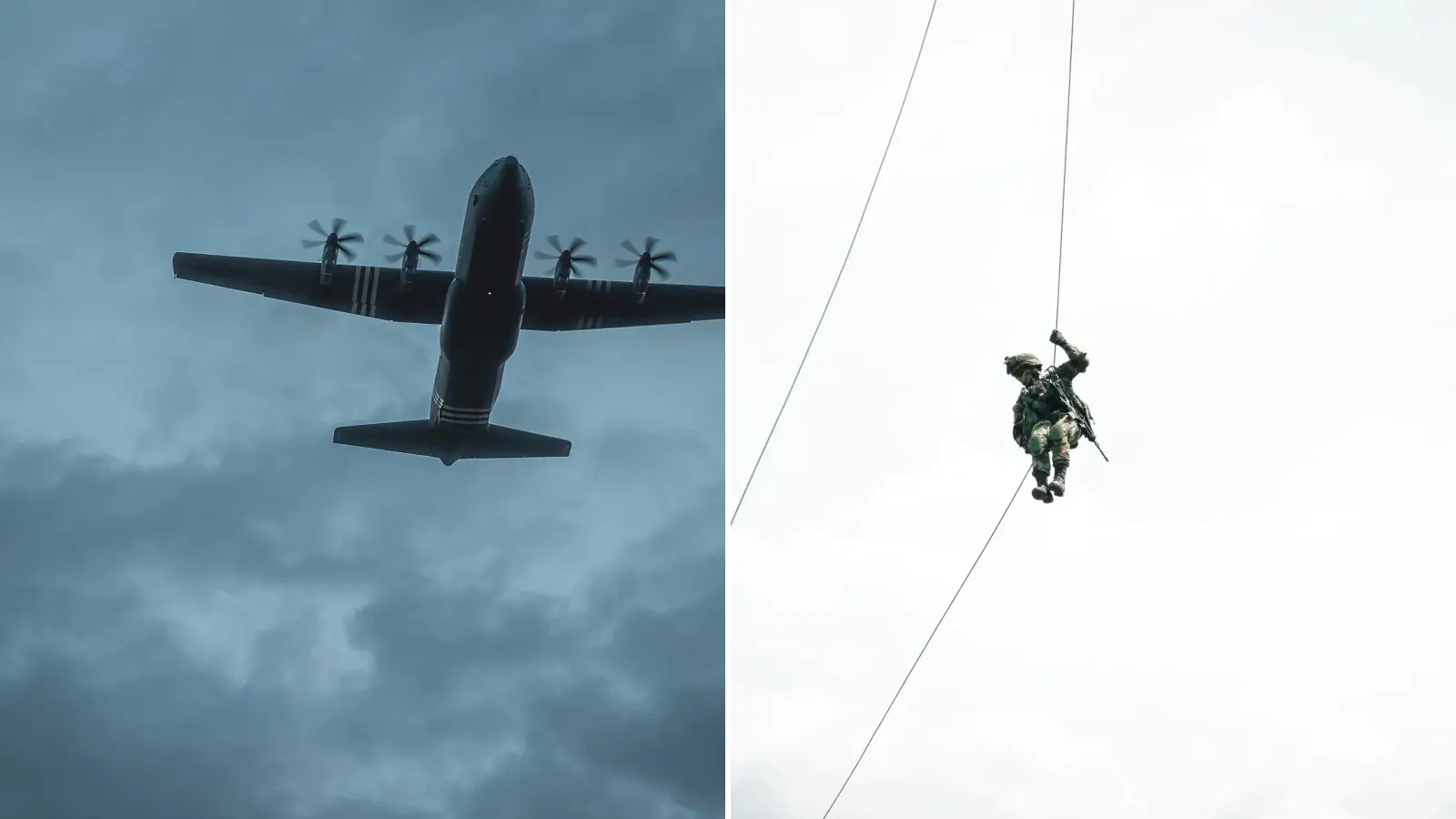
Within a unified training environment, live-fire exercises with tank and mechanized infantry platoons, tasks with 155mm howitzers, and aerial fire can be executed. According to the U.S. Army, this places Novo Selo among the most effective NATO training platforms in Europe.
The range has about 3,700 acres of maneuver space, approximately 8 kilometers wide and about 12 kilometers long. Nearby, there is a rail terminal for moving heavy equipment and supplies, a helipad, and a logistics connection to the port of Burgas, located about 70 kilometers away.
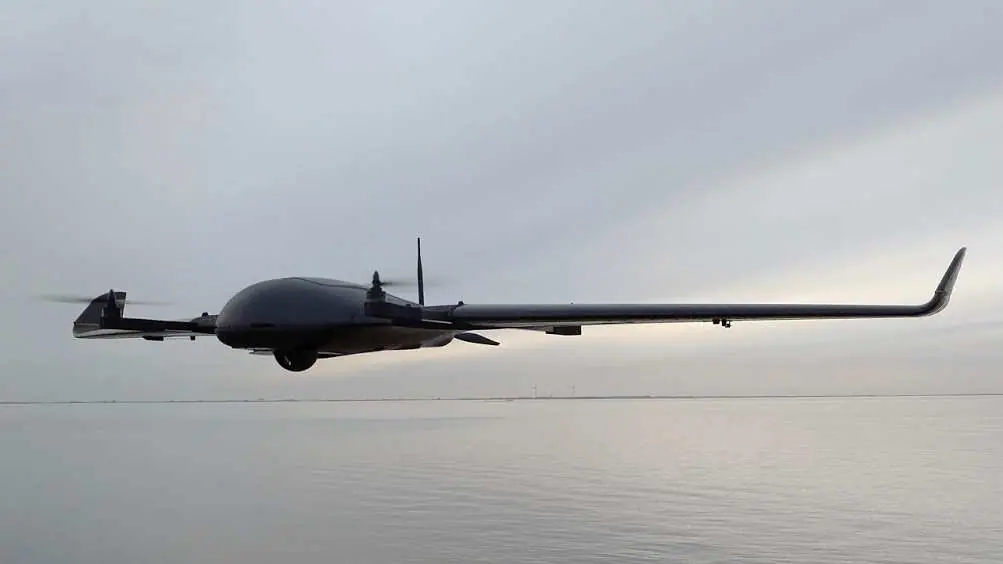
"The terrain itself – dense forests, steep sections, and open spaces for maneuvers – presents every formation with a real problem to solve. The unrestricted airspace allows us to use unmanned aerial vehicles whenever our plan requires it, and the professionalism of the 7th Army Training Command and the Bulgarian Land Forces gives us the opportunity to train as necessary, rather than as an overloaded schedule allows," explains Downey.
Multinational force on the eastern flank
In addition to the U.S. 1st Battalion, 36th Infantry Regiment, NATO's multinational battlegroup in Bulgaria is also stationed at the training area. Italy is the framework nation for the formation, in which contingents from Albania, Bulgaria, Greece, Italy, Montenegro, and North Macedonia also participate.
Colonel Matteo Epifani, commander of the 8th Bersaglieri Regiment, defines the role of the Italian contingent as a practical application of the principle of collective defense.
"The Italian contribution to NATO's eastern flank ultimately means turning collective defense from a principle into a reality," Epifani states.
"During our mission in Bulgaria, our task was not just to maintain a military presence, but to build a reliable, integrated, and ready multinational force capable of operating alongside allies from the very first moment. In Novo Selo, we experienced this every day," he emphasizes.
During the handover of command between the 8th Bersaglieri Regiment and the 4th Tank Regiment earlier in August, Epifani noted that working together had turned units with different practices and military cultures into a single team.
"We brought together units with different experiences, military cultures, procedures, and practices and gradually turned them into a single team, united by the same goal and the same sense of responsibility," he says.
According to Epifani, interoperability does not end with common procedures and standards. "Interoperability certainly means common procedures, communications, and standards, but it also means understanding how others think, learning from each other, and above all, building mutual trust. That was perhaps the most important result of our mission. Our differences were not an obstacle – they became a source of strength," he points out.
Economy and human support
The activity of the training area also has significance outside the military sphere. The mayor of Sliven, Stefan Radev, points out that the partnership with U.S. Army Garrison Black Sea creates employment and economic opportunities for the region.
"As mayor of Sliven municipality, I am pleased with the close cooperation we have built with the U.S. Army at the Novo Selo training area. This partnership supports our municipality by providing jobs for more than 300 residents and creating significant economic opportunities," Radev states.
The mayor also highlights the participation of U.S. service members in a local blood donation campaign. "Initiatives like this month's blood donation campaign, in which 60 U.S. service members voluntarily donated blood for our Regional Center for Transfusion Hematology, demonstrate a genuine commitment to our community. These actions highlight the human dimension of our partnership. We highly value the professionalism of U.S. Army Garrison Black Sea, its constant commitment, and the respect that service members show towards Sliven and the surrounding communities," he says.
The combination of training, allied coordination, and regional partnership reinforces Novo Selo's place as an important platform for collective security and deterrence on NATO's eastern flank.
Comments (4)
абе хорааа, видя ли новината?! "ново село" пак в действие! да знаеш само колко яко е това! сериозно, много се радвам да видя такива НЕЩА
Добре е, че тренировките вървят. Важно е да
Пак ли тия учения?! Да не почне пак някой да ни говори за провокации от нас? Аман! Като гледам как се подсилват, все едно ще им трябва, а? Сериозно, какво чакат, бе?!
абе хора, пичове… какво да ви кажа аз?! видях новината за "НОВО село" и ми стана малко тъпо на душата, ама пък после се сетих – здраве да има