
The week ahead of us passed through a strange combination of everyday life that is falling apart – both literally and metaphorically. From the small tragedies in our neighborhoods to the major political strategies that will rewrite the future of the region, the rhythm was one of constant rethinking of how secure we actually are in our own city.
Safety: between fire and asphalt
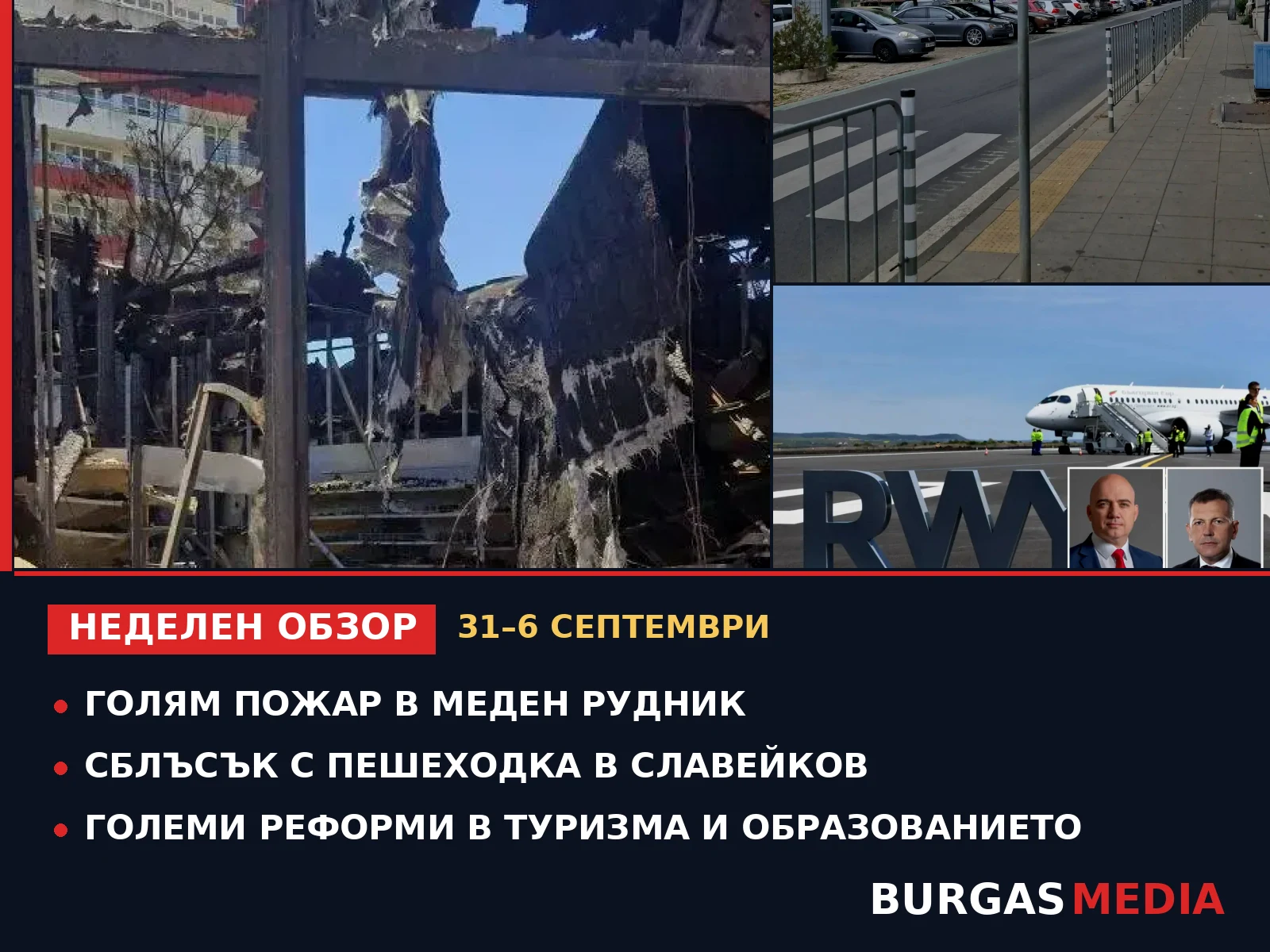
We begin with the heavier moments that remind us that peace is fragile. In the „Meden Rudnik“ complex, flames do not ask for permission, and a fire burned down a floor of a house on „Lulin“ St. № 6, leaving behind material chaos and questions regarding the safety of residential buildings. Although there were no casualties, the incident is a serious signal of how quickly a home environment can turn into a disaster zone. Such events always make us reflect on prevention and the condition of installations in older developments.
If fire is a threat from within the home, then the roads present us with threats from the outside. In the „Slaveykov“ residential area, the situation was almost the same in terms of stress – a 23-year-old woman was hit by an „Opel Tigra“ car while crossing a pedestrian crossing near the „Konstantin Preslavski“ school. A car hit a 23-year-old pedestrian, reminding us that even marked paths do not guarantee full predictability in urban traffic. Although the girl was released for home treatment, the case is further proof that road culture in our neighborhoods still has a long journey ahead of it.
This deficit of security also manifests in the urban infrastructure itself. When an advertising billboard fell on the „Terminal Yug“ stop, it became clear that the problem lies not only with drivers but also with the maintenance of facilities. The collapse of a massive, decayed metal structure in a place where hundreds of people pass every day is more of a warning than just an incident. The urban environment should be a support, not a trap.
Strategies for the future: tourism and education
While we deal with safety issues, the „big picture“ is being prepared at a high level. Tourism, which is the backbone of the Burgas economy, is set to undergo a serious transformation. The package of reforms presented by Minister Ilin Dimitrov aims for sustainability and competitiveness, with a key element being the creation of a new connectivity and advertising fund. Minister Ilin Dimitrov is preparing reforms in tourism, which will directly affect airport capacity and how we will welcome the world in 2027. This is a long-term investment whose success will determine whether we remain a regional leader or simply become a passing point.
Parallel to the economic strategy, a change in „social capital“ is also necessary – our education. Minister of Education Prof. Georgi Valchev put the heavy topic of quality on the table, confirming the intention to resume teacher certification. Minister Georgi Valchev is introducing new quality criteria, which is a direct response to the need for higher standards in classrooms. This is a process that requires time and preparation, but it is mandatory if we want our children to receive an education worthy of European standards.
Light at the end of the tunnel: volleyball spirit
Ultimately, amidst all these challenges and administrative reforms, we always find a reason for pride and anticipation. Burgas proves once again that it is a city with enormous energy and sporting spirit. Preparations for EuroVolley 2026 are already tangible, and plans for a special zone in the Sea Garden inspire optimism. Burgas is opening the Volley Village festival zone, which will turn our coastline into the heart of European volleyball. This is the news that reminds us that our city not only fights its difficulties but is also actively preparing to meet the world with a smile and a major event. The week showed us that while we deal with the lost and the worn out, we must always look toward the new horizons that lie ahead of us.
Comments (3)
инфраструктурни предизвикателства... интересно къде то4но са те?
Абе, "седмица на преломните моменти"... хах! Седмицата винаги е такава в Бургас, нещо се случва. Големите спортни амбиции ли? Кой ги слуша тия! 7 милиона за стадион, кажи речи... За к'во ни трябва нов стадион като тротоарите са разбити и дупките все по-големи? Да не би да е за руските туристи, дето ще идват да гледат футбол ли?
7 милиона… наистина ли толкова ли трябва за стадион? странни тия числа.