
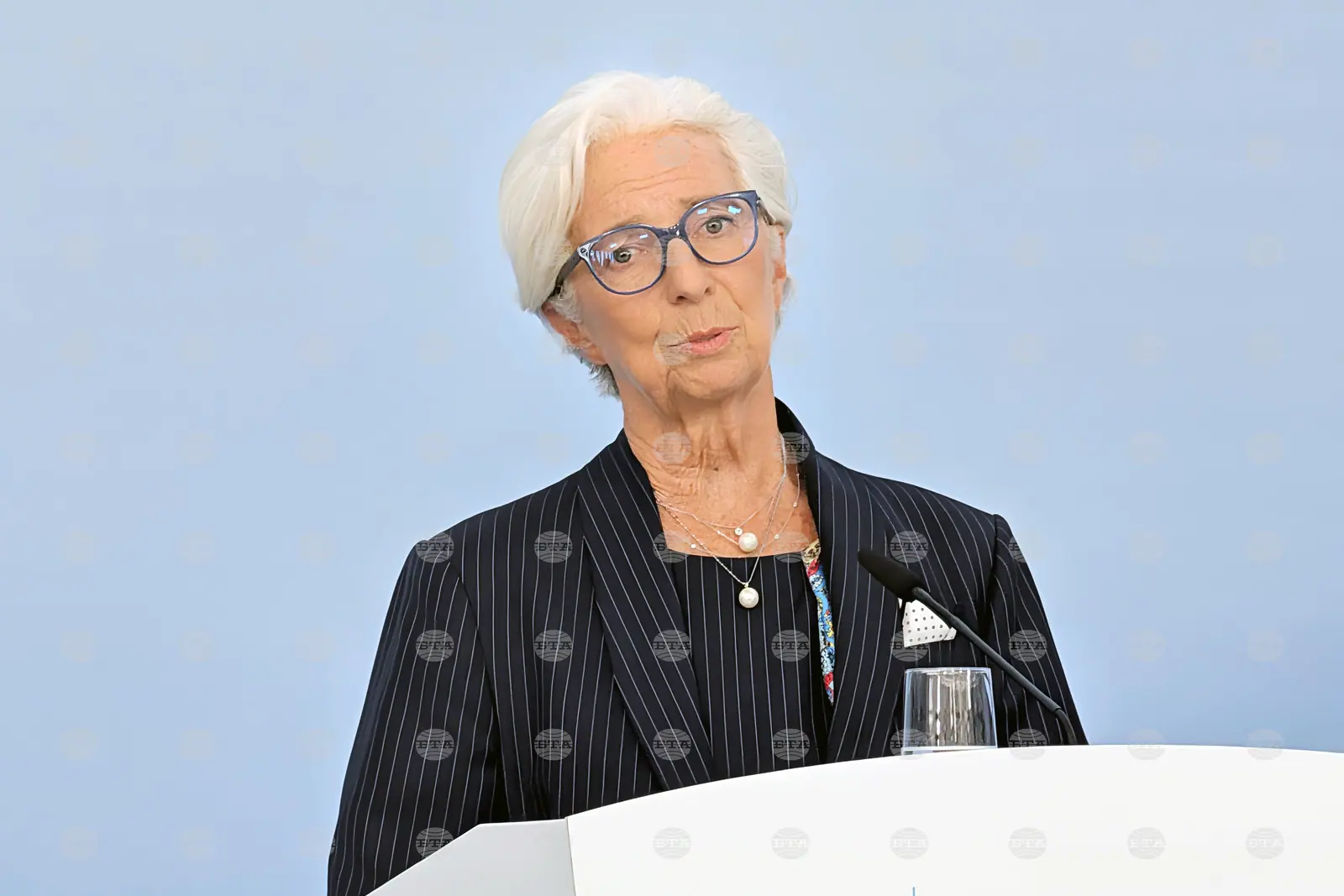
Christine Lagarde, President of the European Central Bank, outlined her vision for the Old Continent's economic future during a speech delivered at the Apple Festival in Normandy. According to estimates by the institution's economists, cited in a publication on the Frankfurt-based central bank's website, the implementation of artificial intelligence could boost the Eurozone economy by 630 billion euros annually over a ten-year period. This amounts to nearly 1,800 euros per person, with Lagarde emphasizing the need to channel savings into European companies and deepen the single market so that these benefits reach society.
The problem of "brain drain" and capital flight was illustrated by Lagarde using data on over 400 non-European companies, each with a market valuation exceeding 1 billion dollars, that have at least one founder who grew up on European soil. The total value of these enterprises reaches 1.8 trillion dollars, which is a direct result of poorly integrated capital markets. As a positive counterpoint, she highlighted the French firm Mistral, which raised 3 billion euros – the largest amount for a European private technology company to date. The investment was made with the support of the Scaleup Europe fund, whose goal is to stimulate business development through local capital.
The ECB President also focused on barriers to European services, noting that internal obstacles in the sector, especially in the digital sphere, are effectively equivalent to tariffs of about 100 percent. At the same time, she stressed that the openness of our economy makes us more exposed to international shocks. Concrete examples of this include the energy crisis, Russia's war against Ukraine, the conflict in the Middle East, and new tariffs from the US, which have led to a decline of nearly one-fifth in Eurozone exports since the beginning of last year.
Energy independence remains a key priority, with Lagarde insisting on the completion of the electricity grid interconnections planned for 2030. She gave the example of Normandy, which in 2024 produced two and a half times more low-carbon energy than it consumed, but because of poor connectivity, this surplus cannot be used to achieve lower and more stable prices across the entire union. Regarding monetary policy, Lagarde reaffirmed the ECB's commitment to a 2 percent inflation target in the medium term to prevent lasting price increases following energy and food shocks.
In support of technological and financial independence, Lagarde also defended the introduction of a digital euro. Since two non-European companies control about two-thirds of card payments in the Eurozone, she emphasized the need for an alternative European payment instrument. It must be accessible for both online and offline use, functioning alongside cash and reducing dependence on foreign operators.



Коментари (0)
Все още няма коментари.