
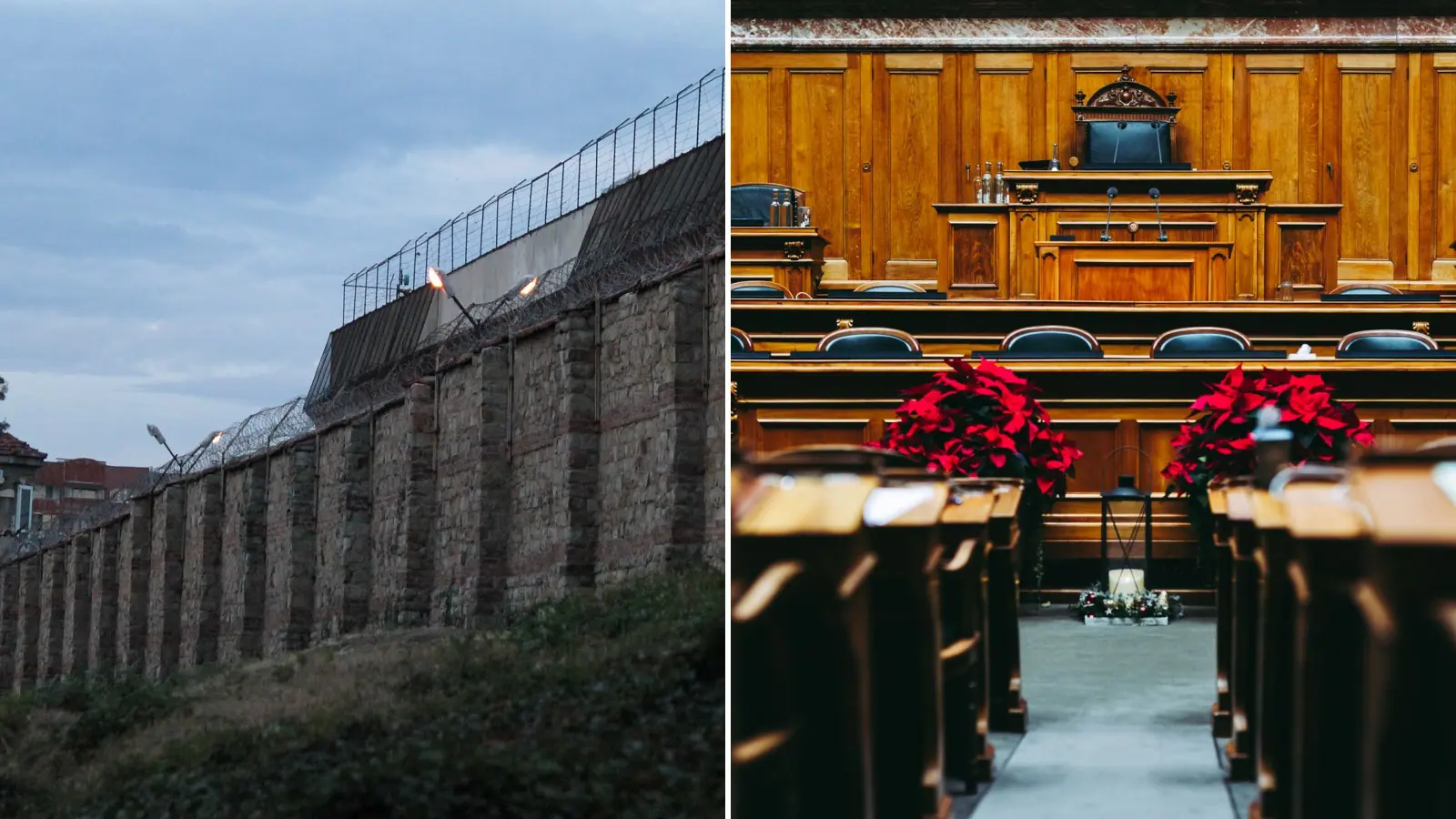
Sofia city prosecutors and the head of Sofia Prison are challenging the parole of Kristian Nikolov, who was sentenced to 9 years in prison over the death of journalist Milen Tsvetkov. Both have taken the case to the Sofia Court of Appeal. The Ministry of Justice reported the prison chief's appeal.
Sofia City Court granted Nikolov's request on 22 October. The judges said his behaviour gave enough proof that he had reformed. The prison chief's appeal became public today. The prosecutors filed a protest against the same ruling. Nikolov stays in prison until the appeals court decides.
Earlier on this story: Sofia prison chief appeals release of Kristian Nikolov
The prison chief opposed the release at the city court hearing, where he gave a negative opinion. He has now also filed a private appeal.
He says the court ignored the reasons given by the prison administration. He argues there is no convincing proof that Nikolov has reformed and been re-educated, and says he has served only a third of his sentence.
The prison chief also says the weaknesses found in the first risk assessment have not been fixed. He insists that work with the convict should continue and be completed, so that Nikolov's attitude to a law-abiding life changes.
Milen Tsvetkov died in a crash on 19 April 2020, Easter, on Cherni Vrah Boulevard in Sofia.
The case reached the Supreme Court of Cassation, which gave its final ruling in July 2023. A three-judge panel changed the Sofia Court of Appeal's decision in three parts: the legal definition of the crime, the prison term and the ban on driving a motor vehicle.
At the Supreme Court of Cassation, both the prosecution and the defence asked for the ruling to be overturned and for a new hearing by the appeals court. Prosecutors filed a cassation protest, and the private prosecutors filed cassation appeals. They argue that Nikolov acted with possible intent, that the case is especially grave and that the sentence should be increased.
The defence lawyers asked for a full acquittal or, if the court refused, for lighter sentences.
The Supreme Court of Cassation found no serious breaches of procedural rules or of substantive law, as the parties had claimed. The court said the defendant knew his actions were dangerous to the public and foresaw the consequences.



Comments (0)
No comments yet.