
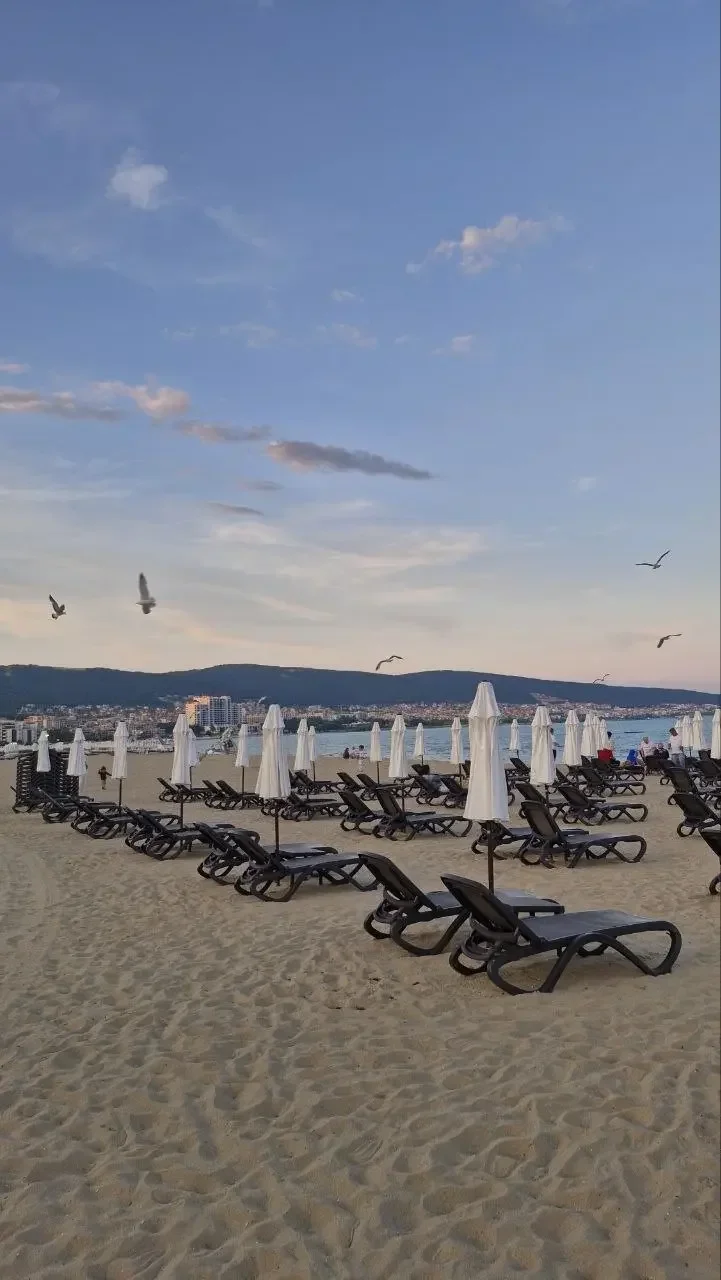
The 2026 summer tourist season begins with a combination of record revenue expectations and a palpable increase in service costs, which calls into question the competitiveness of Bulgarian tourism compared to other destinations in the region. According to industry data, bookings for summer 2026 show a growth of about 3–5% compared to the previous season, and forecasts predict over 2 billion euros in revenue from international and domestic tourism along the Black Sea coast and in the country's interior.
At the same time, hoteliers and restaurateurs report increased costs of about 30% due to more expensive fuel, food, and wages, while the average increase in package prices for summer 2026 is limited to 5–10% to maintain the destination's competitiveness. According to industry representatives, the majority of contracts with foreign tour operators were signed back in 2025, which does not allow prices to be indexed to their full extent in relation to actual inflation.
The Ministry of Tourism reports that Bulgaria continues to be perceived as an affordable seaside destination, with average prices here remaining approximately 15–20% lower than those in Greece and Turkey for a comparable standard of hotel facilities in the mid-price segment. However, this advantage is coming under pressure from rising costs, as well as strong competition from neighboring countries that are actively investing in the modernization of resorts and in marketing on international markets.
Another key factor in pricing is tax policy. The topic of "tourism VAT" is once again at the center of the debate, as the business sector insists that the differentiated rate for restaurant services and package tourist services should remain lower to compensate for the jump in costs and stimulate investment in quality. Some experts warn that a possible return to a higher rate would limit the ability to upgrade facilities and push part of the sector into the gray economy.
Regarding competitiveness, Bulgaria traditionally occupies average to good positions in international rankings – the country is assessed as accessible, relatively safe, and with a rich natural and cultural resource. At the same time, weaknesses such as uneven service quality, a shortage of qualified personnel, and insufficient investment in infrastructure and digitalization continue to limit the potential to attract higher-class tourists.
There is also a change in the behavior of Bulgarian tourists, who increasingly compare the prices and quality of services here with those in Greece, Turkey, and other European destinations. Traffic jams at the border with Greece during peak season days show that Bulgarian clients are willing to travel extra kilometers if they believe they will receive a better price-to-quality ratio.
In this context, sustainable forms of tourism, such as "eco-tourism" and "ESTI tourism" (educational, cultural, and nature-oriented tourism), are emerging as a key niche for increasing competitiveness. Bulgaria has numerous protected areas, national parks, and biodiversity that can be the foundation for a high-value product aimed at more demanding and solvent tourists seeking authentic experiences and proximity to nature.
Studies on the development of eco-tourism in protected areas show that this segment attracts visitors with higher education and income who are willing to spend more locally, but who also require high standards for ecological behavior, infrastructure, and the interpretation of natural heritage. The development of "ESTI tourism" – a combination of ecological, rural, educational, and cultural tourism – is also pointed out as a chance for a more even distribution of tourist flows outside the large seaside resorts.
However, the focus on sustainable models requires targeted investment – in green infrastructure, wastewater treatment plants, alternative transport, training for local communities, and the active involvement of businesses in implementing standards for responsible tourism. These elements are at the core of modern concepts for eco-tourism and ESTI tourism, which place emphasis on limiting the negative impact on nature and maximizing the benefits for local people.
Along the Black Sea coast, the topic of pollution and infrastructure deficits remains sensitive. Reports of problems with wastewater, illegal construction, and overcrowded beach areas periodically come to the fore and negatively affect Bulgaria's image as a seaside destination. It is here that a sustainable approach to tourism could become a competitive advantage if combined with real control and transparency.
Another important issue is related to human resources. The shortage of qualified staff in hotels and restaurants leads to compromises in service quality and serious challenges for businesses, especially during peak months. Some employers rely on seasonal workers from other countries, but this does not always compensate for the need for long-term personnel policy and adequate pay.
Despite the difficulties, the industry enters summer 2026 with moderate optimism. Preliminary bookings are at last year's levels or slightly above them, and for some markets, a growth of 1–3% is reported. Tour operators and hoteliers strive to hold prices on already sold packages, absorbing part of the increased costs themselves in order to maintain the trust of clients and partners.
In the long term, the competitiveness of Bulgarian tourism will depend not only on how fast prices rise, but on whether the price increases will be accompanied by a real improvement in quality, more transparency, and a clear positioning of the country as a destination for sustainable, high-quality, and diverse tourism. In this sense, the debate on "tourism VAT," investments in eco-tourism and ESTI tourism, and support for local communities are turning from technical into strategic issues for the economy and the image of Bulgaria.
Comments (10)
Абе, да видим дали ще е баш кеф наплива през 2026 или само по 🤦♂️
Абе пичове, вие го казвате... 2026?! Дааа, доста време има, ама пък и много може да се омаже! Рекорден интерес – супер, това е добра новина за нас, браво на българския туризъм! Ама тая работа с цените... кът да я няма. 💸
Ааа, 2026? Хем интересно, хем малко страшно. Надя
Айде па новини... 2026?! То до тогава може и луната да колонизираме! 😂 Рекорден интерес - добре, ама цените да не извънземни станат, че само баровците ще си позволяват почивка ту
абе, 2026 ли? сериозно?! ние тука все още се борим със ситуацията от тази година, а те вече за след 4 години говорят! да речем, че интерес ще има - винаги е имало и ще има към българия. но "по-качествен туризъм"... ама с по-високи цени ли ще го постигнем? сериозно, това ли е планът ни?