
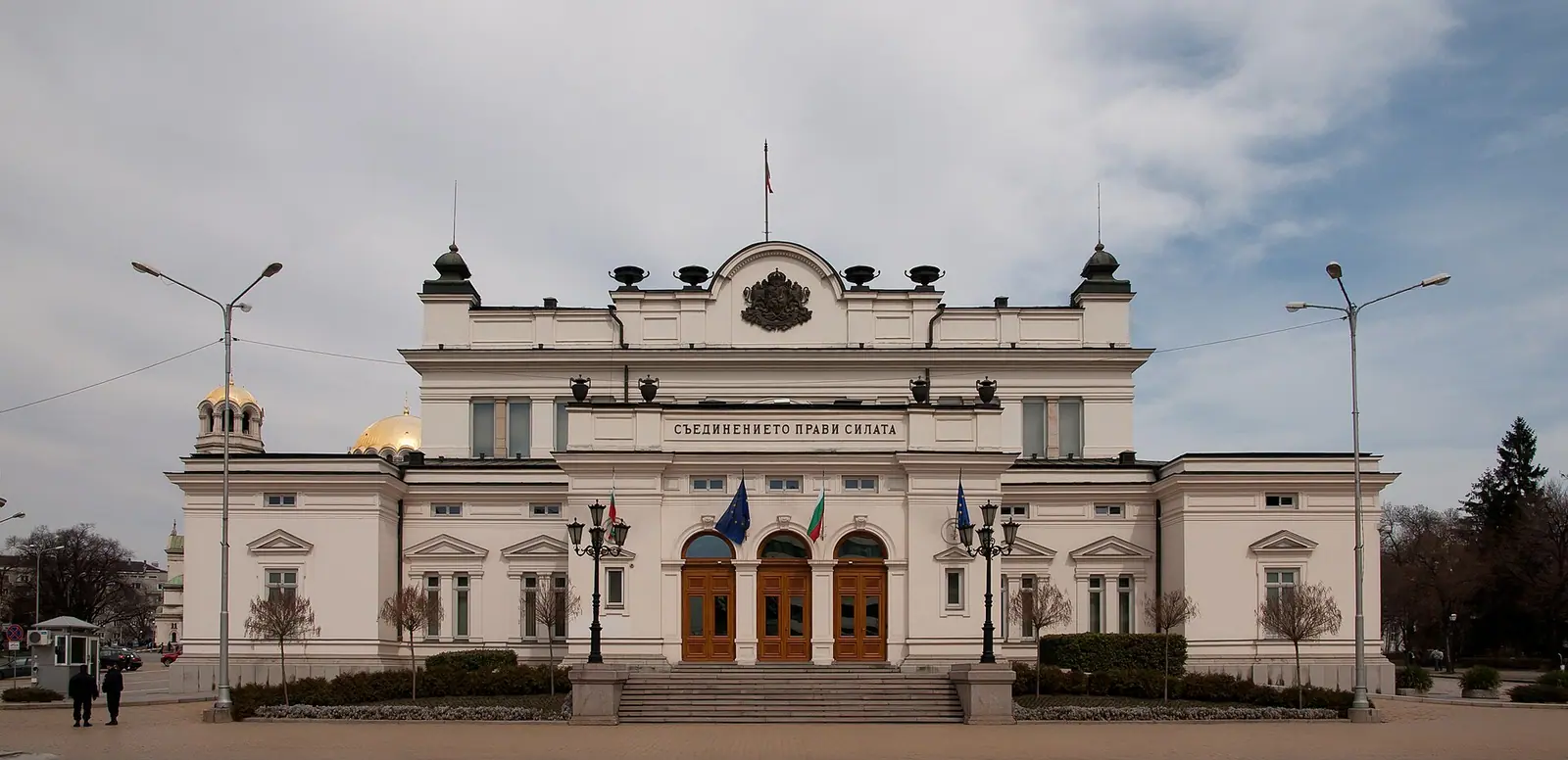
The GERB-UDF parliamentary group has officially announced a change in its approach to the current administration. In a declaration read from the parliamentary podium, Toma Bikov stated that the political formation is shifting from a mode of "constructive opposition" to the role of a "critical opposition." According to him, the tolerance shown during the cabinet's first 100 days was a matter of political culture, but in the upcoming session, that attitude has become a luxury the opposition can no longer afford. In its new role, the group will focus on clearly pointing out every single mistake made by the current cabinet.
In his analysis, Bikov characterized the Rumen Radev government not as reformist, but as transitional. The main reason for this assessment is that the cabinet is driven solely by narrow partisan goals. In doing so, the government deprives itself of a long-term perspective for consolidating the nation around common strategic goals. Although it holds a full majority in the National Assembly, the cabinet suffers from a lack of an effective decision-making mechanism that produces real results and new developments, rather than just words and phrases.
The MP emphasized that the biggest challenge facing this government is not the opposition in all its components, but its very essence and its inability to adequately meet the commitments arising from its full parliamentary majority. Toma Bikov recalled that a cabinet's first 100 days are usually used to set a new direction, take unpopular measures to overcome crises, or serve as a "honeymoon" period during which the opposition and media welcome the new ministers. Instead, the current administration has shown no potential for a new direction or dynamics. The full majority of "Progressive Bulgaria" suggested the mobilization of energy for large-scale structural changes, but instead, it produced daily complaints, observations, and misunderstandings.
GERB-UDF's assessment is that the cabinet is composed of "observers" rather than people who are ready, capable, and will succeed. This position is not dictated by the role of the opposition, but is a symptom of concern that Bulgaria is missing a significant opportunity to mobilize public energy in a positive direction. This is particularly dangerous in times of geopolitical instability, technological revolution, and the state lagging behind the pace of businesses and citizens. The lack of desire for reforms could lead the government to a situation where it proves to be of a short-lived, transitional nature, moving from one political crisis to another.
In his declaration, Bikov highlighted two major tasks for the upcoming session:
- Adoption of the 2027 budget, where a change in approach compared to the 2026 budget is expected, along with the materialization of requests for structural reforms and a tangible reduction in the budget deficit.
- Election of a new composition of the Supreme Judicial Council (SJC), which requires a 2/3 majority. GERB-UDF confirmed it will not nominate its own candidates, but this does not mean automatic support for others, nor participation in backroom deals. The responsibility for finding consensus with the opposition lies entirely with the ruling party.
In conclusion, Toma Bikov warned that the campaign for the election of President and Vice President of Bulgaria will consume half of the session's time, which could disrupt the normal rhythm of parliamentary work. Nevertheless, GERB-UDF expressed hope that the political debate will be conducted in an argumentative manner.
Коментари (0)
Все още няма коментари.