
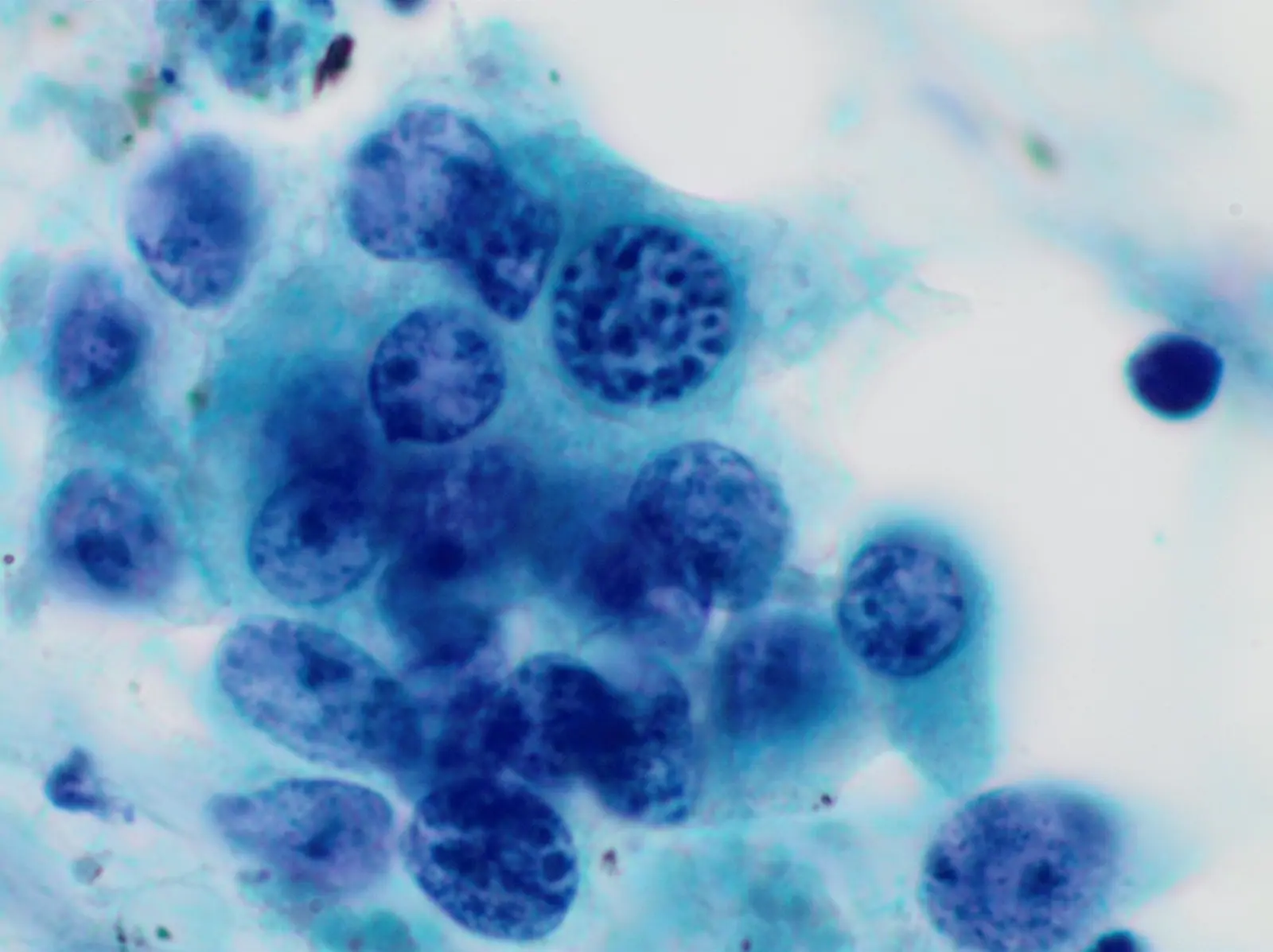
Doctors at Grenoble University Hospital in France are testing a new way to treat pancreatic cancer: tiny radium rods placed directly inside the tumour. The rods give off radiation on the spot and stop the tumour growing.
The ACAPELLA study will include 40 people with pancreatic cancer. Doctors in Grenoble are due to implant the first rods at the end of April.
The pancreas is the gland that makes insulin and other enzymes for digestion. Pancreatic cancer is among the most dangerous cancers: only about 10% of people diagnosed live more than 5 years. The causes are still not fully clear, and the number of cases is rising.
Doctors place the rods using endoscopic ultrasound. Pierre-Yves Heurault, who takes part in the study, says this gets them very close to the tumour. They go through the digestive tract, which lies right next to the pancreas, so they can place the radiation sources precisely. The rods sit about 3–4 millimetres apart so that the whole tumour gets radiation.
The study has recorded only 2 serious side effects so far, and both have been brought under control. One participant in the study says the side effects are mostly mild or moderate and serious ones are very few, so the safety profile is very encouraging.
Another international team based in France has shown that special antibodies can be used against this type of cancer. They attach to tumour cells and make them visible to the body's defences and to different treatments. Scientists in the US are working along the same lines. The hope is that large tumours with many metastases will shrink and can then be operated on, while cancer cells elsewhere in the body are destroyed.
Prof Ivelin Takorov of the Military Medical Academy in Sofia, one of Bulgaria's leading experts on pancreatic tumours, told BNT that both methods are very promising. With the rods, a higher dose of a radiopharmaceutical builds up in the tumour. This is a drug that gives off radiation, and the radiation kills the tumour's cells.
The professor explained that the antibodies are a synthetic molecule. It attaches precisely to the cells of pancreatic ductal carcinoma, a type of pancreatic cancer, and makes them recognisable to drugs or immune cells. This is needed because cancer cells are 99.99% identical to healthy ones, and the immune system has trouble spotting them.
Prof Takorov said Bulgaria has no very accurate statistics on the disease. About 1,000 new cases are found in Bulgaria each year, but only around 300 can be treated with a radical approach, meaning a full cure. About 700 people die each year.
The professor puts the grim figures down to the fact that the disease cannot be found early. "Any symptom at all already borders on a very advanced pancreatic cancer, and in some cases one that has already spread," he told BNT.
The main warning sign is jaundice, which appears earlier if the tumour is close to the bile duct. Tumours in the tail of the pancreas have the same histology, meaning the same type of cells, but with these the first sign is usually pain. By then the tumour is most often already 10–12 cm and often has metastases in the liver. At that size it cannot be operated on, because blood vessels run alongside it.
For now, only surgery offers a chance of a full cure, Prof Takorov said. In most patients the disease is not cured even after surgery and chemotherapy before and after it, because the tumour is very aggressive.
"Surgery on its own is an archaic method of treating these diseases, because it can only act locally," the professor said. An operation removes only the visible tumour and some visible metastases. Only a drug in the bloodstream can deal with cancer cells that travel in the blood.
For breast, colorectal and lung cancer there are already many molecules that attack tumour cells selectively, he said. He added that many recent discoveries give hope that these cancers will soon be treated with drugs rather than surgery.
The studies in France are at an early to middle stage, but they clearly give hope, Prof Takorov said. He said it will take at least 5–10 years before they become standard practice.


Comments (1)
40 човека? дано им мине добре на всички!