
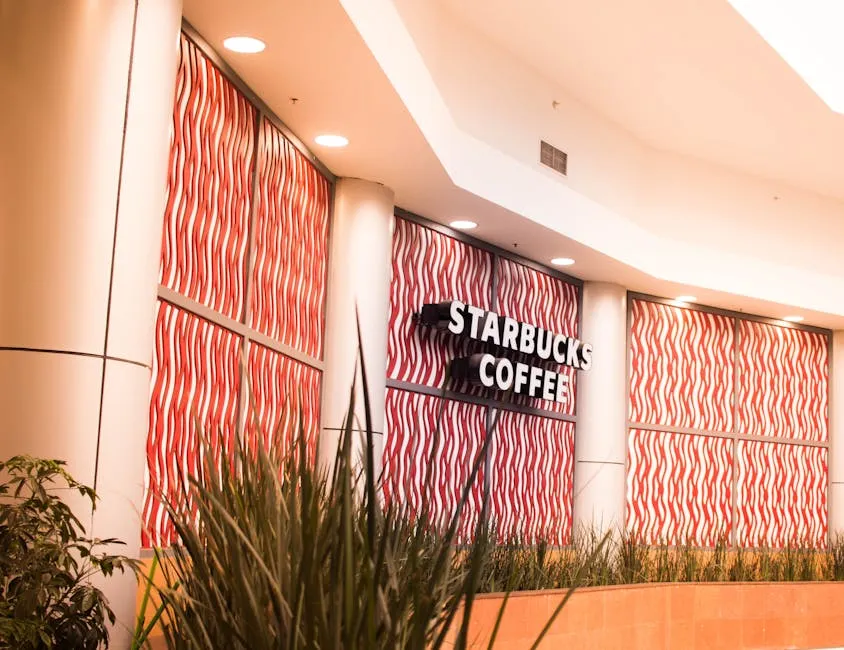
Starbucks management is taking a radical step in its corporate policy by requiring management team employees to be physically present in the office four days a week, starting from October this year.
The new directive, announced by CEO Brian Nichol, applies to employees in the US and Canada and represents a significant tightening of the previous remote work rules introduced during the COVID-19 pandemic.
The company offers a one-time financial compensation to employees who do not wish to comply with the new requirements. This decision is part of a large-scale restructuring strategy aimed at improving operational efficiency.
Nichol emphasized that the change is driven by the need to restore the "human connection" in the organization. According to him, the new approach will help the company overcome challenges related to declining sales and organizational difficulties.
In addition to the change in work schedule, certain managers will be required to move to central offices in Seattle or Toronto. Nichol himself recently moved to Seattle, even though his original contract did not require it.
This initiative fits into a broader corporate trend where leading companies like Amazon and JP Morgan are reviewing their remote work policies. Studies from leading universities show that about one-third of employees capable of working remotely have already been brought back to offices.
Changes at Starbucks also include other large-scale transformations, such as menu revisions, review of venue usage rules, and job cuts. In the past year alone, the company reduced its staff by 1,100 employees.
Management acknowledges that not all employees will agree with the new approach, but remains firm in its position that this is the necessary strategy for the company's future development.
Market analysts will closely monitor how this change will affect employee satisfaction, productivity, and potential talent drain from the organization.
Starbucks' decision is indicative of changing attitudes towards the work environment in the post-pandemic period, where hybrid models are gradually giving way to more traditional office formats.


Коментари (3)
Отново работодатилите решават как да живеем!
те пак ще загубят добрите си служители.
поредната глупост - явно не разбират хибридната работа.