
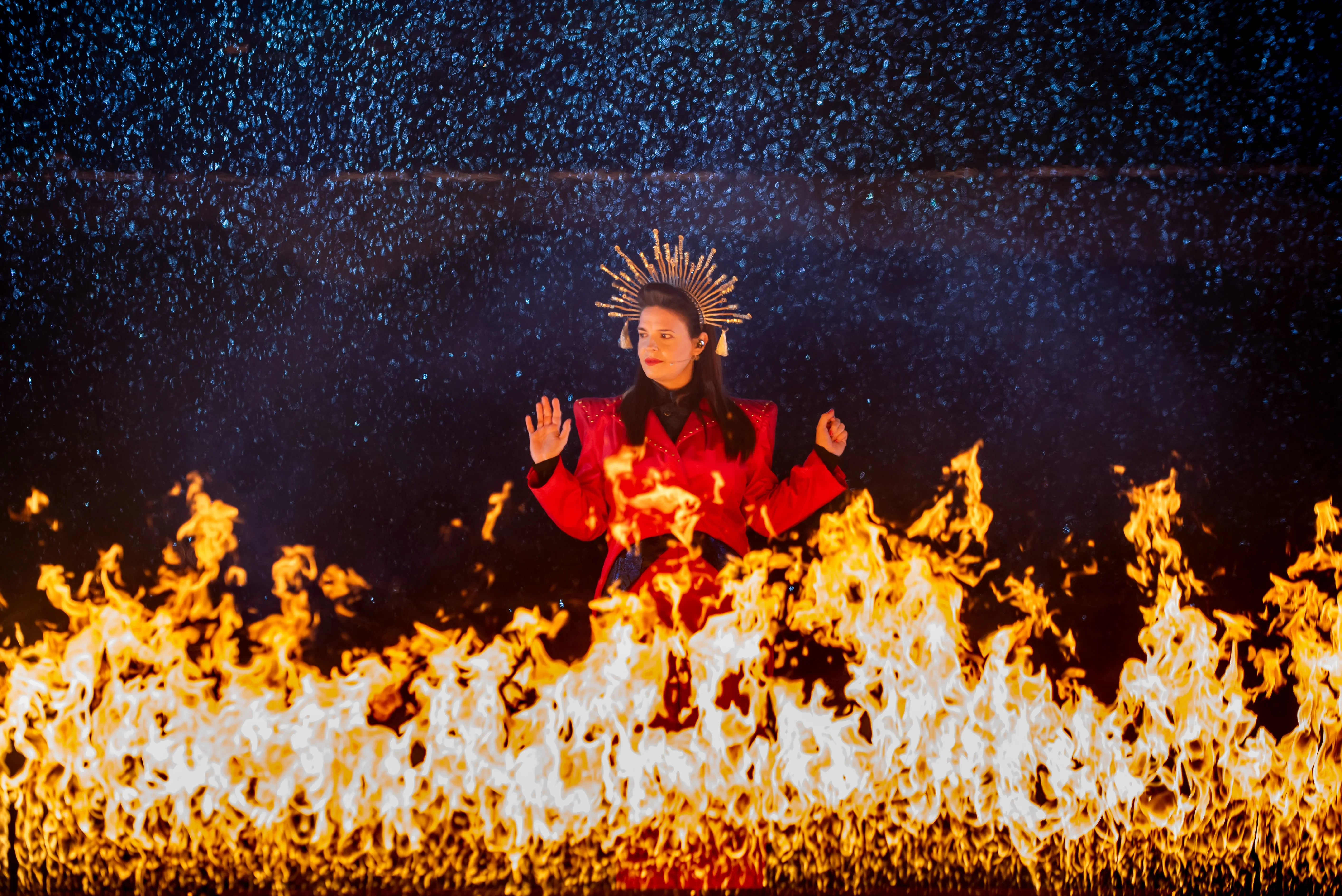
"Passing through fire is an act of purification - both personally and collectively." This belief is at the heart of the latest performance by the State Puppet Theater - Burgas, titled "Nestinari", shared director and concept author, Petar Todorov, in an interview for the Bulgarian Telegraph Agency (BTA). The large-scale visual production was tasked with opening the first part of the 15th edition of the festival for physical and visual theater "The Age of Aquarius" on the stage of the NHK Cultural Center.
Work on the project began more than a year ago. The theme of fire-dancing, according to Todorov, is deeply rooted in the Bulgarian worldview. He explained that this is an ancient tradition, passed down through the centuries. "It started as pagan customs, then was recognized by the church, and at one point it may have renounced it. But that's not what interests us," the director noted. The team aims to recreate the contemporary experience and symbolism of purification, he emphasized.
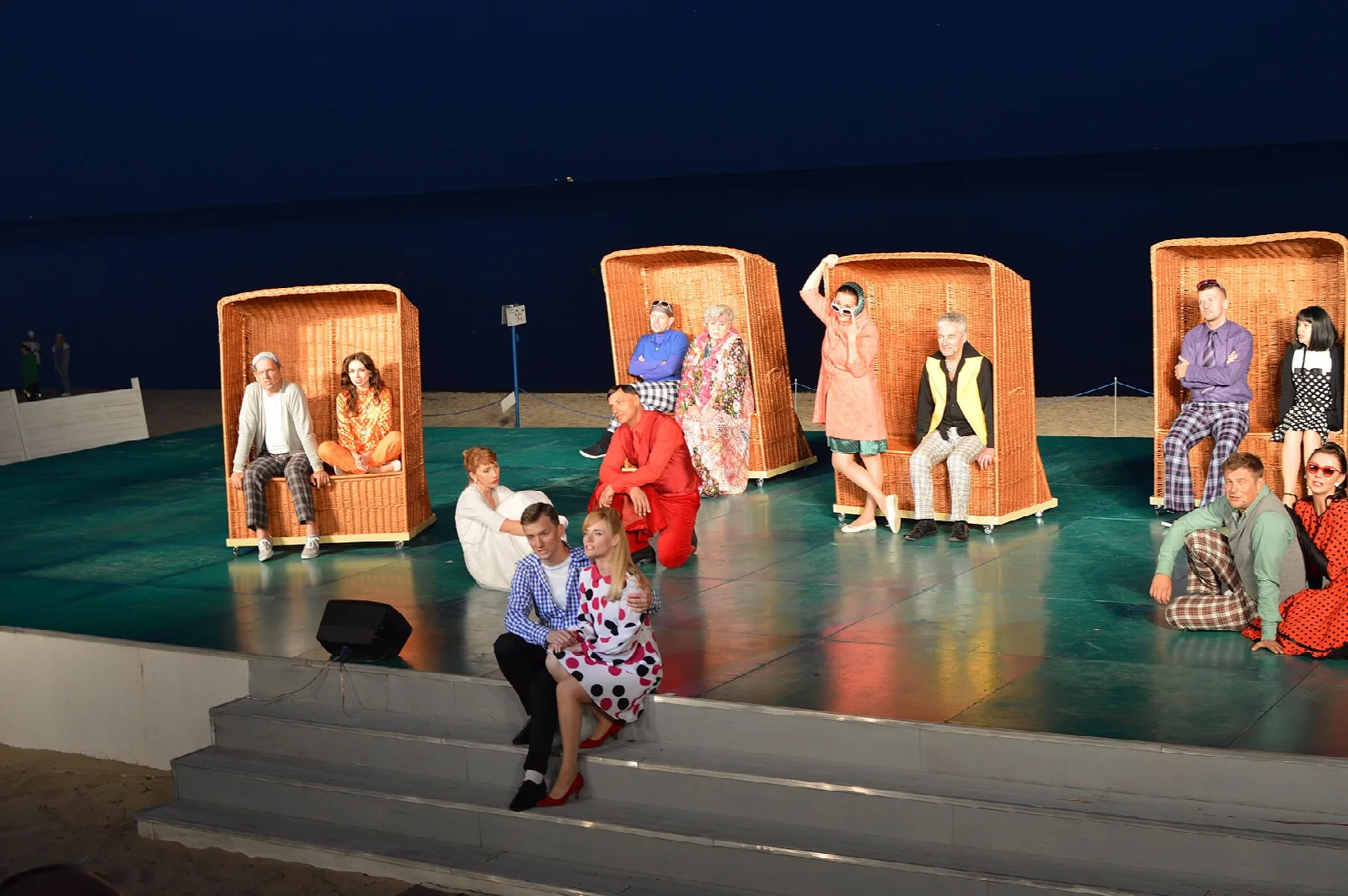
The performance aims to present a generalized image of the fire-dancers. The story is to unfold on stage with the participation of 14 actors - almost the entire theater cast - who create a collective character, representing, according to Todorov, the whole society. "With this performance, we want to suggest that our society needs a common, collective purification. The very act of passing through fire is a purification of the soul, of energy, and after it we all come out cleaner, more free. Let's make a common effort and start again - from scratch," the director also said.
"Nestinari" is defined as the largest production of the theater for more than half a century. The project is implemented under a program funded by the National Recovery and Resilience Plan. This allows the formation of a large creative team. In addition to Petar Todorov as author and director, Hanna Schwarz (scenographer), Petya Stoykova (choreographer), Petya Boyukova (costume designer), Petya DImanova (composer), Ivelina Ivanova (video design) and the puppet constructor Ayten Ogjudju from Turkey participate in it.
The screenwriters are faced with the challenge of staging the performance on a stage that is larger than that of the Puppet Theater. "Our goal was to go beyond our usual space and go to larger stages. The NHK Cultural Center is the largest stage in Burgas, and we hope the performance will have a long life on other similar stages," Todorov shared. The performance is scheduled to visit with two performances at a festival in Malmö, Sweden, in November.
The premiere of the performance in the city is tasked with opening the first part of the 15th edition of the festival "The Age of Aquarius". The event was created by Petar Todorov in 2000. The forum is among the established events for contemporary stage forms in our country and this autumn will present 12 productions from Bulgaria, Iceland and Sweden. The second part of the edition is planned for the period between February 16 and 22, 2026. "The festival started 25 years ago as a space for innovative stage forms - physical and visual theater, dance, puppet theater, performance. Back then, these hybrid genres were not well known in our country. I am glad that the festival continues its life for the 15th edition," Todorov noted. The program of the autumn part will take place between October 15 and 19 on the main stages in the city - NHK Cultural Center, Drama Theater "Adriana Budevska", the stage of the Puppet Theater and Cultural Center "Morsko Casino".
In conclusion, Petar Todorov emphasized: "You have to go through something extreme to free yourself from the old and look ahead. To start again, from scratch - that is the idea of our performance". After the premiere on October 15, "Nestinari" will be staged again on the stage of the NHK Cultural Center on October 16 and November 12, as well as in the second part of "The Age of Aquarius" in February 2026. A trembling anticipation is felt in the hall before the opening of the curtain.
Коментари (15)
Абе моля те
Хехе, куклените ги прави не само за децата
аз така мисля, че куклен театър може да бъде не
Здравей, като се ходи по улицата, чует с
Здравий, че някаква култура се развива