
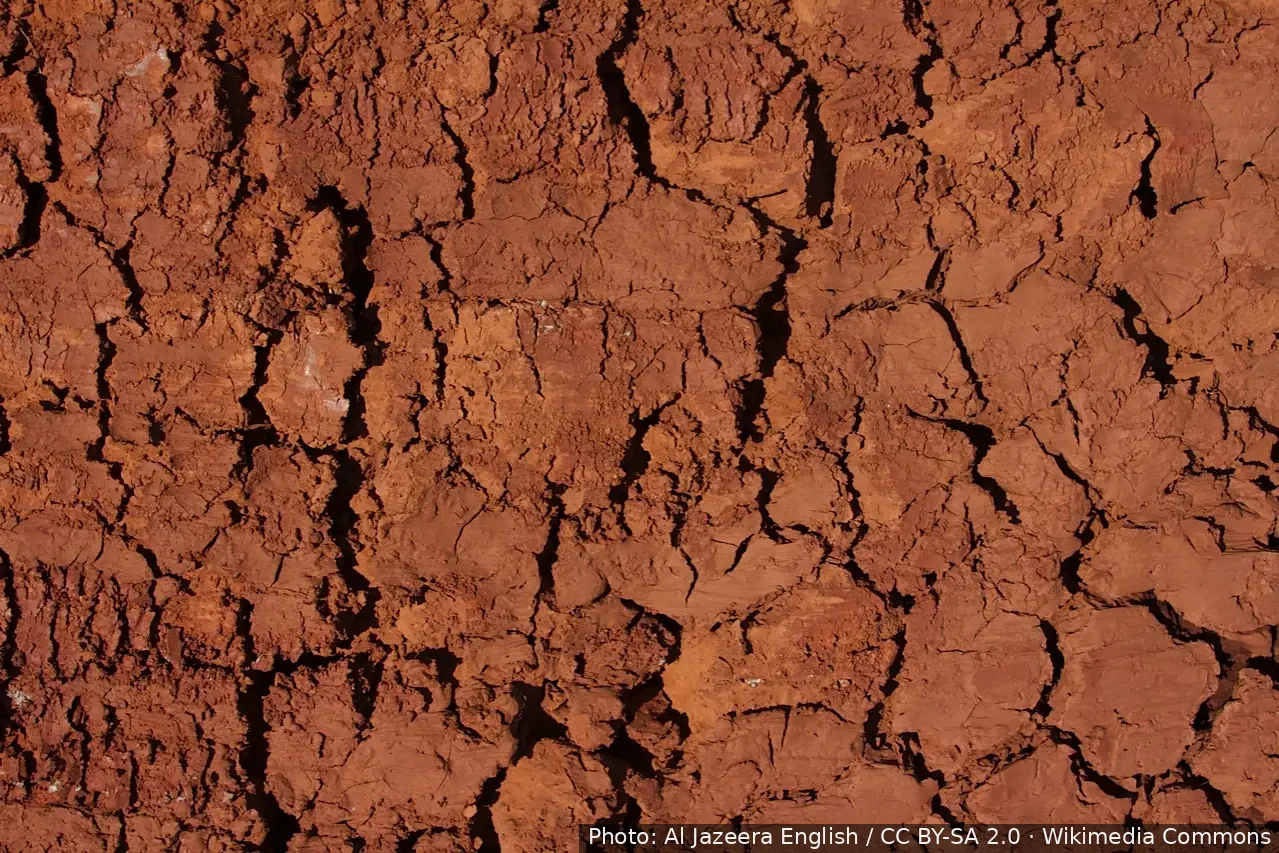
Bulgaria is highly vulnerable to climate change. Drought and heat cost it about €1bn in 2025, close to 1% of its economy or around €140 a person, said Assoc. Prof. Maria Trifonova of the Faculty of Economics and Business Administration at Sofia University "St Kliment Ohridski". She spoke today at a conference in Sofia, "Global Scientific Data in Support of the COP31 Climate Talks". It is a side event to COP 31, the conference of the parties to the UN Framework Convention on Climate Change, now under way in Antalya, Turkey.
In the new Climate Change Performance Index (CCPI) 2026, Bulgaria ranks 40th out of 63 countries, 11 places higher than a year earlier.
The meeting focused on climate science and global efforts to limit change. Students, academics, experts and journalists were in the hall. Students presented the year's big international reports. Lecturers, a former environment and water minister, a banker and an officer from NATO's crisis management centre then commented on them.
Trifonova based her talk on the UN Environment Programme (UNEP) report "Emissions Gap Report 2026". Global reports show the goal of limiting warming to 1.5 degrees Celsius above pre-industrial levels has already been missed.
Trifonova said climate change has a clear economic and social cost. As part of south-eastern Europe, Bulgaria is a natural "hot spot", especially in summer, and rainfall totals and the way rain falls through the year are changing sharply. By the middle of the century Bulgaria can expect 10-20 days a year of extreme heat, and by the end of it the number could reach 50-60. In recent years it has been among the EU countries with the most deaths linked to extreme heat and other climate events.
If such events keep recurring or become more frequent, the damage could reach 3.5% of GDP.
Energy poverty in Bulgaria was above 20% in 2023. People in it have little room to adapt to heat and drought, Trifonova said. She said investing on time in city infrastructure, the water and sewage network and the energy efficiency of buildings matters most. Each euro spent on adapting to the climate can return up to 700 times its value.
Yulian Popov, environment and water minister in 2013, in 2023-2024 and in April 2026, commented on the CCPI. The index is produced by Germanwatch, the NewClimate Institute and Climate Action Network, and it also covers the EU as a whole. The authors say Bulgaria rose because it gets more electricity from renewable sources. But its rating stays low because it meets only the minimum EU requirements on energy efficiency, the share of green energy and climate policy. Popov said such rankings usually draw "constructive scepticism". He noted that Bulgaria is among the first countries with a climate law modelled on the British one. The UK has had such a law since 2008.
Popov said the better ranking is down not to policy but to entrepreneurs. As an example he pointed to the boom in Bulgarian battery companies, most of which operate outside the country. He called on the authorities to listen more to business and the market.
A first-year student presented the report "State of Finance for Nature 2026: Nature in the Red". In 2023, money flows that harm nature came to $7.3tn, of which $4.9tn came from the private sector and $2.4tn from the public sector. About $220bn went to solutions that help nature, roughly 30 times less. Nine in every ten of those dollars come from public institutions and one from private ones.
Kalina Kisyova, director of corporate segment and SME product development at UBB, said these ratios show how big the private sector's opportunities are in nature-friendly investment. She said funding will grow in real terms and in stages, based on sound decisions. Banks and businesses now look beyond carbon emissions, because risks to nature also have a financial side, she said. The effect of money spent on adapting to the climate is hard to measure, but models help and risks are becoming easier to quantify. The biggest challenge is the availability of climate and carbon footprint data and how far it can be trusted. A universal approach to funding matters more, and there is "still something to build" there, Kisyova said.
She said the approach to sustainability is becoming more practical, and firms look for efficiency that helps them compete. The stage of "activism and the wish for self-promotion" in sustainable investing is over, Kisyova said.
Another student presented the World Economic Forum's "Global Risks Report 2026". It records rising uncertainty, sharper competition between countries, a retreat from shared agreements between states and geoeconomic confrontation. Young people worry most about this confrontation and the two wars nearby, in Ukraine and in the Middle East.
In recent years, states have used political and economic instability as a weapon and a way to put pressure on each other, said Major Ralitsa Bakalova of the NATO Centre of Excellence for crisis management and disaster response. She said preparation and prevention matter most, because resilience is built before a crisis. Institutions need lines of communication with each other and with the public. The lesson of the Covid pandemic is that preparation must start with the analytical and strategic units and pass down the chain from there, Bakalova said.
A first-year student presented the 2026 report "Are We Ready for the Predictable? Ecological Overshoot and the Unpreparedness of States" by the Global Footprint Network. It compares 31 countries on how fast they use natural resources and how much strain they put on ecosystems. Bulgaria is not among them, but the student applied the method to the available data for the country. The day after which humanity can no longer replace what it has used came this year on 30 July.

Comments (0)
No comments yet.