
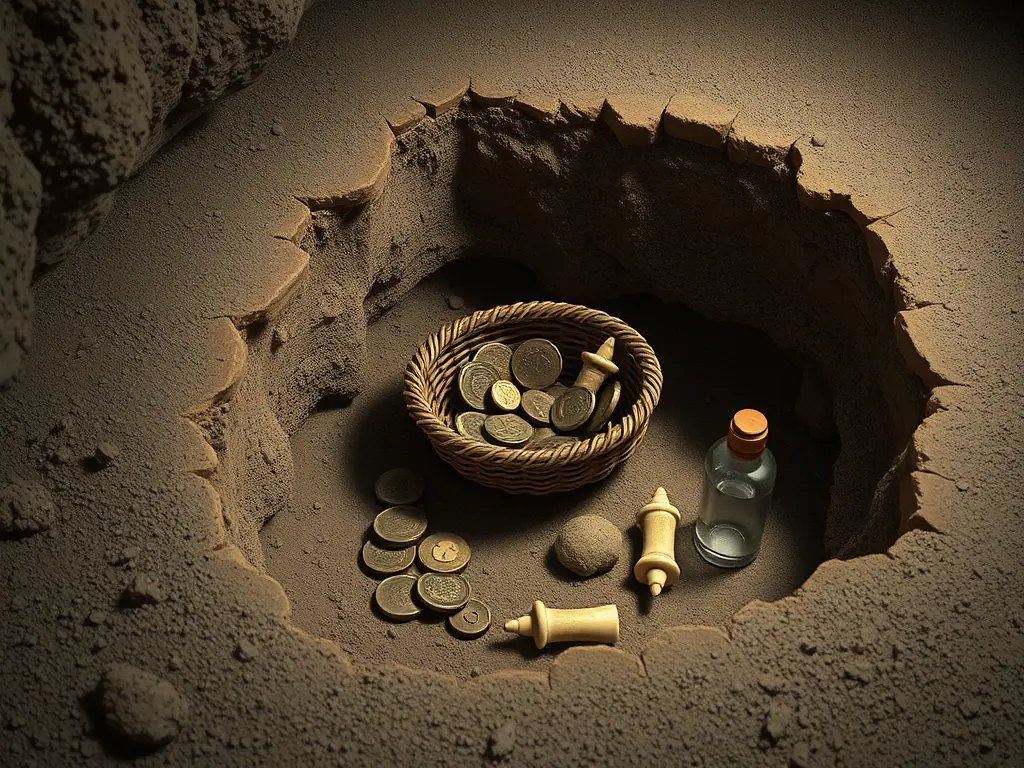
The wood of the cabinet rotted away long ago, but the volcanic ash that buried it in AD 79 hardened around it and kept its shape. In a house on Via dell'Abbondanza in Pompeii, archaeologists have been able to read not only the objects but the furniture itself. Inside, they found a child's necklace of amulets, 38 bronze coins and lead weights.
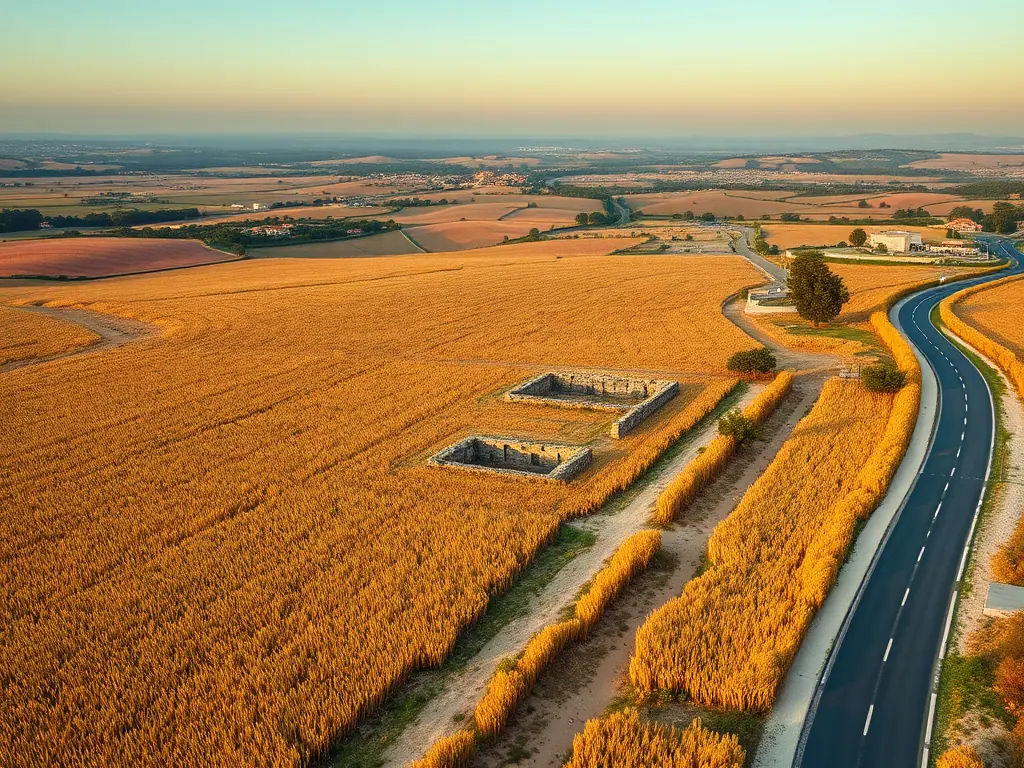
The house is listed as IX 11, 7 and is often called the House of Cornelius Maximus. Its facade was dug up as early as 1912, but the rooms behind it have only now been studied, during restoration of the neighbouring complex, the Insula dei Casti Amanti.
How the ash kept the shape of the cabinet
The method is the same as for the plaster casts of victims that Giuseppe Fiorelli made in the 1860s. Fine ash settled around the cabinet and set hard. The wood decayed and left a three-dimensional hollow. Archaeologists lift the objects out of the deposits that built up as the wood broke down.
According to one source, the cabinet is a corner unit with two sections of about two metres each, and it stands in the south-east corner of the room. Its walls are made of overlapping slats on a base of thick planks. Two iron posts and two iron clamps fixed it to the floor. The ceiling collapsed in the eruption, but more than half of the height survives.
What lay inside
The most striking find is a necklace of at least 24 tiny amulets made of faience, bone, glass paste and rock crystal. Each has a hole so it can be strung. They show the gods Bes and Mercury, hands, feet, pine cones and bunches of grapes. The Romans called them crepundia. They hung them on children for protection, and the rattling told adults where the child was. Many people kept them into adult life. This set was in a cloth pouch in the cabinet.
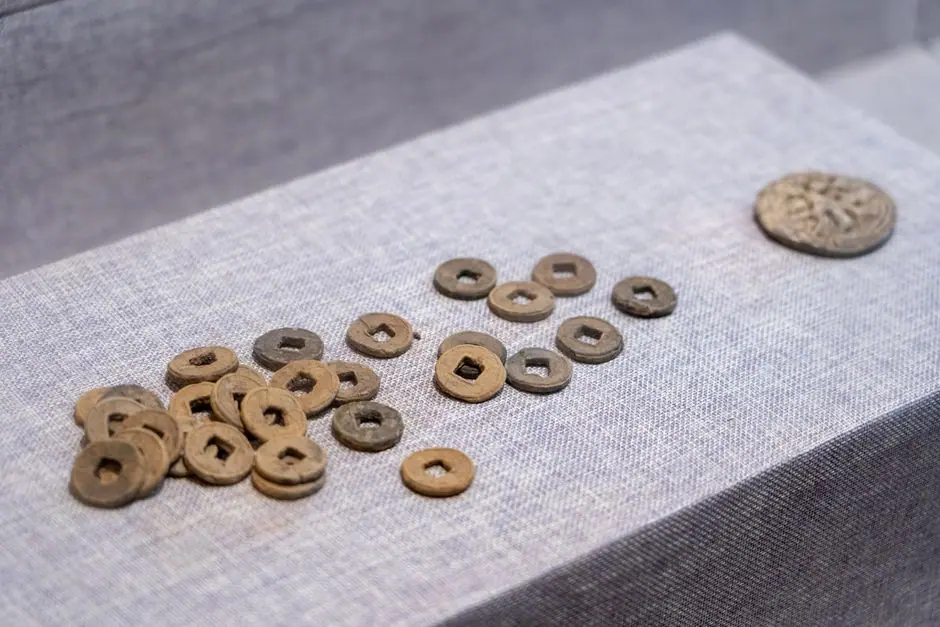
The 38 bronze coins were in a small woven basket made of plant fibre, of which only fragments survive. The lead weights were in a small wooden box that has left only traces. According to one source, there are eight weights, six of them with iron handles, and the park administration links them to trade. The cabinet also held tweezers, a glass bottle for perfume or ointment, an incense burner, a bronze lamp and vessels of bronze, glass and pottery.
In an amphora on a raised shelf, archaeologists found the bones of two small mice, 117 fragments in all. The same room has wall paintings in the Fourth Style, attributed to a workshop on Via di Castricio, which point to a fairly good standard of living. But the house was being renovated when the volcano erupted.
Nobody knows who lived here
Park director Gabriele Zuchtriegel is firm about the occupants: "We cannot establish with certainty the identity of the person who lived in the house." The name Cornelius Maximus comes from inscriptions on the facade that can no longer be read.
The park says the owners may have fled and never returned, died in the eruption, or died later with no heirs to claim their belongings. Archaeologists say the coins and amulets left in the cabinet show that people had no time to take their valuables. According to one source, the park believes the objects point to the daily life of a woman, but who exactly she was is not known. Zuchtriegel adds that such small items "give back the human dimension of the past".
Trapani describes the find in the "E-Journal degli Scavi di Pompei", volume 11, 2026, in a paper titled "Excavations of a domus in insula IX 11: discovery of a storage cabinet with crepundia".


Comments (0)
No comments yet.