
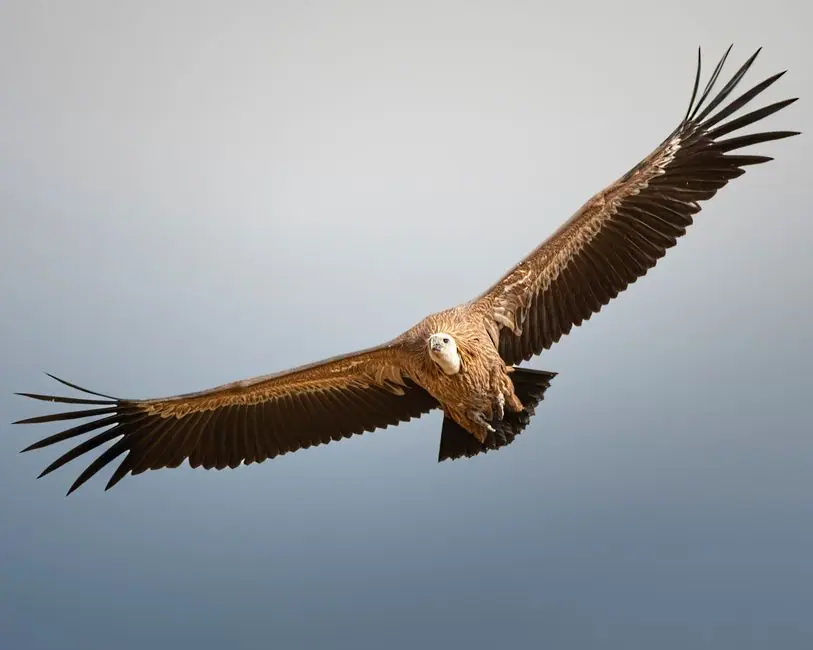
An Andean condor and a trumpeter swan both weigh about 11kg, but the condor uses about five times less energy per kilometre of flight, a 79% difference. The condor flaps its wings for about 0.1% of its time in the air, while the swan flaps for about 99%. The figures come from a study in the journal Science, published on 15 October 2026. The study says the textbook ranking, with swimming cheapest, then flying, and running the most costly, does not hold in the wild.
The study was carried out by the Max Planck Institute of Animal Behavior and Swansea University. Its first author is Martina Scacco.
Data from 850 birds and bats
The old ranking comes from tests in water tanks, wind tunnels and on treadmills. In a wind tunnel the air is still. "Lab rules tell us the condor and the swan should have the same energy bill," says Professor Emily Shepard of Swansea. She says observation shows otherwise, because one bird soars and the other flaps.
The team fitted no new tags. Instead, it pooled data from projects run by 68 scientists. These include 17 years of GPS and accelerometer (motion sensor) data from 850 birds and bats of 38 species, plus four years of radar data on 12 size groups of smaller fliers. In all, the study covers 50 species, from about 12 grams to more than 11kg. The tracked animals weigh at least 250 grams. The analysis covers nearly 195,000 straight flight segments, such as daily commutes and migration.
Accelerometers show how long an animal flaps and how long it soars. GPS routes are checked against models of wind and rising air along the way. That gives an estimate of the energy spent per metre, much like fuel use per 100 kilometres. Scacco describes it as "fuel economy, the natural equivalent of miles per gallon".
Birds that soar and birds that flap
The analysis sorted the species into two groups on its own: those that soar and those that flap. Among the soarers, heavier birds flap less and use less energy. Seven vulture species flew a total of more than 4.3 million kilometres, flapping for only 0.1% to 7% of the time. For them, warm rising air explains energy use far more than wind does. By the authors' calculations, the condor uses about as much energy as a fish of the same weight swimming. The institute's statement says it is even cheaper than swimming.
For the flapping species, average energy use matches lab predictions, but it varies far more from flight to flight. In 12 of 18 such species, some flights cost more than the textbook figure for running. Kamran Safi, another senior author, says the air can raise the cost for these birds as well as cut it: a tailwind helps, a headwind hurts. They often fly in conditions that waste energy.
The soarers' cheap flight comes at a price. They can fly only where and when there is rising air, so they pay in time, not energy. According to Swansea University, the bigger birds in this group are more limited in where and when they can fly. The flappers cope with more varied conditions, but at a higher cost.
An estimate, not a direct measurement
The energy figure is an estimate based on flight style, timing and wind, not a direct measurement. The method leaves out the extra effort of flying into a headwind, which can raise power needs by about 20%, so the effect of the air is probably bigger than the study shows. Wind and rising air together explain about 14% of the remaining differences once body size is taken into account. Bats, soaring ocean birds and small songbirds remain the least studied.
The authors see a link to climate. "If atmospheric conditions change, the cost of flight will change too," says Safi. That could affect routes, migration timing and where species live, but Scacco says the study does not yet predict which routes will change.
The next step is to measure energy use directly, for example with heart rate monitors, to capture differences between individual animals.





Comments (0)
No comments yet.