
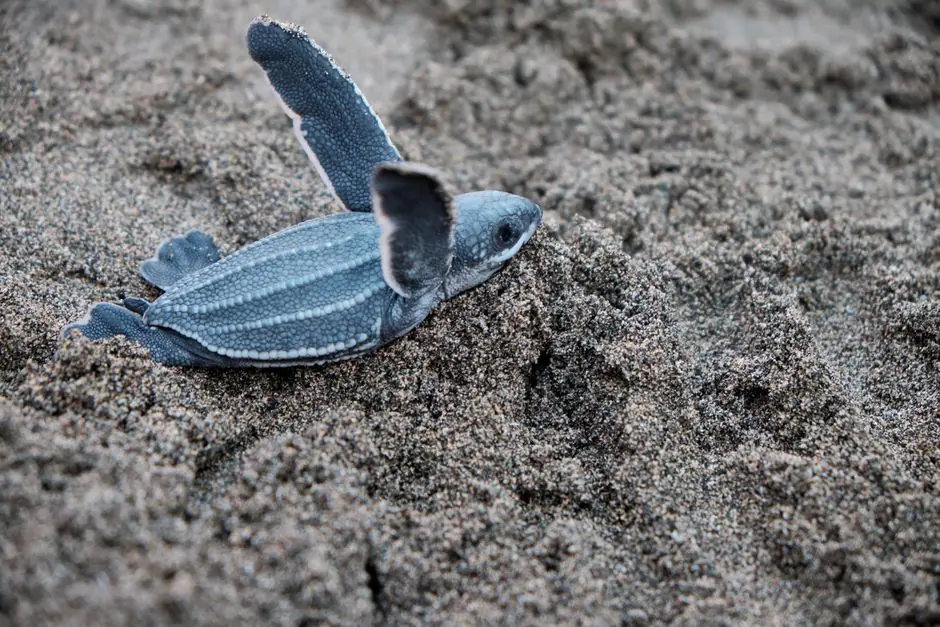
A record number of eastern Pacific leatherback turtle nests were found on several beaches in Ecuador in the 2025–2026 season, a new study says. The beaches are more than 1,000 miles (about 1,600 km) from the traditional nesting sites in Mexico and Costa Rica. The authors see this as a possible sign that the species is adapting to a warmer ocean. But nesting in Ecuador is still rare, and the publications do not give the exact number of nests.
The study comes from a team around Juan José Alava of Simon Fraser University in Canada, with colleagues from Ecuador. It appears in the journal Chelonian Conservation and Biology on 19 October 2026. The scientists collected records on the country's coast going back to 1980. These include research papers, conservation group reports, government checks and confirmed sightings on social media. The records cover encounters with females of breeding age, nests, hatchings, nesting attempts and animals washed up on the shore.
Nesting up since about 2000
The team says the number of nesting females has grown since about 2000. For a long time, Ecuador was not known as a nesting site. The authors note that females were rarely seen on its beaches, and no hatchlings have been recorded since 1983. The Reina Laút foundation documented the first successful hatching in Ecuador in 2021. By March 2026 it had logged 14 nesting cases. Ecuador is the southernmost nesting limit for the species in the eastern Pacific.
The number of eggs per nest and the share that hatch are similar to those on the northern beaches. Sometimes Ecuadorian nests produce more hatchlings than usual.
In January 2026, a female named Bella came ashore at Crucita beach in Manabí province. Street lights confused her. She climbed onto a seawall and then onto a pavement without laying any eggs. Two nights later she laid 47 eggs on a quieter stretch of beach. The researchers say she nested four to five times that season. Of her 146 eggs in all, 134 hatched, or 91.8%. Most nests were moved to a hatchery in San Jacinto. On 26 February 2026 the Environment Ministry reported 95 newborn turtles in Manabí: 51 at Cabuyal beach and 44 at Crucita.
Nesting during La Niña
El Niño and La Niña are natural swings in the Pacific. During El Niño the water warms, and during La Niña it cools. The scientists compared the Ecuador records with these cycles. Over the past decade, nesting there has increased during cool spells, or La Niña, in the south-eastern tropical Pacific. The authors say warm spells harm the population, and climate change makes them worse.
Alava describes the finding this way: the females are "adapting their reproductive cycle" to thrive and survive in coastal Ecuador. The university's press release is more careful. It says the findings "suggest" this and that the turtles "may be" adapting. The link with La Niña is a correlation, meaning the two things occur together, but the study is not an experiment that proves a cause. It gives no specific water temperatures, so the claim of "warmer waters" stays general.
Fewer than 1,000 animals in the region
The eastern Pacific population has fallen by more than 90% since the 1980s. Other data put the drop at about 97%, and the species is critically endangered, with fewer than 1,000 animals left in the region. Alava warns that the subspecies is "on the path to extinction" there within the next 60 years. He calls for steps to cut deaths in fishing nets, and to deal with plastic and the loss of beaches. This is his warning, not a calculation from the study.
Between 2011 and 2026, at least 35 dead leatherbacks washed up on Ecuador's shore, many with injuries from fishing and other human activity. The main threat is accidental capture in nets, according to the Reina Laút foundation.
In February 2025, conservation groups sought protection for Punta Bikini beach in Sucre, and a court ordered the municipality to stop sand mining and the movement of machinery there. By January 2026 not a single turtle had come ashore on the beach, and prosecutors are investigating illegal sand mining.
On 20 March 2026, a satellite transmitter was fitted to Lucero at Pajonal beach near Bahía de Caráquez. She is the first leatherback in Ecuador with such a device. Data on her routes and feeding areas could help target steps against deaths in nets.




Comments (0)
No comments yet.