

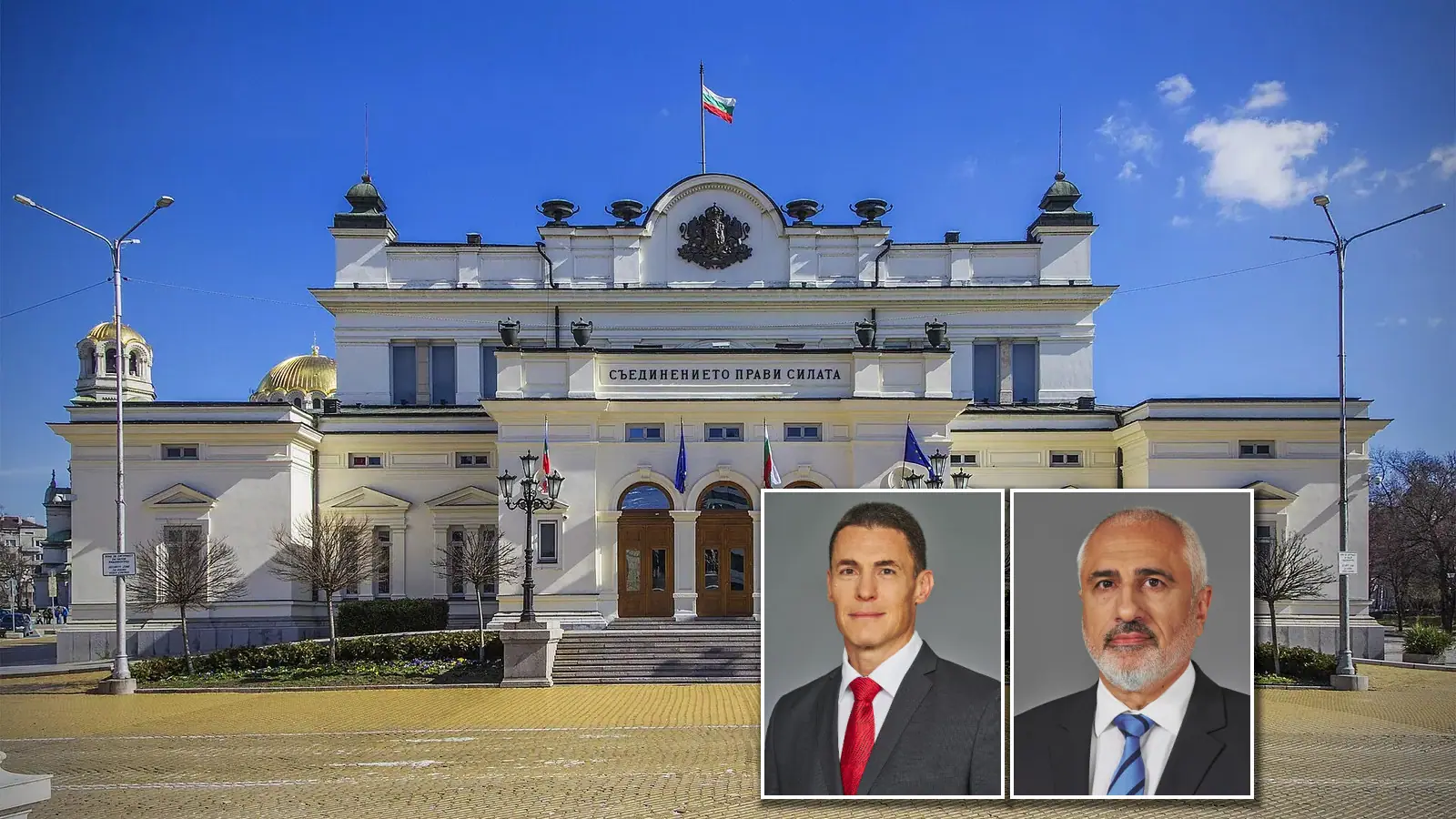
Lawyer Tanya Radulovska, a candidate for the Judges' Chamber of the Supreme Judicial Council (SJC) on the parliament's quota, set out her views on the problems of the courts to parliament's legal affairs committee on Tuesday.
The committee heard the first four candidates for the Judges' Chamber on Monday, the first day of the hearings. The same day, MP Raya Nazaryan told reporters that GERB-SDS could back candidates from both the ruling parties and the opposition.
What happened before: Legal affairs committee hears first four candidates for Supreme Judicial Council from parliament's quota
"For me, the main problem of the courts right now is a shortage of justice, and judges and the public feel it equally," Radulovska said. She said this lack of justice is why people trust the courts so little.
Her plan rests on justice, not on reform and independence. "I do not intend to talk about reform and independence, because somehow, to me, those words have worn thin," she said.
She believes the judiciary is in an unprecedented crisis. She blamed an SJC that has no legitimacy and whose mandate ran out long ago, and whose lasting inaction has shown it cannot solve urgent problems. Radulovska said the council has had a long-standing problem with a lack of transparency. Electing a new SJC must bring better, more efficient and higher-quality justice and restore public trust, she said.
"Progressive Bulgaria" asked her about a public register of meetings of SJC members, and a duty for them to declare contacts with MPs and the executive. She said she backs the register. Meetings should be held in public and openly, she said.
Radulovska also proposes a register of cases at risk of pressure. Cases would be entered by set criteria when they are opened, or when the judge decides he or she is under pressure. She said publicity would protect both the case and the judge. "Democratic Bulgaria" asked her about protecting magistrates. She said the system must move from reactive to preventive steps, because the current ones come too late.
Radulovska says the judiciary's money is spent inefficiently. She proposes programme budgeting and outside expert help in managing finances.
Radulovska was a judge for more than 10 years, then became a lawyer. She has also served as deputy justice minister. GERB-SDS asked her about her role at the ministry. She said she does not see herself as a political figure and has no party membership. When she was appointed, she was assured that no political demands would be made of her.
She is proud of her work at the ministry on the mechanism for protecting magistrates, on cooperation with the SJC and on international adoptions. She said staff at the Bulgarian citizenship directorate spoke of constant pressure in the form of political requests to speed up certain procedures.
"We Continue the Change" asked her about influence networks. Radulovska said that as a judge she had no direct contact with them, but she gave examples of pressure, including the case of judge Vladislava Tsarigradska. "Revival" asked why she left the system. She said that after the current SJC was elected and took its first steps against judges' self-governance, she decided she would see the problems and their solutions better from outside.
"Democratic Bulgaria" and "We Continue the Change" put her forward. The MPs took up her candidacy after a proposal from seven non-governmental organisations: the Anti-Corruption Fund, Bulgarian Lawyers for Human Rights, the Bulgarian Institute for Legal Initiatives, the Bulgarian Helsinki Committee, the Institute for Market Economics, Justice for All and the Access to Information Programme.
The hearings of the 20 candidates run until 6 November on a schedule set in advance. They are streamed live on the parliament's website and on the BTA website.




Comments (0)
No comments yet.