
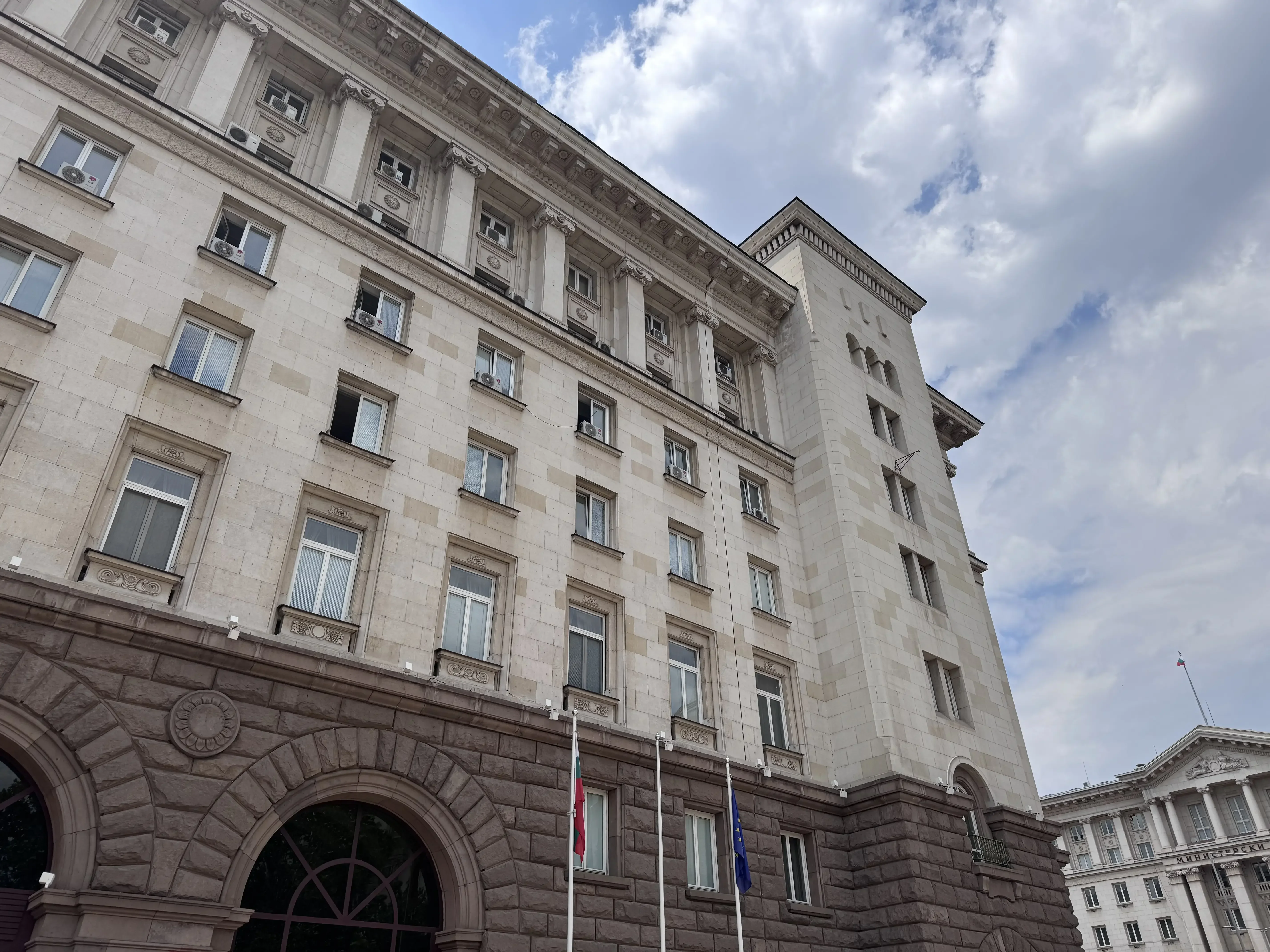
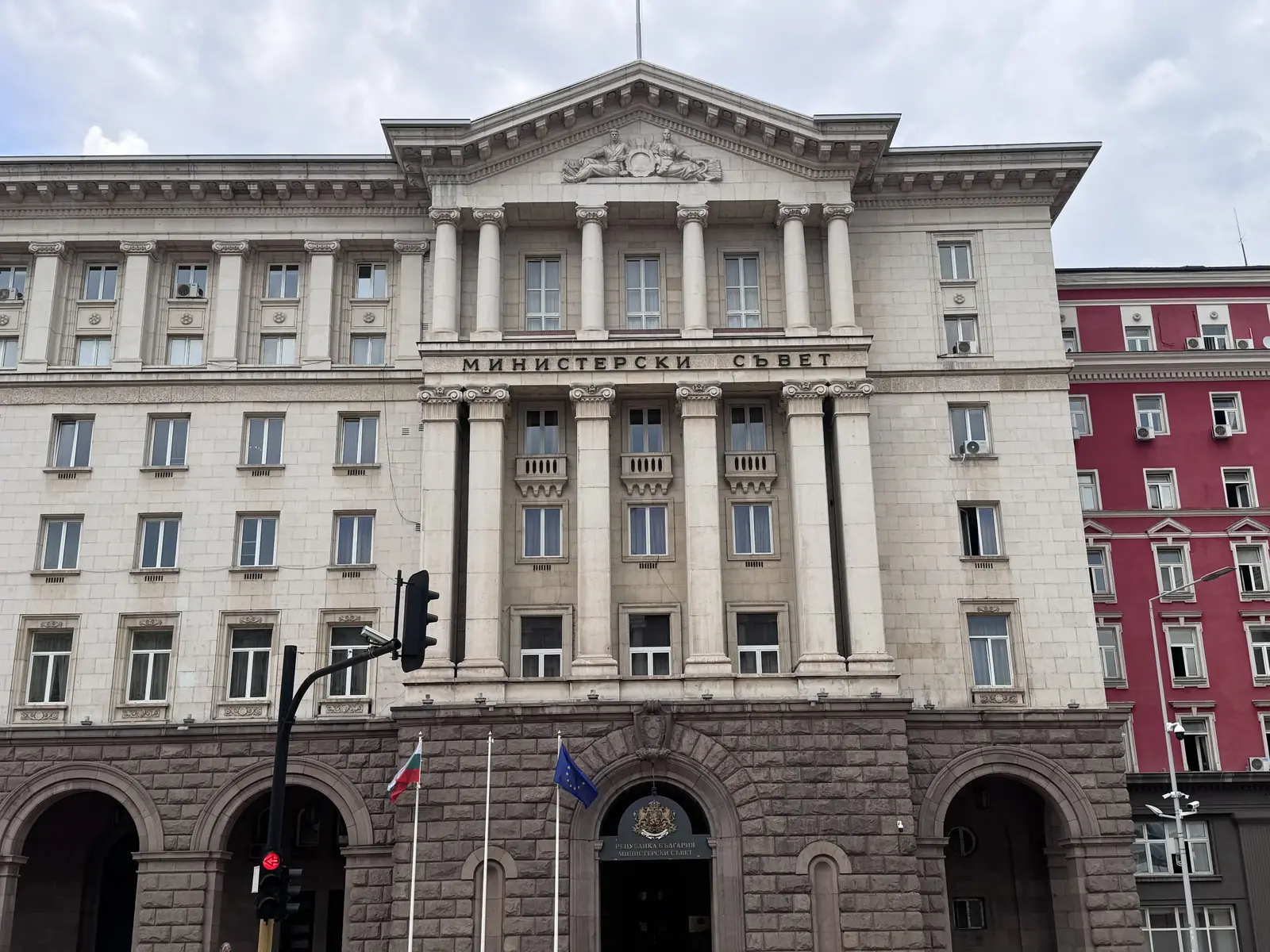
The draft law on the state budget of the Republic of Bulgaria for 2026 has been approved by the Council of Ministers, the government press office announced. The decision was made after an earlier meeting of the Tripartite Council, at which the social partners discussed the main parameters and priorities in the budget.
In addition to the fact that the cabinet approved the draft of the Law on the State Budget of the Republic of Bulgaria for 2026, the government also adopted an updated medium-term budget forecast for the period 2026–2028. It fulfills the role of motivation for the draft law and serves as the basis for the development of the state budget for 2026.
The 2026 budget has been prepared in accordance with the first adopted "National Medium-Term Fiscal-Structural Plan of the Republic of Bulgaria for the period 2025–2028", which includes policies, priorities, reforms and investment intentions in a medium-term horizon. The same are reflected in the national budget documents. With regard to fiscal policy, the priority is maintained to guarantee the long-term sustainability of public finances, with the aim of increasing confidence in the country and creating a predictable investment and economic environment.
In connection with the upcoming introduction of the euro from January 1, 2026, the information and documents on the budget procedure for 2026 have been drawn up in euros. The official exchange rate, defined in Art. 5 of the Law on the Introduction of the Euro in the Republic of Bulgaria – 1.95583 leva per 1 euro.
The initially developed draft budget laws for 2026, which were approved by the Council of Ministers and submitted to the National Assembly in November this year, were subsequently withdrawn by Decision No. 839 of December 2, 2025 of the Council of Ministers. The current project represents a second, revised version of the budget.
The financial calculations for the period 2026–2028 reflect the trends in the autumn macroeconomic forecast for the development of the national economy, as well as the main assumptions and assessments of the effect of discretionary measures on the revenue and expenditure side.
According to the autumn macroeconomic forecast of the Ministry of Finance (MF) for the period 2026–2028, economic growth is expected to reach 2.7% in 2026. For 2027 and 2028, the growth of the gross domestic product is expected to be in the range of 2.5–2.4%. The average annual inflation for 2026 is expected to be similar to that in 2025 – 3.5%, with a slowdown to 2.9% in 2027 and to 2.5% in 2028. The macroeconomic forecast has been confirmed by the Fiscal Council and is close to the expectations of international institutions such as the European Commission, the OECD and others.
The size of the budget balance under the consolidated fiscal program (CFP), expressed as a share of GDP, for the period 2026–2028 is planned to be within a deficit of 3.0% of GDP in 2026, 2.8% of GDP in 2027 and 2.4% of GDP in 2028. Maintaining the deficit within these limits aims to ensure the financing of a number of expenditure policies, supported by the necessary measures to increase revenues.
Based on the assumptions made, the state debt is expected to reach EUR 37.6 billion (31.3% of GDP) in 2026, EUR 43.5 billion (34.2% of GDP) in 2027 and EUR 49.0 billion (36.6% of GDP) in 2028. For 2026, the maximum amount of new state debt that can be taken is up to EUR 10.0 billion, including up to EUR 3.2 billion under the "SAFE" instrument for strengthening the European defense industry.
The minimum size of the fiscal reserve as of December 31, 2026 is set at EUR 2.4 billion.
From January 1, 2026, the minimum insurance income for self-insured persons is set at 620.20 euros. The maximum insurance income for all insured persons is in the amount of 2300 euros for 2026, 2505 euros for 2027 and 2659 euros for 2028.
Tax policy will continue to be aimed at achieving macroeconomic and budgetary stability in the medium and long term, as well as at providing the necessary financial resources for the implementation of the government's expenditure policies. The main goals of tax policy remain related to maintaining economic growth, improving the business environment, combating tax fraud and abuse, and increasing fiscal sustainability.
The total amount of revenues, grants and donations under the consolidated fiscal program is calculated at EUR 50,402.3 million for 2026, EUR 51,546.9 million for 2027 and EUR 54,745.6 million for 2028. The increase in 2026 compared to the expected level of EUR 44,499.2 million for 2025 is mainly explained by newly planned measures on the revenue side and the expected effect of measures adopted in 2025, the impact of which did not fully manifest itself due to the later adoption of the budget for 2025.
In the preparation of the forecast for tax revenues, the following proposals for changes in tax legislation have been taken into account:
- Expanding the scope of goods with high fiscal risk.
- Expansion of the system for electronic tracking of the movement of vehicles transporting goods with high fiscal risk.
- Introduction in the Corporate Income Tax Act of a tax credit for "research and development (R&D)", according to which the taxpayers performing R&D will be recognized for tax purposes an additional 25% of their R&D expenses during the relevant year, subject to the fulfillment of certain conditions. In the event that a long-term intangible asset is formed as a result of the research activity, it is proposed to allow the taxpayer to increase the tax depreciable value of this asset by 25%.
- Continuation of the validity of the new excise calendar for excise rates on tobacco and tobacco products, introduced from 01.05.2025, with the aim of a balanced and gradual increase of excise rates on tobacco products.
- Continuation of the policy of applying tax relief under Art. 22v and Art. 22g of the Personal Income Tax Act (for children and children with disabilities) in an increased amount also in 2026.
- Providing an opportunity for a more favorable depreciation regime for tax purposes for electric vehicles.
From January 1, 2026, an increase in the variable part of the fee under Art. 30, item 3 and 4 of the Gambling Act for licenses to organize gambling games – from 20% to 22% is expected.
The parameters of the expenditures for the forecast period are consistent with the possibilities of the budget to finance the set policies, as well as with the prospects for the development of the public sector, fiscal goals and the priorities of the government. The total amount of expenditures under the CFP is planned at EUR 54,051.9 million for 2026, EUR 55,091.2 million for 2027 and EUR 58,007.1 million for 2028.
According to the national rule under Art. 28, para. 1 of the Public Finance Act, the expenditures are planned to be 40.1% of GDP for 2026, 39.9% of GDP for 2027 and 40.0% of GDP for 2028. It is noted that when applying the activated exception related to the requirement for an increase in defense spending, an effect arises that leads to a reduction of the ratio of these expenses below the threshold of 40%.
The main expenditure policies that led to an increase in the expenditure part of the budget for the period 2026–2028 include:
- Increasing the minimum wage from January 1, 2026 from 550.67 euros to 620.20 euros.
- Updating pensions for work activity, granted until December 31 of the previous year, starting from July 1 of the respective year, according to the so-called "Swiss rule".
- Increasing the amount of the cash allowance for childcare up to 2 years of age from 398.81 euros to 460.17 euros for the entire period up to and including 2028.
- Increasing the amount of the cash allowance for childcare up to 8 years of age from a parent (adoptive parent) from 398.81 euros to 460.17 euros for the entire period up to and including 2028.
- Increasing from 50% to 75% the cash allowance for unused leave due to pregnancy and childbirth under Art. 50a of the Social Security Code, for unused leave for childcare up to 2 years of age under Art. 54 of the SSC and for unused leave for the adoption of a child up to 5 years of age under Art. 53d of the SSC.
- Introduction of a unified income policy by increasing the funds for personnel in the budget sphere for 2026 by 10% and removing the automatic mechanisms for determining the amount of remuneration in separate sectors, linked to the average salary.
- Maintaining the income policy for pedagogical specialists in the system of pre-school and school education.
- Starting a "Program to support resident doctors" with funding in the amount of EUR 30.0 million for 2026.
- Increase of funds in the budgets of municipalities as a result of changes in the natural indicators by activities delegated by the state, in the areas of culture, social services, health care, etc. Budgetary relations with the municipalities are planned in the amount of EUR 5,077.8 million for 2026 compared to EUR 4,563.7 million for 2025, which represents an increase of 11.3%.
The capital expenditure funds for 2026 are planned at 7.020 billion euros. Of these, 3.165 billion euros are national funding, and 3.855 billion euros are European funding (including financial instruments and loans).
The continuation of the “Investment Programme for Municipal Projects” is envisaged. The total maximum amount of funds to be allocated in 2026 under concluded project contracts pursuant to Annex No. 3 to the Draft State Budget Act for 2026, including projects assigned and implemented by district mayors in cities with district divisions, will be up to 920.3 million euros. Payments will be made by the Bulgarian Development Bank under conditions and procedures determined by an act of the Council of Ministers.



Comments (15)
евала правителството! 🇧🇬🇪🇺 най-сетне да гледаме напред! 2026-та ще е годината! с еврото ще сме пълноправни европейци, ще има повече инвестиции и работа за всички. три процента дефицит - абе к'во да кажа, по-добре така, отколкото да се молим на
Абе, хора, баси! Най-после нещо свястно! Три процента дефицит – това е добър знак, значи гледат да си пазят главите, че с еврото трябва да сме супер сериозни. Иначе к'во ще стане? Ще ни излезе някой "неочаквано" и пак ние ще плащаме сметката.
Абе, хора... три процента дефицит? Звучи добре на хартия, разбира се. Ама нещо ме е хванало едно такова съмнение. Все пак, помним си какви "фискални чудеса" правихме доскоро, нали? И не ми казвайте, че няма да има някаква „непредвидена ситуация“ – все нещо ще изникне.
Абе, кво става с бюджета? 3% дефицит... дано не е някой трик, да не ни спънат пак по пътя към еврото. Т
Абе, кво значи "актуализират" бюджета? Актуализират го като телефон след 10 години ли?! 😂 Дано само не се