
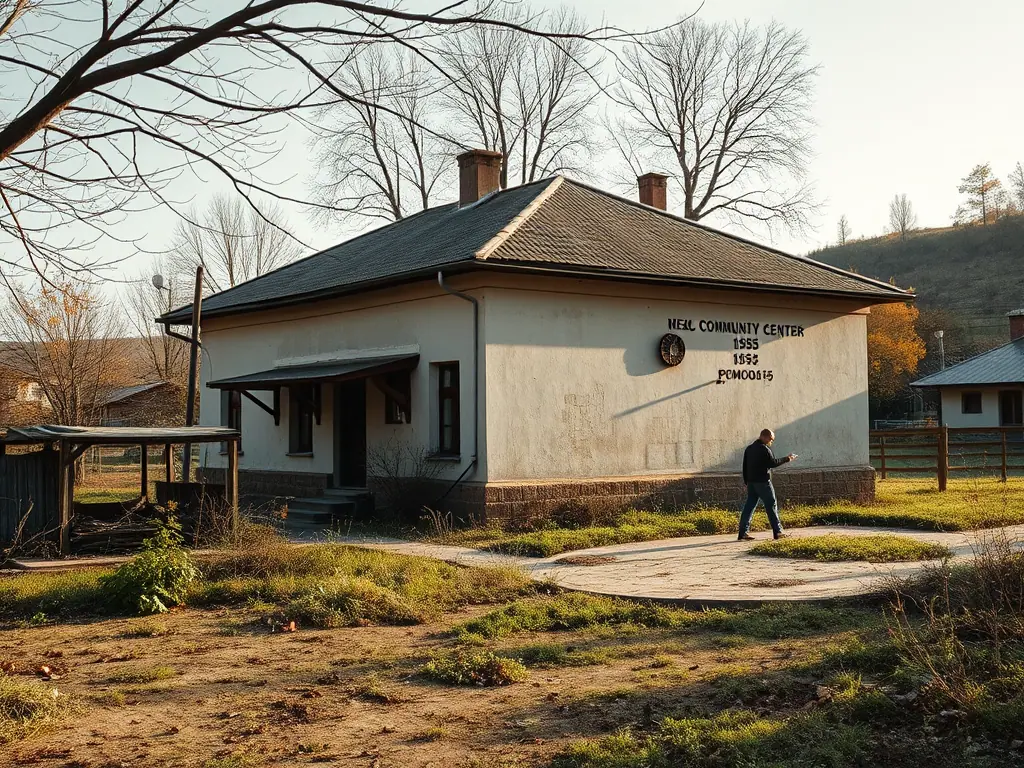
The building of the former community center in the village of Laka is once again municipal property, following the conclusion of negotiations with the previous owner that lasted more than a year and a half. The property, which consists of a structure built in 1955 and an adjacent plot of nearly two decares, is being returned to the management of Pomorie Municipality. This news, significant for the local community, was announced by the mayor of the municipality, Ivan Aleksiev, through his official social media page on Facebook.
The history of the building spans more than seven decades, having long served as a key venue for the development of cultural and public life in the village of Laka. Local residents hold fond memories of the theatrical performances, celebrations, and various cultural events once organized there. The alienation process began in 1989 when the building was sold. The subsequent years of changing ownership led to a gradual loss of its function as a meeting place for the community, but today, more than three decades later, the property is once again in the hands of the municipality.
Initial steps toward restoring the facility have already been taken, with a group of volunteers actively participating in cleaning the main rooms and the surrounding yard. This initiative was carried out even before the finalization of administrative procedures for allocating funds. In parallel, the administration is working on plans to transform the building into a modern multifunctional cultural center, aiming to restore its role as a hub for events. To ensure comprehensive renovation without placing a full burden on the local budget, opportunities for attracting European funding are being explored.
Alongside this, designs have been prepared for the improvement of the area around the community center. Plans include the construction of sports infrastructure on the grounds, which are also municipal property, effectively turning the space into a complex zone for cultural, social, and sports activities accessible to both the elderly and the young people of the village. It is intended for the property to be registered as public municipal ownership, which serves as a guarantee that it will not be subject to future sales and will retain its purpose for public needs.


Comments (3)
Тридесет години? Сериозно ли, Лъка? И какво правеха досега там бе?
Тридесет години... наистина ли е чак толкова? Нямам представа какво се е случило в Лъка, ама все пак – добре че общината си го е взела обратно, нали? Дано да не се окаже, че някой просто се е възползвал от ситуацията
лъка... 30 години наистина е мн време! дано сега поне го направят нещо полезно за хората, а не да стане пак като