
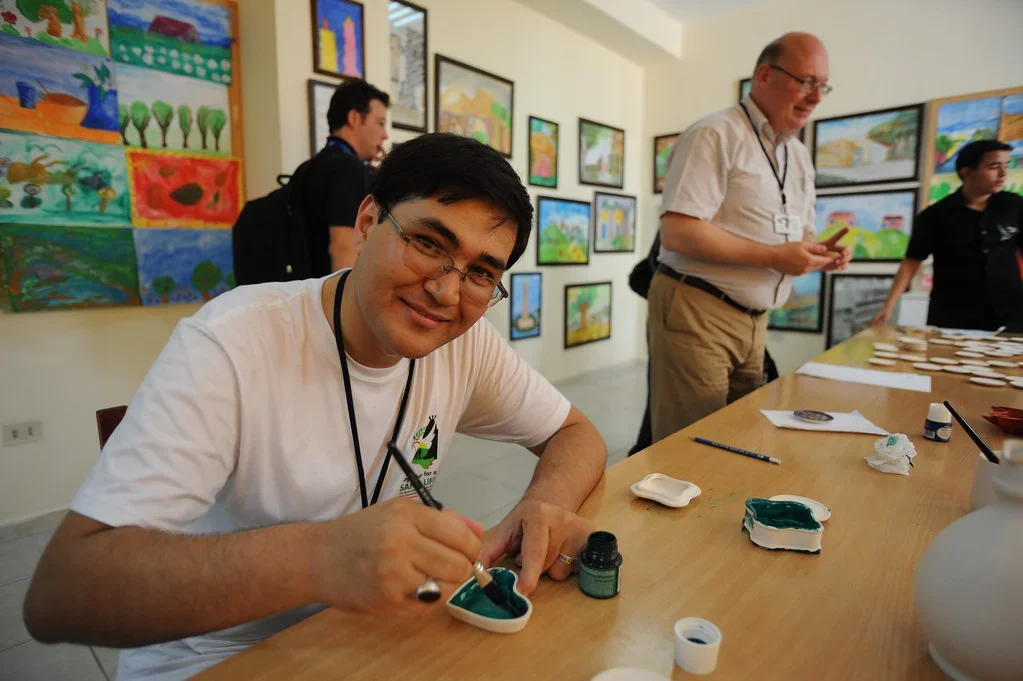
Visiting museums, reading books, and listening to music can slow biological aging almost as much as regular physical exercise. This is the conclusion reached by the authors of the first study to establish such a link at the molecular level.
What the study shows
The work was published on May 11 in the journal "Innovation in Aging" by a team of scientists from University College London (UCL). The researchers analyzed blood samples and survey data from 3,556 adult residents of the United Kingdom, using epigenetic clocks – tools that "read" chemical patterns on DNA to assess the rate of biological aging.
The results allow creative and cultural activity to be considered as an independent element in public health strategies – on par with nutrition and physical activity.
Using the "DunedinPACE" metric, scientists found that people who engage in creative activities at least once a week age approximately 4% slower than those who hardly participate in such activities at all.
For those who participate once a month, the rate of aging is about 3% lower, and for those participating at least three times a year – about 2% lower. The difference between people with weekly activity and those with no participation is comparable to the previously described difference between current and former smokers.
Art, epigenetic clocks, and biological age
A separate epigenetic test, "PhenoAge", shows that the biological age of people who engage in creative activities every week is on average about one year lower than those who do so rarely.
Both the frequency and variety of activities – reading, playing music or singing, attending concerts and theater performances, heritage sites, and libraries – are independently linked to slower biological aging.
The effect is more pronounced in middle-aged and older people – over 40 years of age. Of the seven epigenetic clocks tested, only three showed a significant link; older versions of these tools did not detect a positive effect from either creative activity or physical exercise.
"Not a luxury, but a necessity"
"Our research showed that it is important not just to engage in art regularly, but also to cover as broad a spectrum of its forms as possible," says Daisy Fancourt, lead author of the study and head of the Social Biobehavioural Research Group at UCL.
"Each type of creative activity – reading, music, attending cultural events, exploring historical monuments – affects us in a different way: cognitively, emotionally, and physiologically."
Fancourt calls for creative activity to be viewed as a health-promoting behavior. "It is important that we stop perceiving it as a luxury and start treating it as a vital necessity," she emphasizes. "Regular – ideally daily – creative activity deserves the same encouragement as '10,000 steps a day' or 'five portions of fruits and vegetables'."
Limitations and next steps
The study is observational, which is why it cannot prove that engaging in art directly slows aging. It is part of a seven-year, £3.5 million program funded by Wellcome and coordinated by UCL, which aims to investigate the global and molecular impact of engagement with the arts on human health.
Co-author Feifei Bu notes that the study provides "the first evidence that engagement in the arts and cultural life is associated with slowing biological aging."
To confirm a causal link and understand which forms of creative activity are most beneficial, intervention studies and longer-term follow-ups will be needed. Nevertheless, current results place art on a par with nutrition and exercise as a potential pillar of a healthy life.




Comments (4)
Ей, сериозно ли? Изкуство вместо фитнес 👍
абе, тва с изкуството си го говорим от години, ама да стане като спорта? майтапл! 😅 ще
Еее, ама наистина ли?! 😮 Изкуство вместо спорт? Не е ли малко невероятно? Аз лично обичам да чета и си мисля, че може и да има нщо в това
ахах, значи мога да си спестя потта и болките от фитнеса