
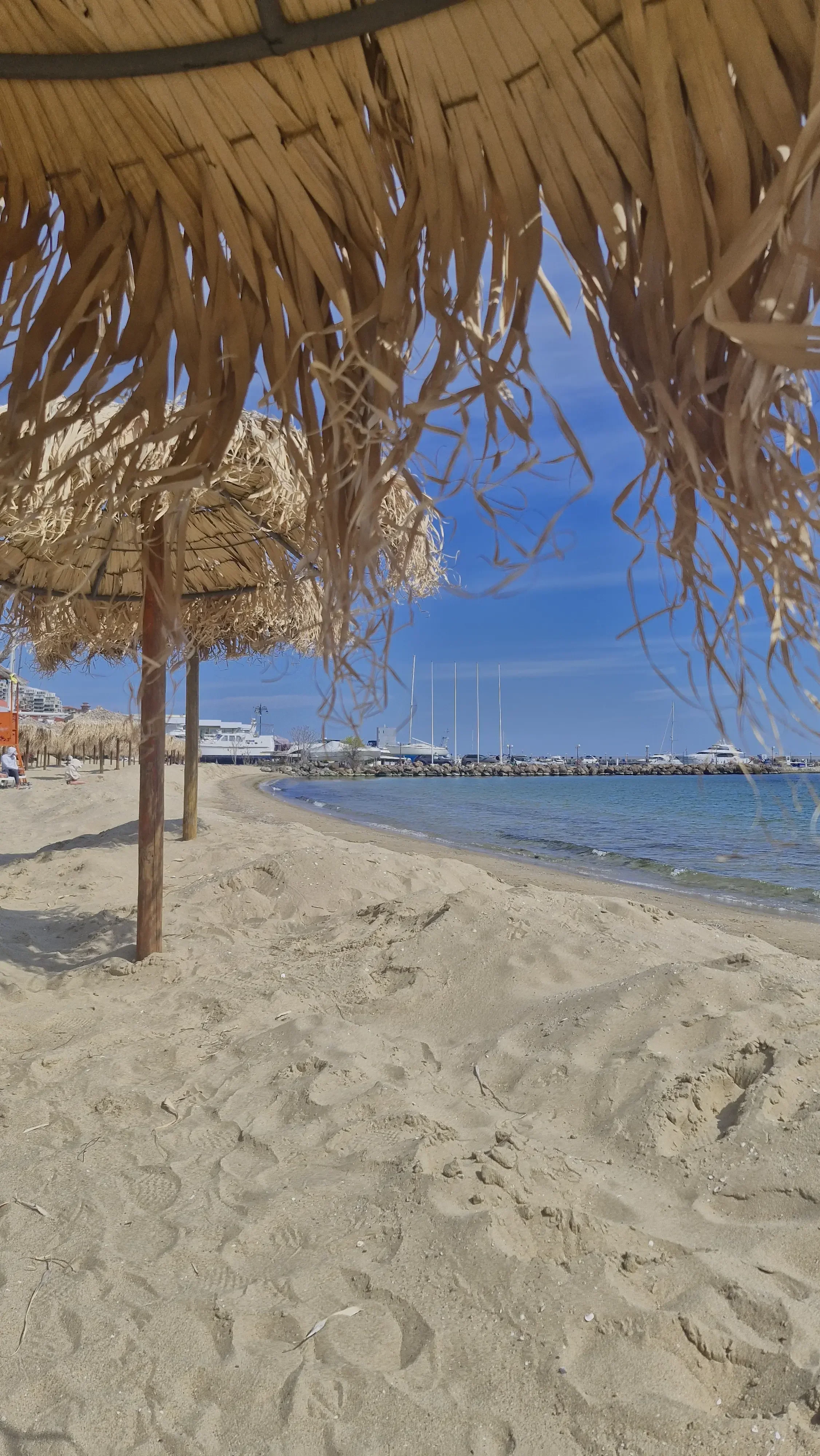
The idea that "whoever lives by the sea cannot have a Vitamin D deficiency" sounds logical, but doctors have been warning for years that this is a myth. Even in sunny regions like the Bulgarian Black Sea coast, Vitamin D deficiency remains common – due to lifestyle, working hours, the season, age, and sun protection habits. During the spring and summer of 2026, the topic is coming to the fore again, as many specialists in endocrinology and general medicine remind us: "geography helps, but it does not eliminate the need for monitoring and prevention".
Why Vitamin D deficiency is possible even "on the beach"
Vitamin D is synthesized in the skin under the influence of UVB rays. In theory, people on the Black Sea coast have a longer "sunny season" – from late March to October. In practice, however, a large part of the population spends the day indoors – in offices, shops, kitchens, hotels, and warehouses. This is especially true for those employed in tourism, who work the most precisely during the sunny months, often in closed premises or in the shade.
Modern sun protection culture also has an additional influence – hats, long-sleeved clothing, high SPF, and avoiding the noon hours. These measures are correct in terms of preventing sunburn and skin cancer, but they significantly reduce the time the skin actually produces Vitamin D. As a result, a paradox can occur: a person may live 500 meters from the beach but actually receive less UVB than someone in the interior who walks to work every day.
What the data for Bulgaria shows
Over the last decade, various studies on the Bulgarian population have shown a high frequency of insufficient or low Vitamin D levels – both in large cities and in smaller towns. Some studies, covering patients in hospitals and outpatient practices, report that over half of those tested have values below the recommended ones, and in certain groups (the elderly, people with overweight, chronic diseases), the deficiency is even more frequent.
In coastal regions, the picture is not fundamentally different. Local observations by general practitioners and endocrinologists along the Black Sea coast show that deficiency (levels below about 20 ng/ml) and insufficiency (20–30 ng/ml) are established "significantly more often than would be logical for a sunny region". This applies both to locals and to people who come for seasonal work.
Which groups are at higher risk on the Black Sea coast
Doctors are unanimous that not everyone at the seaside is in the same situation. At higher risk of deficiency are:
- People who work indoors – in kitchen blocks, hotels, offices, commercial outlets.
- Women and men over 60–65 years of age – in them, the skin synthesizes less Vitamin D, and there is often a lower intake through food.
- People with overweight – Vitamin D is fat-soluble and is "retained" in adipose tissue, which can lower blood levels.
- Individuals with chronic diseases – diabetes, autoimmune diseases, malabsorption problems.
- People who, for medical or personal reasons, avoid the sun and use high SPF constantly.
For children on the Black Sea coast, the picture is more optimistic, but not unambiguous. Children who spend more time outside have better levels, but those who spend their summers mostly on screens or in enclosed spaces can also develop insufficiency.
Spring–summer 2026: what doctors recommend
Against the backdrop of general uncertainty and accumulated stress in recent years, many specialists recommend a more active but reasonable approach for the spring–summer of 2026. The main points are three: testing, measured sun exposure, and, if needed, supplements.
1. "Do not guess – get tested": doctors recommend that people with chronic diseases, the elderly, and those who feel constant fatigue, muscle pain, frequent infections, or a drop in mood should measure their Vitamin D level. This is a simple laboratory test that provides a real picture and allows the dose of any supplements to be adjusted individually.
2. "Sun, but with reason": regular but moderate sun exposure is recommended – for example, 10–20 minutes a day on exposed areas (arms, face, part of the legs) in the morning or late afternoon hours. The idea is not to reach the point of burning, but to get "small doses" of natural UVB before applying sunscreen for a longer stay outside.
3. "Supplements – when there is a reason": if the test shows a deficiency or insufficiency, Vitamin D intake in the form of drops or tablets is discussed. Doctors emphasize that the dosage must be adjusted to the specific level, age, weight, and accompanying diseases – "self-medication" with overly high doses is not a good idea. At normal levels, a lower prophylactic dose is often sufficient during the winter months, and in the summer – primarily sun and diet.
The role of food: can we ensure enough Vitamin D with diet alone?
Food contributes to Vitamin D intake, but on its own, it is usually not enough for optimal levels. Sources are fatty fish (salmon, mackerel, herring), egg yolk, full-fat dairy products, liver, as well as fortified foods (some milk, breakfast cereals). On the Black Sea coast, fish is more accessible, but actual consumption in the Bulgarian population as a whole remains lower than recommended.
Doctors often emphasize that "diet is important, but it cannot replace the sun" – especially for people with a proven deficiency. In the best case, good nutrition plays a supporting role, while the main "players" remain synthesis in the skin and, if needed, supplements.
Vitamin D and the psyche: not just bones and immunity
Classically, Vitamin D is associated with bones and calcium metabolism – osteoporosis, rickets, mineralization. In recent years, however, more and more is being said about its role in the immune system and mental health. Low Vitamin D levels are associated with a higher risk of depressive symptoms, seasonal mood changes, and poorer resistance to infections.
For people on the Black Sea coast who face high seasonal loads (tourism, seasonal work), chronic fatigue, and stress, optimizing Vitamin D levels can be one of the small but real factors for better general condition. However, doctors remind that it is not a "magic pill" – its effect is part of a broader picture, including sleep, movement, diet, and mental support.
Conclusion: the sun helps, but it does not solve everything
Living on the Bulgarian Black Sea coast is an advantage – a longer sunny season, access to nature and the sea. But this is not a "guarantee" against Vitamin D deficiency. In the spring and summer of 2026, doctors recommend more realism and less self-delusion: let us test when there is a reason; let us use the sun reasonably, not extremely; let us take supplements only when needed and according to a plan, not "just in case".
Ultimately, Vitamin D is yet another example that good health at the seaside is not automatically granted by geography. It is a combination of natural advantages, informed choices, and a readiness to take care of ourselves, even when it seems that "we are in the perfect place".





Comments (4)
искрено ли ни препоръчват да чакаме до 2026 година, за да си обърнем внимание на витамин d? не е ли по-добре да се информираме сега и да вземем мерки пре
Абе, сериозно ли? Да си чакам до 2026 да разбера дали ми трябва витамин D?! Не е ли малко... драматично? Аз си мисля, че ако внимавам – малко слънце, малко зеленчуци, не съм чак тооолкова зле. И после ще стане като с бензина - всички на опа6ки за витамини, хаос и паника
пич, сериозно ли?! 2026?! да не му дойде акъла на някой! иначе как да си вземем мерките сега? пак ли ще чакаме някой отгоре да ни каже какво да правим 🤙
брр, 2026?! шегувате се, нали? 😂 ама верно е, трябва да се гледа какви са 👎