
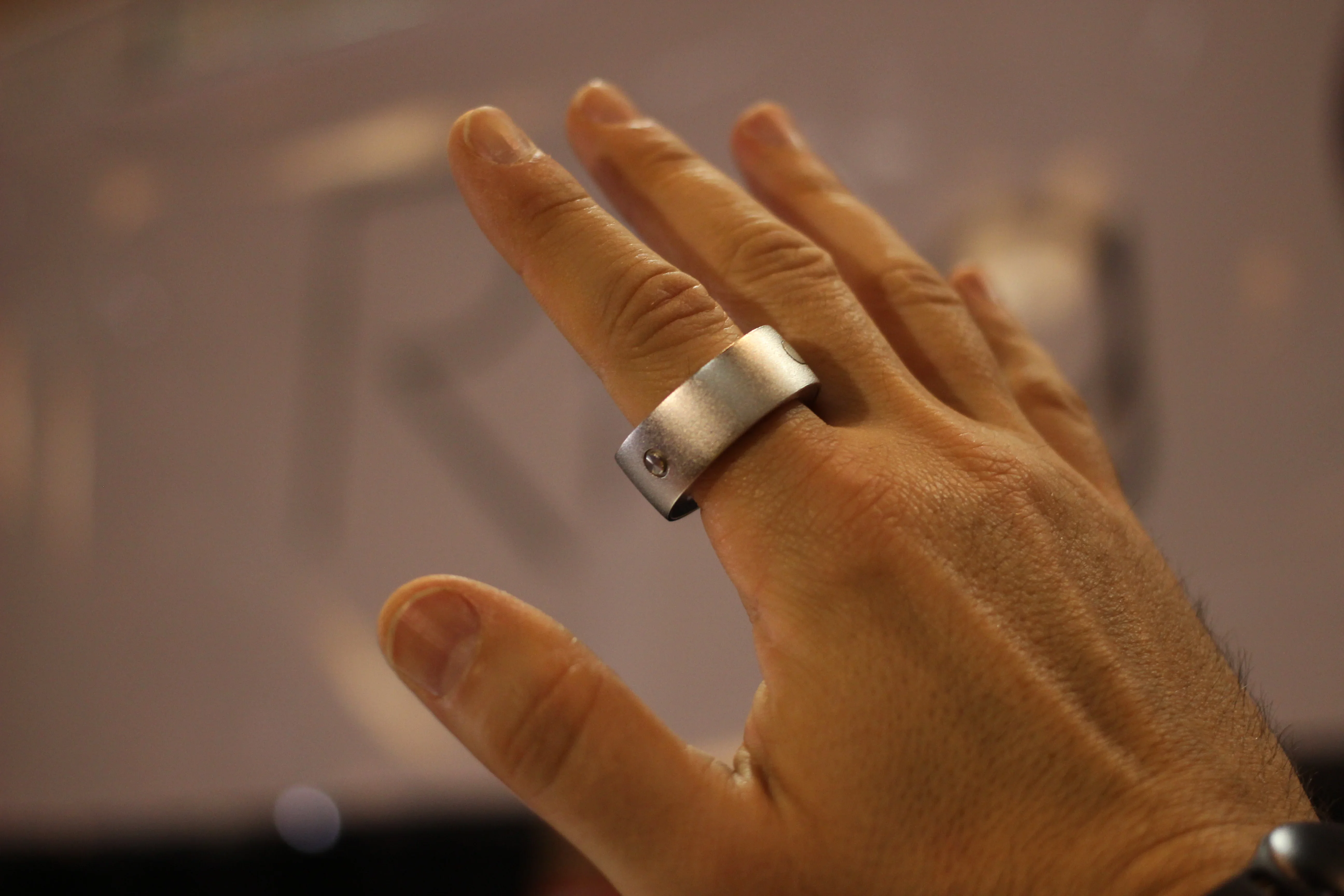
The next stage in the development of wearable technology is no longer counting steps or passive sleep tracking, but the ambitious goal of predicting diseases years before the first symptoms appear. Major players in the sector – "Oura", "WHOOP", "Samsung", "Apple" and "Google" – are entering an open race to create artificial intelligence models that can predict heart attacks, strokes, and dementia based on biometric data collected 24/7 from rings, watches, and bracelets.
The race of predictions
This wave of ambition relies on a rapidly growing volume of scientific research. In January, a team from "Stanford University" published in "Nature Medicine" a paper describing the "SleepFM" model – a foundational system trained on over 585,000 hours of nocturnal sleep recordings from more than 65,000 people.
The model is able to predict 130 different diseases – including dementia, heart attack, heart failure, and stroke – using only data from a single night of sleep, and with clinically high accuracy. According to the authors, with the development of mass wearable sleep monitoring devices, such models could turn non-invasive real-time health monitoring into a tool covering entire populations.
Companies in the sector are already investing significant funds to turn this science into products for end users. The Finnish "Oura", a manufacturer of smart rings, reached a valuation of about $11 billion after raising over $900 million in a Series E round in October 2025, and in February 2026, it unveiled its first proprietary AI model, initially focused on women's health.
"Google" in early May launched an AI "health coach", based on the "Gemini" models and integrated into the new "Google Health" app, with the goal of attracting users from competing devices as well. "Samsung" published a study in the "European Heart Journal Digital Health", according to which "Galaxy Watch" smartwatches can predict episodes of loss of consciousness by analyzing heart rate variability using AI.
Regulatory clash
A large part of the tension in the sector is related to regulations. In December 2025, Oura CEO Tom Hale published a column in "The Wall Street Journal" in which he urged the U.S. Food and Drug Administration (FDA) to introduce a new category – "digital health screening devices".
The idea is for this intermediate category to stand between general "wellness" products and full-fledged medical devices subject to strict government control. Introducing it would allow wearable devices to warn users of potential health risks – such as high blood pressure or signs of sleep apnea – without having to go through the multi-year and expensive process of approval as medical devices.
On January 6, 2026, the FDA took a step in this direction: Commissioner Marty Makary announced an update to the guidance for "General Wellness" category devices, expanding the definition for low-risk products. The update came six months after the agency sent a warning letter to "WHOOP" regarding its blood pressure measurement feature, which the regulator classified as an unregistered medical device.
The human cost of constant monitoring
Experts warn that the speed of development of these technologies carries risks that go beyond purely regulatory disputes. A report by the American Academy of Neurology in March notes that wearable devices are not always accurate enough, can produce false alarms, and generate a continuous stream of health data that sometimes increases anxiety instead of reducing it.
"Such devices can also have unforeseen consequences, in particular – increasing anxiety," points out Dr. Sara Benesch, a professor of neurology at the University of Minnesota. For some people, constant reminders, charts, and "risk alerts" become a source of obsessive body tracking and chronic anxiety.
Algorithmic bias remains another serious problem. Artificial intelligence systems, trained on limited or demographically unbalanced datasets, show lower accuracy when working with diverse population groups. This raises the question of who these prognostic tools actually help and who they might harm if they provide inaccurate or misleading signals.
Data privacy advocacy organizations are also pointing to the huge volumes of sensitive biometric information collected by wearable devices. It often remains unclear how exactly this data is stored, shared, and monetized, and the terms of service are complex and opaque for the average user. An analytical piece by "Bloomberg" notes that the "elusive unicorn" of prognostic health data also carries deeply personal risks.


Comments (14)
абе, наистина ли?! милиарди за пръстени, които да ме стресират? не ми е ясно! разбирам, че напредък има, технологията върви нагоре - това е добре, абсолютно! но да плашиш хората с потенциални болести още преди да са си изпили кафето... дали наистина сме готови за такова ниво на информираност?
Евала на умните глави, ама малко страшно звучи т'ва с предсказването... Да не стане все едно носиш проклятие на китката! 😅 Важно е да има
Аааа, пичове, вие разбирате ли къде отиваме?! Това е футуристично! Смарт пръстени, които да предсказват болести... все едно сме във филм на sci-fi! 🤩
Абе, сериозно ли? Милиарди в пръстени, дето да казват дали ще ни прихване нещо? Не че не е интересно... ама все едно си купувам скъп часовник, за да ми напомна, че времето лети и накрая всички отиваме там. 🤷♂️
евала за развитието, ама малко страшно звучи, май! дано не се ока