
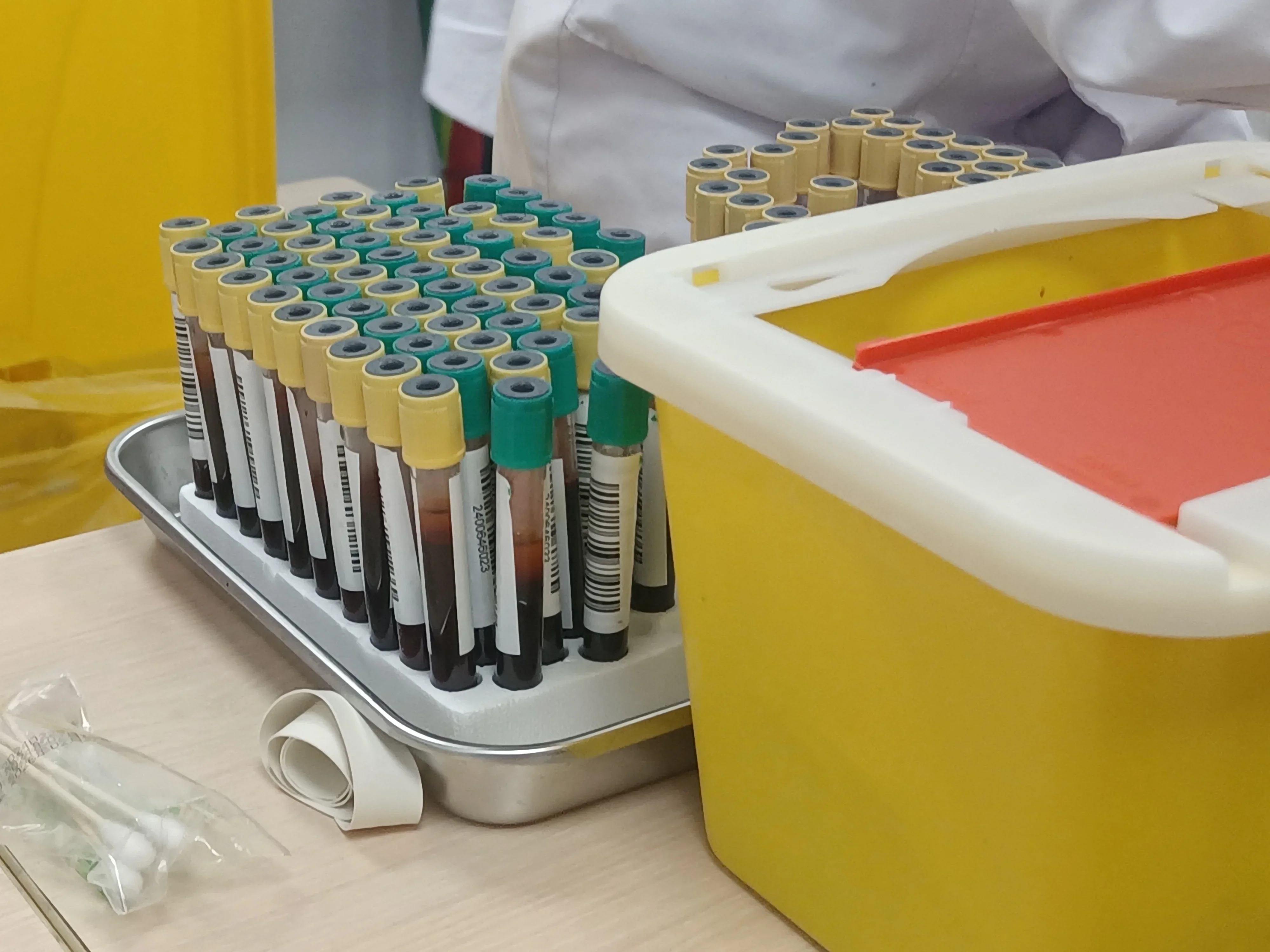
A blood test based on so-called "biological aging clocks" can predict the risk of dementia several years before the appearance of clinical symptoms. This is the conclusion reached by scientists from King's College London in a study published on May 13 in the journal "Alzheimer's & Dementia". They found that in people whose bodies "age" faster than their chronological age, the risk of dementia is about 20% higher, and the risk of vascular dementia is about 60% higher.
Metabolomic aging clocks for dementia prognosis
The study used so-called metabolomic aging clocks – an approach that analyzes small molecules in the blood that arise during the metabolism process to assess the biological age of the organism.
The difference between this biological assessment and the actual chronological age – called "Delta MileAge" – shows whether the body is aging faster or slower than expected.
Relying on data from a large British cohort study, the scientists found that dementia developed in nearly 4,000 participants during the observation period. In people whose biological age exceeded their chronological age by more than one standard deviation (about 16% of participants), the risk of dementia was significantly increased.
This effect is particularly pronounced in vascular dementia, which is the second most common cause of dementia in the world.
Combination of accelerated aging and genetics: tenfold higher risk
The most striking result was observed in participants for whom accelerated biological aging was combined with a very high genetic risk – the presence of two copies of the "APOE ε4" allele.
In this group, the likelihood of developing dementia was approximately ten times higher compared to the average participant in the cohort.
Crucially, the two risk factors – accelerated biological aging and genetic predisposition – appear to act through independent mechanisms. This means that biological aging markers carry additional information about dementia risk that cannot be derived from genetic data alone.
From scientific result to prevention
"Our results suggest that biological aging data could help us identify people at risk of dementia before clinical symptoms appear," says lead author Dr. Julien Muts, a Sir Henry Wellcome Postdoctoral Fellow at the Institute of Psychiatry, Psychology and Neuroscience at King's College London.
"By combining genetic factors with potentially modifiable factors reflected in biological aging markers, we may be able to develop preventive strategies – including through a simple blood test."
Muts emphasizes that biological clocks based on blood plasma are a "scalable and minimally invasive" method that could be integrated into screening programs for middle-aged people in the future or used to select participants for preventive clinical trials.
A rapidly developing scientific field
The current study comes against the backdrop of increased interest in biological aging clocks. Earlier this year, a study published in "Nature Aging" showed that people with accelerated epigenetic clocks have a higher risk of death.
In May, scientists from Johns Hopkins University reported that more pronounced and stable circadian rhythms of activity and rest are associated with delayed physiological aging.
In parallel, Chinese researchers have developed multi-level "aging clocks" that use deep learning methods and hundreds of physiological markers.
The totality of these results suggests a shift in how age-related diseases are viewed: they are increasingly seen not just as a consequence of passing years, but as a result of the gradual "breakdown" of the body at the molecular level.
Whether this knowledge will turn into routine clinical tools remains to be seen. As Muts notes, "metabolomic aging clocks capture specific biological information that is relevant to assessing dementia risk."





Comments (5)
абе, пак ли с анализи? 🙄 добре де, като разберем, че ще ни изиграе паметта, кво праим? започваме да си записваме
Хмм, интересно... Дано наистина помогне на хората да се подготвят, ама и цената да не е чак толкова голяма. защто иначе хубаво откритие, ама само за бога
Ааа, значи пак нещо ново... Добре де, ама доколко е практично за нас българите това? Все едно да ти кажат, че ще се разболееш - хубаво ли е тогава? Макар
Много полезно изследване! Дано скоро да стане достъпно и у нас, за да може да се предвиди навре
ахах, значи сега ще знаем предварително кога мозъкът ни ще почне да играе шах с нас? 🤔 интересно... ама наистина интересно. дано не е скъпо тоя анализ, че пенсиите май стигат само за хляб и