
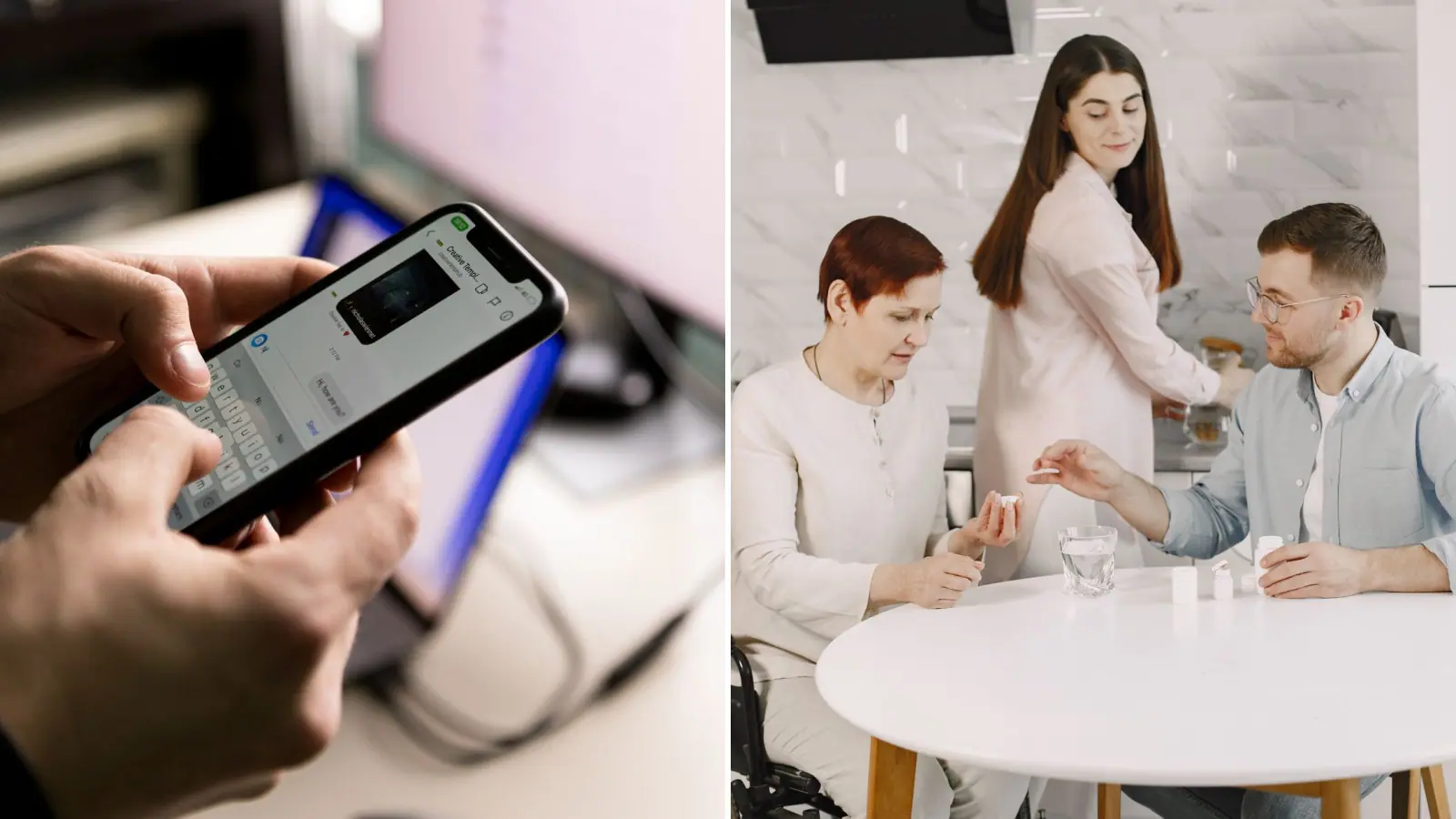
People who have had a stroke or live with aphasia can now reach an AI assistant called "Aya" at any time, the Stroke and Aphasia Association (SAA) said in Sofia today. It answers by phone on 0700 11 404, by email, in a chat and by voice.
The service was presented for National Stroke Day, whose motto this year is "50,000 hopes for life!". The project is called "Supported after stroke: an innovative model of information and advice with adaptive access". It costs €15,000, paid by Sofia's "Social Innovations" programme. A pilot version is already running, and tests will continue until spring.
The service is for people just discharged from hospital after a stroke, those still recovering and those living with lasting disabilities. It is also meant for people with aphasia, who need easier ways to understand and express themselves. Relatives and specialists who refer people for help can use it too.
Dr Georgi Georgiev, deputy chair of the SAA, described how it works in three steps. A person asks a question by phone, email or chat. A clear answer comes at any time, even in the evening and at weekends. The assistant then points the person to help and, if needed, brings in a human operator.
On the phone, "Aya" speaks to the person, and its written answers are short and easy to follow. The chat suits people with aphasia. During working hours, an operator takes any question that is not simple. People with aphasia or other communication difficulties get a call back from a speech therapist.
In the demonstration, "Aya" spoke more slowly, stopped when interrupted and coped even with an answer of one or two words. Its answers come only from the database it has been given, and it does not answer questions outside the topic of stroke. During the test period, users' questions will be added to the database. The information resources and the method were developed in Bulgarian and English.
Dr Georgiev said a stroke raises many practical, social and emotional questions: how to continue recovery, where to find rehabilitation and a speech therapist, and what social rights a person has. He said the information is hard to find, and much of what is online may be wrong. Hospitals do not have the staff or time to explain things to relatives, he said, so the association chose a digital assistant to make up for too few operators on permanent duty.
"Nobody tells families or shows them what to expect after a stroke patient is discharged," said engineer Dorina Dobreva, chair of the SAA.
The association expects less uncertainty for people after discharge, and timely guidance for relatives on how to care for them and help their recovery. Specialists will have a reliable resource to send patients to, and patients will be less isolated and get help faster.
From 2027, hospitals will hand out a booklet for people after a stroke, written by the SAA, with a print run of 50,000 copies. The association's campaigns from 2021 to 2023 reached nearly 3,000 additional places. The SAA runs education campaigns in schools, and the prevention lesson it introduced has been approved by the Ministry of Education and Science.
The free app "I Communicate" lets people with aphasia use language cards to explain their problem to a dentist, a family doctor, an emergency team or another medical specialist. In 2024, the association launched a stroke bot on Viber, carried out a study in Sofia and distributed 10,000 handbooks.
In 2025, the SAA set up speech therapy rooms and communication tools for aphasia. Two operate in Sofia diagnostic and consultation centres, and two more are being set up.
Comments (0)
No comments yet.