
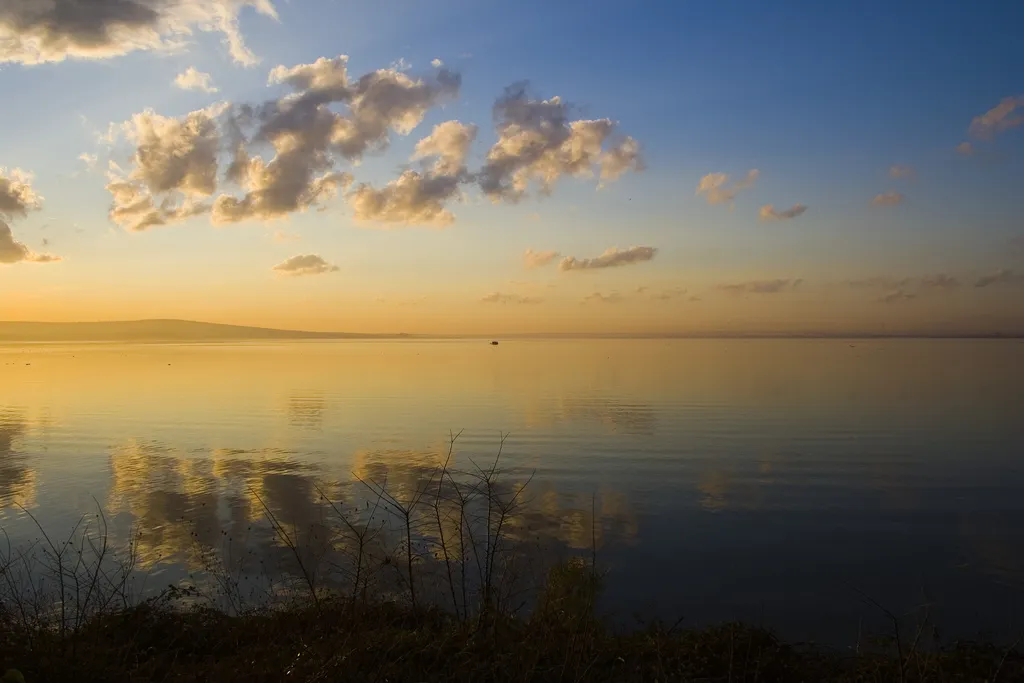
The Vaya Natural Complex is located in close proximity to the Black Sea coast, occupying a strategic territory north of Burgas. This marine estuary possesses an extremely complex and dynamic ecosystem that combines characteristics of both freshwater and saltwater reservoirs.
The geological history of the lake reveals its gradual formation through natural geomorphological processes. Initially emerging as a coastal bay, the area subsequently underwent significant transformations that led to the formation of its modern appearance.
The hydrological features of Vaya are extremely interesting for the scientific community. The water mass is characterized by variable salinity, which creates unique conditions for the development of diverse biological species. The area of the lake varies between 17 and 22 square kilometers, depending on seasonal climatic changes.
The ecological significance of this natural site is of paramount importance. The area serves as a critical habitat for numerous rare bird species, including various types of herons, pelicans, and water-loving birds. During migration seasons, the lake becomes a strategic stopover for hundreds of thousands of migratory birds.
Anthropogenic influence on the Vaya ecosystem is significant. The urbanization and industrial development of Burgas have a substantial impact on the natural processes in the area. Local authorities and environmental organizations are making efforts to preserve biodiversity and maintain the ecological balance.
Scientific research reveals the exceptional biological productivity of the lake. Over 260 plant species and more than 240 animal species are found here, making it one of the most biodiverse areas along the Bulgarian Black Sea coast.
In the context of climate change, Vaya gains even greater importance as a natural buffer and indicator of ecological transformations in coastal ecosystems. Any change in its parameters can provide key information about global ecological trends.
Коментари (9)
Яка локация, братли! 🐦🌊 Природата си е направо топ мем!
Диви селфита с пти4и купон 🦆
Факт! Вая е истинско природно богатство!
Якоезеро,FullNaturePower!🌊🐟Вааесъщинскиеко-gemнаБългария👌 👏
Супер находище! Трябва повече хора да знаят за този уникален природен резерват. 😁