
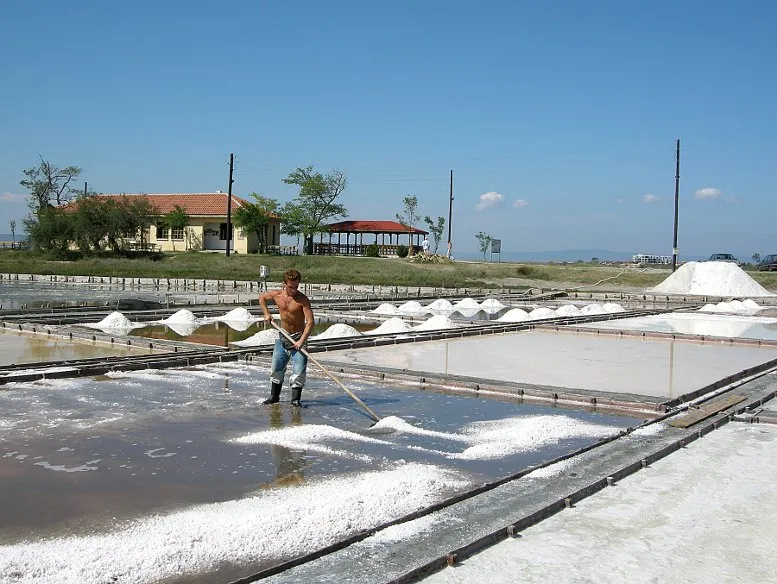
Located on the shore of the picturesque Pomorie Lake, the Salt Museum is an exceptional educational complex that preserves over 3000 years of cultural heritage. Created in 2002 with European funding, the site is the only specialized center of its kind in Eastern Europe.
The exhibition covers an impressive area of about 20 acres of active salt pans, where visitors can trace the authentic salt production process using the ancient Anhialo technology. The method, dating back to the 5th century BC, demonstrates the entire technological cycle – from seawater to the final product.
The museum's interior offers a rich collection of archival materials, including documents from the 15th to 19th centuries, functional models, and traditional work tools. Specially prepared video materials complement the narrative of the historical context of salt production.
The ecological aspect of the museum is emphasized by its location in a protected natural zone, which is part of the Via Pontica migration corridor. Visitors can observe over 200 bird species, including impressive flocks of pink flamingos, pelicans, and various seabird species.
Statistics from the Ministry of Tourism show impressive interest – over 16,000 tourists in 2016, with half of them being foreign citizens from countries such as Russia, Germany, Great Britain, Czech Republic, and Poland. The site is also included in the prestigious list of "100 National Tourist Sites".
In addition to its educational function, the museum offers various additional services – souvenirs, tourist materials, and even cosmetic products based on local healing mud and brine, researched by specialists from the Bulgarian Academy of Sciences.
Practical information includes seasonal operating hours: winter period (September 15–June 15) with hours Monday–Friday from 8:00 to 16:00, and summer period with extended hours – Monday–Friday from 8:00 to 18:00, Saturday–Sunday from 10:00 to 18:00.
The Salt Museum in Pomorie becomes a true bridge between the past and present, combining education, ecology, and tourism in a unique experience.

Коментари (5)
e, drug biznes ot darzhavata 🤑 turisti idat, pari vlizat 👌 😡
ако и, не съм знаел за тоа место
Пич, 3000 години сол - по-стара история от тъща ми 😂👌
Искам да видя как се прави сол по стар български нначин!
Страхотно! Древен занаят, който оцелява и до днес!!