
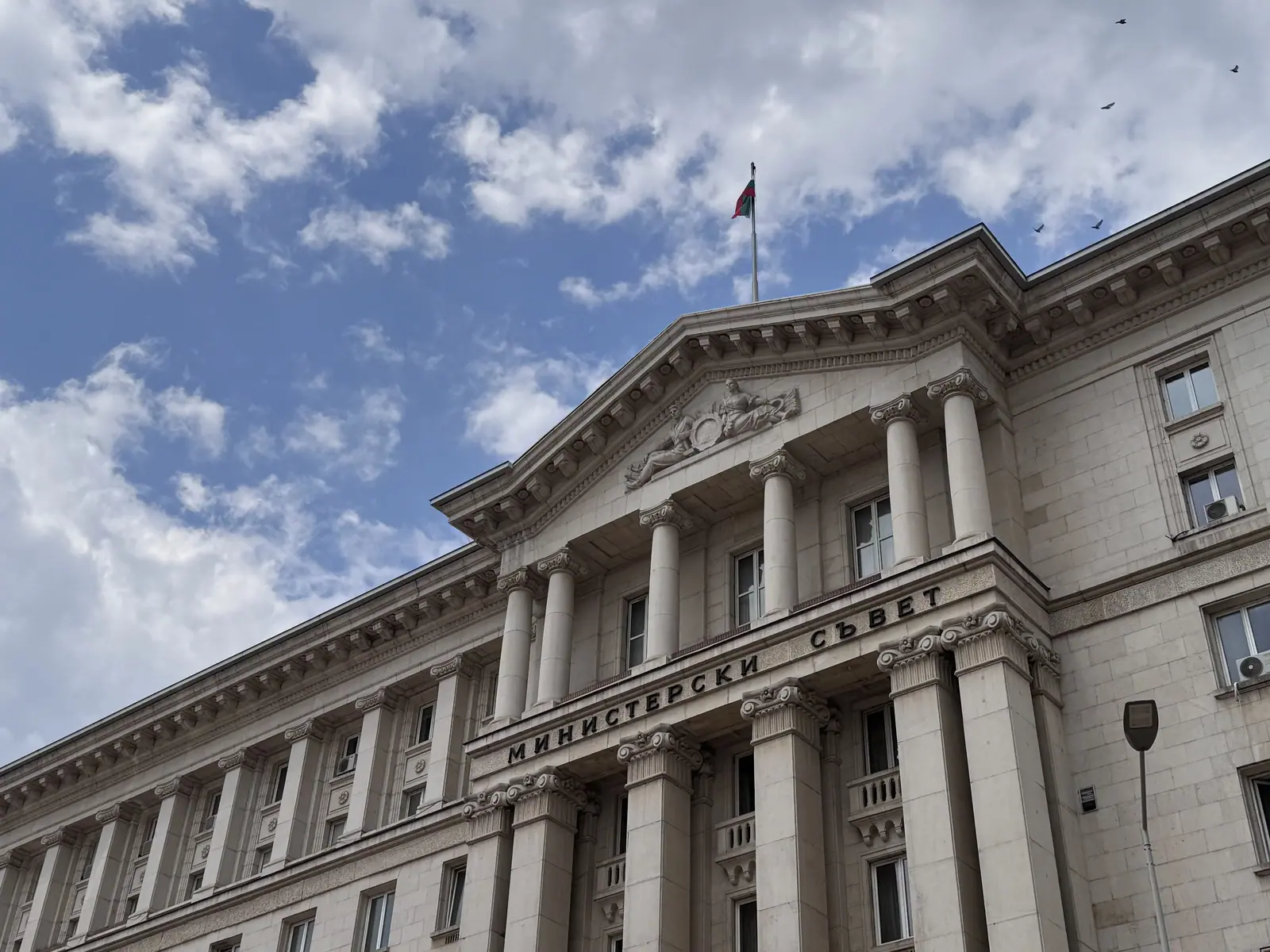
A draft government decree would merge the National Centre of Radiobiology and Radiation Protection (NCRRP) into the National Centre of Public Health and Analyses (NCPHA). The Health Ministry proposed the move. Combined staff at the two centres would fall by 50 posts, from 304 to 254.
The ministry published the draft on 3 November on its website and on the public consultation portal. Comments and proposals are open until 3 December. The Council of Ministers will make the decision.
The merged body would be called the National Centre of Public Health and Radiation Protection. In his report to the Council of Ministers, the health minister cites a functional analysis of the ministry and the budget bodies under it. He says administrative work can now be shared, because the state budget pays for many different activities that matter for health policy. The job cuts come from duplicated general administration in the two legal entities, he says, while the specific functions of the specialised units stay.
The change affects the administrative set-up and structure, and adds no new core functions. The ministry says a single structure will allow better use of staff, money and equipment. The draft comes with a partial impact assessment, but the portal gives no estimate of how much the merger would save. Asked for calculations and an analysis of the effects, the ministry replied with quotes from its own report and gave no figures.
Prof. Zhana Dzhunova, director of the NCRRP, told BNT that the centre has 10 administrative staff and more than 80 specialists: doctors, lab technicians, nurses, biologists, chemists and physicists. She said the formal cut would be five or ten administrative posts, while the merger itself would cost much more. "Under the cover of a sensible idea of administrative reform, an institution with a long history and specific tasks will be wiped out," Dzhunova said.
The centre, which has existed for 63 years, is "like a factory" with set duties to businesses and to protecting public health, she added. She said its tasks have nothing in common with the work of the centre it would join. Its staff are specialists who protect people from ionising radiation, not administrators, she said.
The NCRRP constantly checks water, air, soil and food to make sure Bulgaria stays within the public dose limit of 1 millisievert a year of effective ionising radiation. Dzhunova said radon in homes is the leading risk factor for lung cancer among non-smokers and the second among smokers. It builds up on the lower floors of buildings, and the centre measures it, including in schools and kindergartens.
The centre hosts the only lab that measures the radiation absorbed by a human body. Staff there check the readings of mechanical dosimeters, which often get them wrong, by comparing them with a person's blood test results.
"Our body is the best dosimeter, much better and more accurate than physical dosimeters," Assoc. Prof. Rositsa Hristova, head of the radiobiology department, told BNT. She trained in molecular biology and has spent her whole career at the centre, where she says she grew into a specialist. The International Agency has nominated her for training in Canada and the Netherlands.
People can be exposed to radiation in incidents and accidents, through wrong handling of isotopes, and in criminal cases. All X-ray specialists and staff in invasive cardiology wear dosimeters, the centre says.
The NCRRP has special arrangements because of the situation in Ukraine. As a first step, it has proposed tighter monitoring to the chief health inspector, with more tests, so that no cross-border transfer goes unnoticed. Two weeks ago the European Commission checked the work linked to Ukraine.
In its opinion, the Institute for Nuclear Research and Nuclear Energy (INRNE) at the Bulgarian Academy of Sciences says the change carries serious conceptual and financial challenges. The scientists call for a further assessment of national security, nuclear safety and Bulgaria's international commitments, and want the provisions withdrawn.



Comments (0)
No comments yet.