
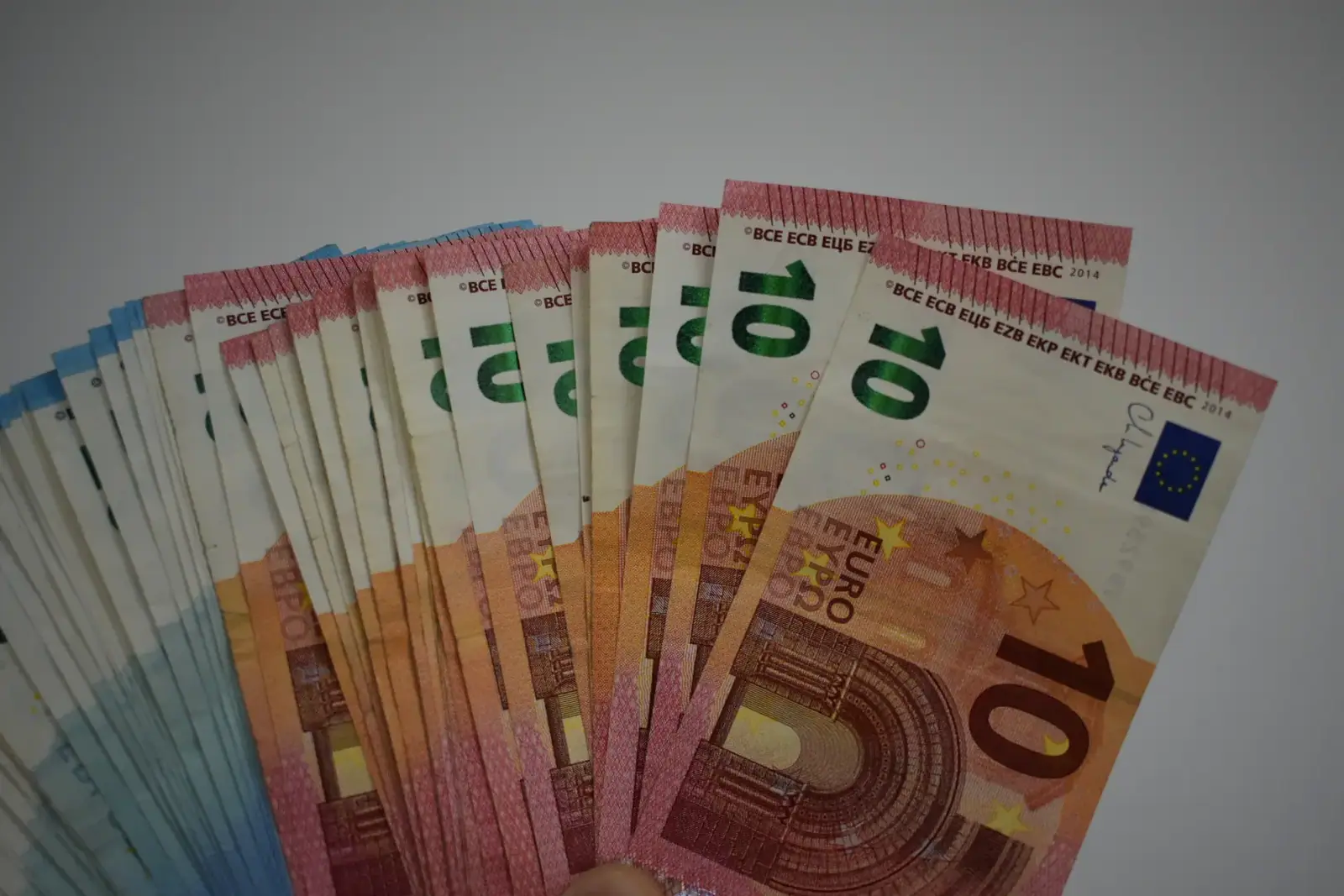
Parliament's health committee has backed the 2027 budget of the National Health Insurance Fund (NHIF) at first reading. Revenue and transfers come to €5.68bn, and spending is the same. That is €426.9m (8.1%) more than in the fund's 2026 budget law. Health minister Katya Ivkova presented the bill.
On 10 November the NHIF supervisory board approved the draft budget, with one abstention. Fund head Dr Vladimir Daskalov said the health insurance contribution stays at 8%.
On 10 November, the NHIF Supervisory Board approved the draft budget, and Daskalov named the personal doctor, early diagnostics and children's health as priorities.
In the committee, 13 MPs voted for the bill and 6 against, with no abstentions. Of the €5.63bn in health insurance revenue, €3.45bn comes from contributions and €2.17bn from transfers for health insurance. The health ministry will also pay the fund money each month for activities outside compulsory insurance, €32.7m for the year in total. Health insurance payments rise by €478.1m (9.7%) to €5.41bn.
Hospitals get the most, €2.531bn, up 8.1%. Of this, €81m is for check-ups and procedures that do not need a hospital stay: diagnostics, prevention and outpatient follow-up care. Medicines are set to get €1.454bn, up 9%.
Specialists outside hospitals get €384m, up 9.3% on this year. Primary outpatient care by family doctors gets €372m. Dental care is set to get €248m (up 7.6%) and medical diagnostic work €176m (up 5%). Medical devices used in hospitals and aids for people with disabilities get €147m, up 2.3%. Another €36m is for hospital medical staffing. Other health insurance payments make up €96m, of which €51m is for medical care under social security systems.
The Bulgarian Dental Union, the parliamentary group of the DPS party and Democratic Bulgaria oppose the bill. Union chair Borislav Milanov said dental prices have not been updated since 1 April 2025, and that dental care traditionally comes last, whatever patients need. The union expects a €36m shortfall and believes the money for dental care will run out by 1 August.
Dr Nikolay Brunzalov, chair of the Bulgarian Medical Union, called the split between budget lines unbalanced. He hopes that when the budget is revised, money for medical services will keep pace with the rise for medicines. The union wants advance checks in real time, with patients taking part, agreed controls on how services are reported, and money for higher prices for medical services and higher pay for medics.
Dimitar Marinov, chair of the board of the Bulgarian Pharmaceutical Union, named two weaknesses. He said the pharmacy scheme gets no real increase, unlike other payments, and that the rise is not enough for better and more even access to pharmacy care. The union backs keeping targeted funding for pharmacies in hard-to-reach places and for 24-hour pharmacies.
The Association of Health Care Professionals, speaking through Diana Georgieva, is ready to back the bill with a dissenting opinion. Maria Chotova, speaking for the Bulgarian Association of Dental Technicians, asked that the law let dental technicians sign individual contracts with the NHIF and be paid directly for their products.
Assoc Prof Lubomir Kirov, chair of the National Association of General Practitioners, said the budget has no big reforms for primary care. But he said it gives the minimum the system needs to work normally and to cover the shortfalls caused by inflation.
Krasimir Mitov of the Zashtita national trade union said patients do not pay less and medics do not get more. He set a condition: nearly half a billion euros must be set aside for medics' pay, or the union will protest.
Kostadin Angelov of GERB-SDS, who chairs the health committee, said the finance ministry handed down the framework. He called the budget an accounting balance with fiscal goals and no strategic vision. In his view, the promised focus on prevention does not show in the figures. Angelov also said hopes are not being met, all opposition proposals for civic oversight were rejected, and the €350 scholarship for young doctors in specialist training only looks like a solution. "To me this is a budget of empty promises and deceived hopes. The health ministry has lost the battle with the finance ministry," he said.
Georgi Iliev of Progressive Bulgaria noted that Bulgaria is in an excessive deficit procedure for the first time. He said the government still keeps health care as a priority, and that hospital care gets about €180m more.
Dzhevdet Chakarov of the DPS said there is again talk of reforms while money is poured into an unreformed system, in which hospitals and medicines take about 70% of the total. He had expected changes toward prevention, preventive care and primary care. Luchezar Ivanov said there is more money, but it is an open question whether it will bring better health care. In his view, clear targets for prevention and a survey of patient satisfaction are needed. He sees the big problem in patients' co-payments and proposes supplementary health insurance, which would create competition and "unblock" the system.
Democratic Bulgaria will not back the budget at first reading. "We are not voting for the sum, but for what it buys. With this budget we are buying the same system, just a little more expensive," said Alexander Simidchiev. He said the NHIF budget has no line for medics' pay, that the only staffing tool is the money for personnel in remote hospitals, and that there is not a single euro for early prevention in children. Simidchiev said the fund's money is public money, not state budget money, and the finance ministry cannot use it.
Nikolay Denkov of PP said the government declares priorities but does not fund them to match. In his view, the problem of medics' pay is not solved, and the €350 scholarships reach too few people and are not enough, though there is a legal basis for a solution. Georgi Georgiev of Vazrazhdane told Progressive Bulgaria that the cabinet is in power and people expect solutions, not excuses. He sees no solution for patients' co-payments and raised the question of higher pay for medics.
A second reading is still to come. Between the two readings, Georgi Iliev will propose reviewing the "Primary care" line and moving 1.6 percentage points of the planned 7.6% to medical devices. PP will table changes on medics' pay.
Comments (0)
No comments yet.