
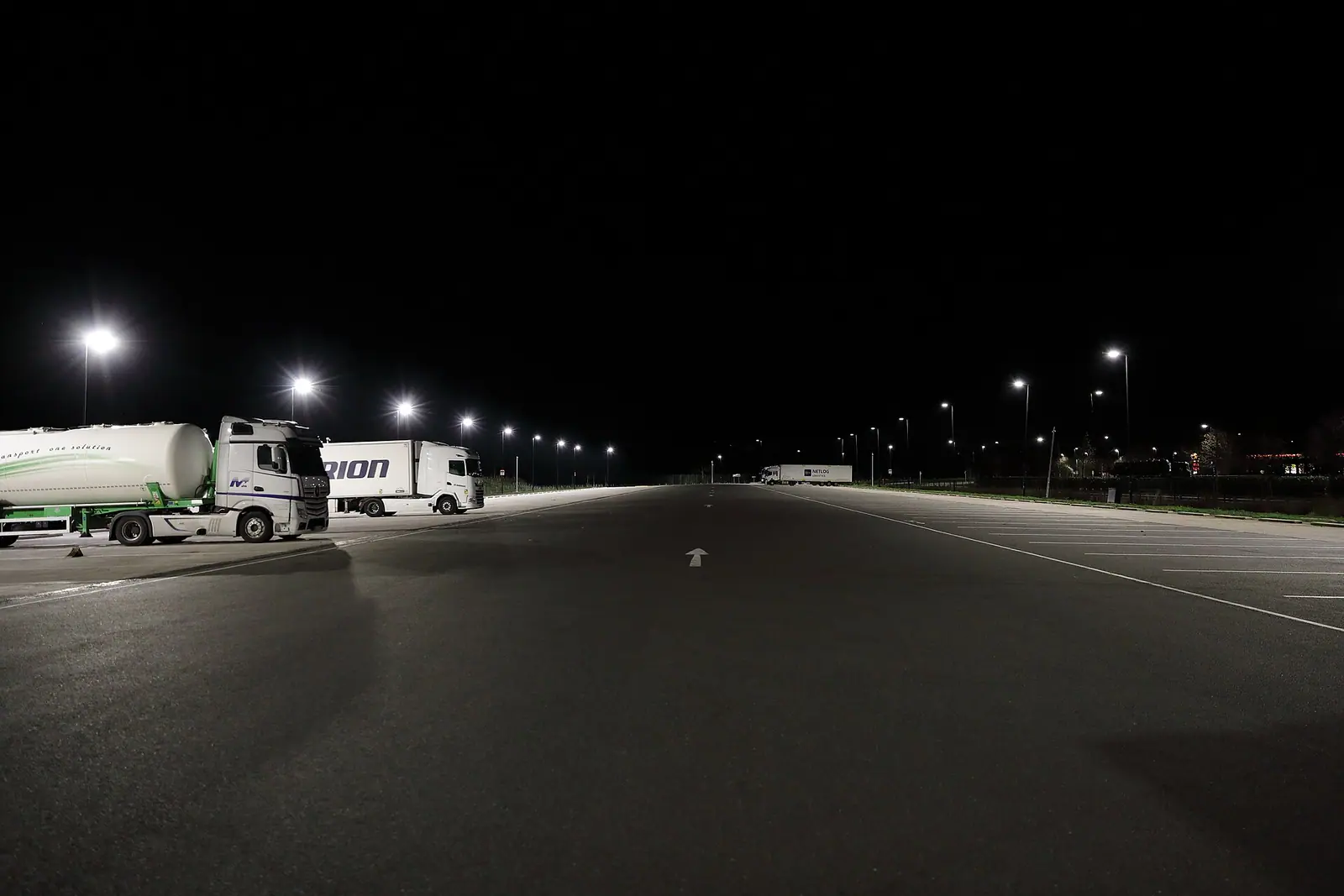
Trucks moving goods on EU roads carried 1.8% more freight in 2025 than the year before, reaching 13.29 billion tonnes, the latest Eurostat data show.
Metal ores and mining products made up the biggest share — 3.04 billion tonnes, or nearly 23% of everything hauled on the bloc's roads. Food, drink and tobacco came second with 1.61 billion tonnes, or 12.1%. Other non-metallic mineral products came third with 1.60 billion tonnes, also 12.1% of the total.
But when you look not at weight but at the work truckers actually did — tonne-kilometres — food, drink and tobacco come out on top. They accounted for 311.1 billion tonne-kilometres, or 16.6% of all road freight activity in the EU. Mixed, "general" cargo followed with 237.1 billion tonne-kilometres (12.6%), then agriculture, forestry, hunting and fishing products with 206.3 billion tonne-kilometres (11%).
In Bulgaria the picture barely moved. Heavy trucks carried 26.978 million tonnes in 2025, against 26.969 million tonnes a year earlier — growth of about 0.03%.
The change is more visible for dangerous goods. Tonne-kilometres for shipping them in Bulgaria fell to 1.063 billion in 2025, down from 1.476 billion in 2024 — a drop of about 28%.
Across the whole EU, dangerous goods — flammable liquids, toxic and explosive substances — make up 4% of all freight transport measured in tonne-kilometres. Finland has the highest share of such loads, at 9.8%, followed by Ireland with 7.8% and Cyprus with 7.5%.
At the other end is Lithuania, where dangerous goods make up just 0.7% of all freight moved. Portugal and Slovakia also have low shares, at 1.9% each.


Коментари (0)
Все още няма коментари.