
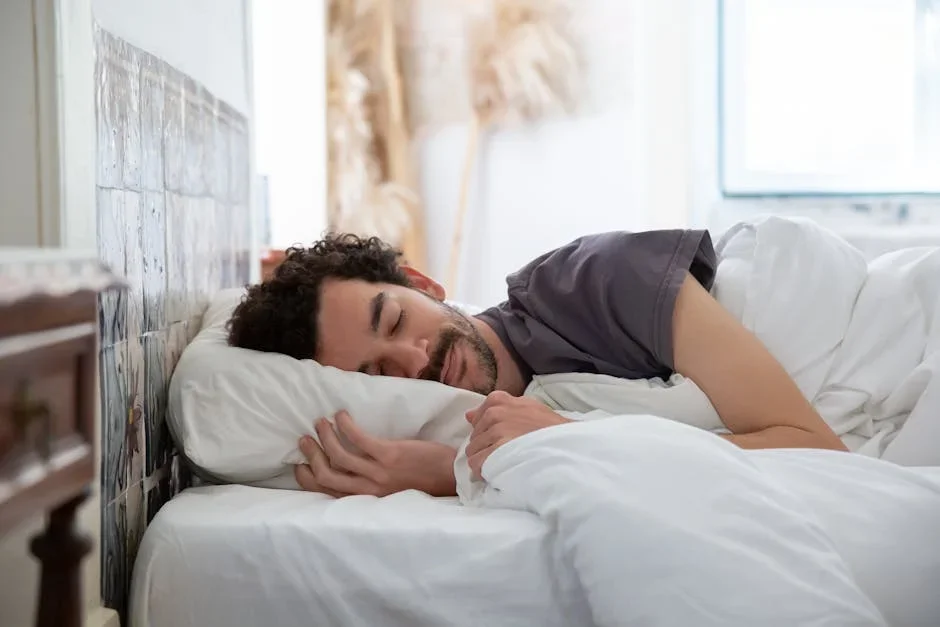
We are ready to pay for personal trainers, special diets and subscriptions to premium fitness, but we often "save" on exactly what cannot be bought - sleep. We wake up early for a workout after a few hours of sleep, work late, reward ourselves with another series, and then we wonder why the weight doesn't move, immunity weakens and motivation disappears. Modern data shows clearly: without stable, regular sleep, even the best diet and the most correct training program lose a large part of their effect.
"The three pillars of health - but sleep is the foundation"
We usually talk about a healthy life as a combination of proper nutrition and exercise. More and more often, specialists complement this formula with a third, equivalent component - sleep. If we think of it as a house, food and sport are the walls and the roof, and sleep is the foundation. Without a stable "foundation" the walls begin to crack: diets do not work, workouts lead to burnout instead of progress, and the nervous system remains constantly overloaded.
Night sleep is not just a pause. This is an active period in which hormones are regulated, tissues are restored, the brain is "cleaned" and memories and information from the day are arranged. When this process is systematically interrupted or shortened, the entire "system" works in emergency mode - no matter how healthy we eat and how often we train.
"Hunger, appetite and sweet: how sleep deprivation sabotages the diet"
One of the reasons sleep is more important than the ideal menu is its influence on appetite hormones. With sufficient sleep, the body maintains a balance between ghrelin - the hormone that stimulates hunger, and leptin - the satiety hormone. When we constantly do not get enough sleep, ghrelin rises, leptin falls, and the brain begins to persistently "ask" for food, especially fast carbohydrates and fats.
The experience of clinicians shows that people with chronic sleep deprivation more often overeat, more often "eat" stress and find it more difficult to stick to a nutritional plan. Fatigue reduces self-control and the ability to plan - after a sleepless night, even the most disciplined person more easily reaches for sweets and fast food, regardless of what is written in his "ideal" regime.
Studies comparing people on the same diet and with the same physical activity, but with different sleep durations, show that those who are sleep-deprived lose significantly less fat and more often lose lean muscle mass. The reason is not in the menu - but in the fact that their body works in "energy deficit" due to the constant lack of recovery.
"Fitness without sleep - a recipe for injuries and stagnation"
No workout "works" if there is not enough sleep after it. It is during the night that the most growth hormone is released, which participates in the recovery of muscle fibers, the construction of new muscle and bone tissue and the repair of micro-injuries from physical stress. The nervous system is also restored during sleep - without this, neither coordination, nor strength, nor endurance can develop sustainably.
Trainers and sports doctors note that massages, supplements, cryotherapy and all "extras" for recovery only make sense if they are on the basis of regular, quality sleep. If we systematically train on the background of sleep deprivation, the body fails to recover, which increases the risk of injuries, overtraining and chronic fatigue. At one point, the workouts stop bringing progress and turn into another stress that the body simply cannot bear.
That is why many specialists are categorical: if you have not slept enough for several nights in a row, the extra hour of sleep is often more beneficial for health and figure than a heroic early workout. It is better to train a little less often, but rested, than every day "on autopilot" with empty batteries.
"The brain and the nervous system: why without sleep there is no will"
Healthy habits are not just a matter of knowledge, but also of the ability to self-control - and this is exactly where sleep plays a key role. During the night's sleep, the brain "arranges" the information, strengthens the new nerve connections and reduces the toxic metabolites accumulated during the day. When sleep is insufficient, the prefrontal cortex - the area responsible for planning and self-control - works more weakly, and the emotional centers are overactive.
Practically this means: when we do not get enough sleep, it is more difficult to say "no" - to an extra piece of cake, to another glass of alcohol or to the next postponement of the workout. Decisions become more impulsive, and motivation for long-term goals - weaker. Thus, lack of sleep undermines exactly that inner strength, on which we rely to stick to a diet, to train and to take care of ourselves.
In addition, chronic sleep deprivation increases the baseline level of anxiety and irritability. In this state, people much more often reach for food, cigarettes, alcohol or aimless scrolling as the only way to "extinguish" emotional discomfort - that is, exactly in the opposite direction to healthy habits.
"Sleep as a regulator of metabolism and immunity"
During deep sleep, the sensitivity of cells to insulin is regulated, blood sugar levels are stabilized and normal fat metabolism is maintained. When sleep is short or broken, tissues become more resistant to insulin, energy from food is absorbed less efficiently, and the body tends to store the excess in the form of fat - especially in the abdominal area.
Sleep is critical for the immune system as well. During the night's rest, processes of "repair" and protection are activated, the production of certain immune cells increases and systemic inflammation decreases. Chronic sleep deprivation, on the contrary, is associated with more frequent morbidity, more severe infections and slower recovery. This means not only more sick leaves, but also more interruptions in the training regime, more stress and even more difficult adherence to any diet.
"Why we cannot compensate for lack of sleep with sports and 'clean' eating"
The popular idea "I will sleep less to have time for workouts and cooking" seems logical only on paper. With real sleep deprivation, the body and brain work in a state of constant shortage and stress. Appetite increases, metabolism changes in an unfavorable direction, and control over food choices weakens. As a result, a person can count calories and go to the gym, but not see progress - not because "the diet is not good", but because the body lacks the main thing: time to recover.
Regular, sufficient sleep creates conditions in which the nutritional regime and physical activity actually work. When we are rested, we make conscious choices more easily, we endure hunger between meals more easily, the body uses nutrients better, and workouts have a greater effect. In other words, sleep is not an "addition" to diet and sports - it is the condition for them to make sense.
"How to make sleep a priority: small steps with a big effect"
The good news is that unlike expensive programs and subscriptions, sleep is free - but it requires a decision. The first step is to accept it as a fixed part of the day, not as a "remainder" that we fill with whatever is left of the time. Practically this means: to set a realistic bedtime and wake-up time, to reduce bright light and screens at least an hour before sleep, to avoid heavy dinners and late alcohol, and to turn the bedroom into a place to rest, not an office or a cinema.
If you notice that even with conscious efforts you cannot fall asleep, often wake up or feel totally broken in the morning, this is a signal for consultation with a specialist - somnologist, psychologist or doctor. Sleep problems are often related to chronic stress, anxiety or other health conditions, and the earlier they are addressed, the easier they are to correct.
In the end, real self-care begins not with counting calories and training minutes, but with the decision to get enough sleep. When sleep becomes a priority, diet and sports begin to work "for" us, and not "despite" us - and it is then that a healthy lifestyle ceases to be a struggle and turns into a natural rhythm.



Comments (3)
Еее, печ... Сега да го кажем така – цял живот се мъча с тия диети, тренировки, суперхрани… все едно си правя глупости! 😂 И то доста пари хвърлени през прозореца, май.
Ех, значи цялата мъка за клинкерките нали? 😂 Аз си спя каквото Бог даде - като ми остане време между работа и бира. Надявам се това да е истина, че после ще спинкам по
Ахаха, верно е! То аз винаги съм си казвал - щом се чувстваш добре, значи нещо правиш вярно. Иначе к'во да го правиш диетата, като си изтощен? Браво 😏