
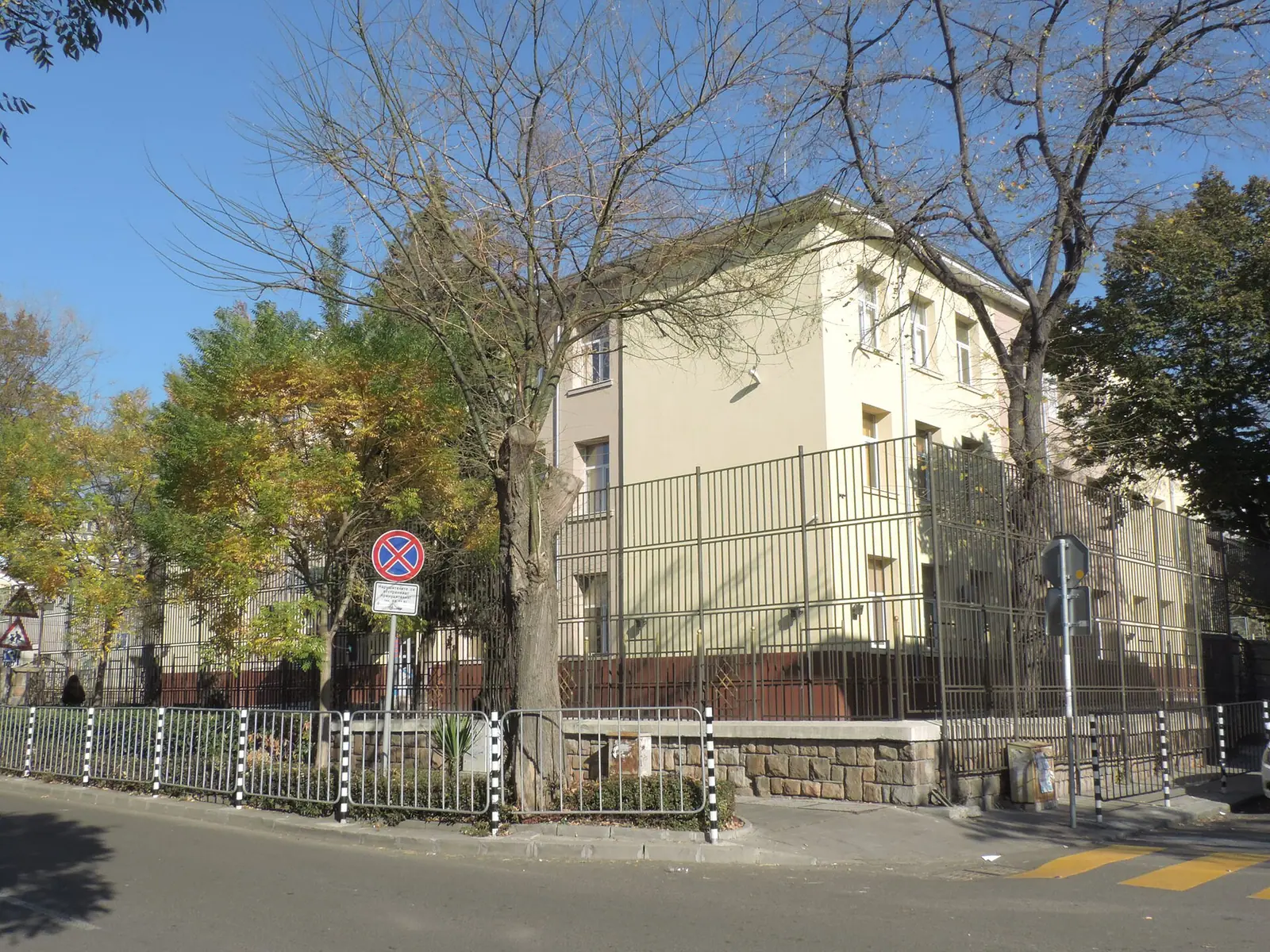
In 1916, classrooms in Burgas's primary schools held 45 to 50 children in a single class, from first to fourth grade, and there weren't enough rooms to go round. That's what the minutes of the Burgas school board meetings from that year show.
At the time, 1,330 children were enrolled in primary school, split into 26 classes taught by 25 teachers.
In February 1916, the board met to deal with the shortage of classrooms. The "P. R. Slaveykov" and "Otets Paisiy" schools were packed, while "Knyaz Boris" school had been taken over as a military hospital and classes there had stopped.
At the meeting, someone suggested using rooms in the school on Lermontov Street, but they were too small for such large classes.
School heads also asked for money to buy a pair of shoes for the poorest child in each class. Wealthier residents of Burgas chipped in: K. Kalchev and N. Kiselov gave 100 levs each, the Zurkov family gave 70 levs, the Marinkyov and Byklov brothers gave 50 levs each, Ganka H. Petrova gave 20 levs, and others donated too. The total reached 1,015 levs, enough to buy materials for 36 pairs of shoes.
Thirty-six pairs turned out not to be enough, so residents asked the city's charity commission for another 1,000 levs to make 25 more pairs.
All this happened during the First World War, when most men had been called up to fight. Burgas's population had grown many times over after several waves of migration, as refugees from Edirne Thrace and Vardar Macedonia settled in the city.
Hygiene in the schools was poor, because support staff had been cut. All the schools stood in the city centre, so children from the refugee neighbourhoods to the east and north had to walk a long way to get there, through rain, snowdrifts and a bitter sea wind. Most pupils came from poor families with many children.
The school year ended with exams in reading, arithmetic, grammar and natural science, after which the children received certificates for completing the year. Photos from 1916 that have survived show pupils from fourth grade, and one of them is labelled with the name of their teacher, Nikola Venetov.
Comments (0)
Все още няма коментари.