
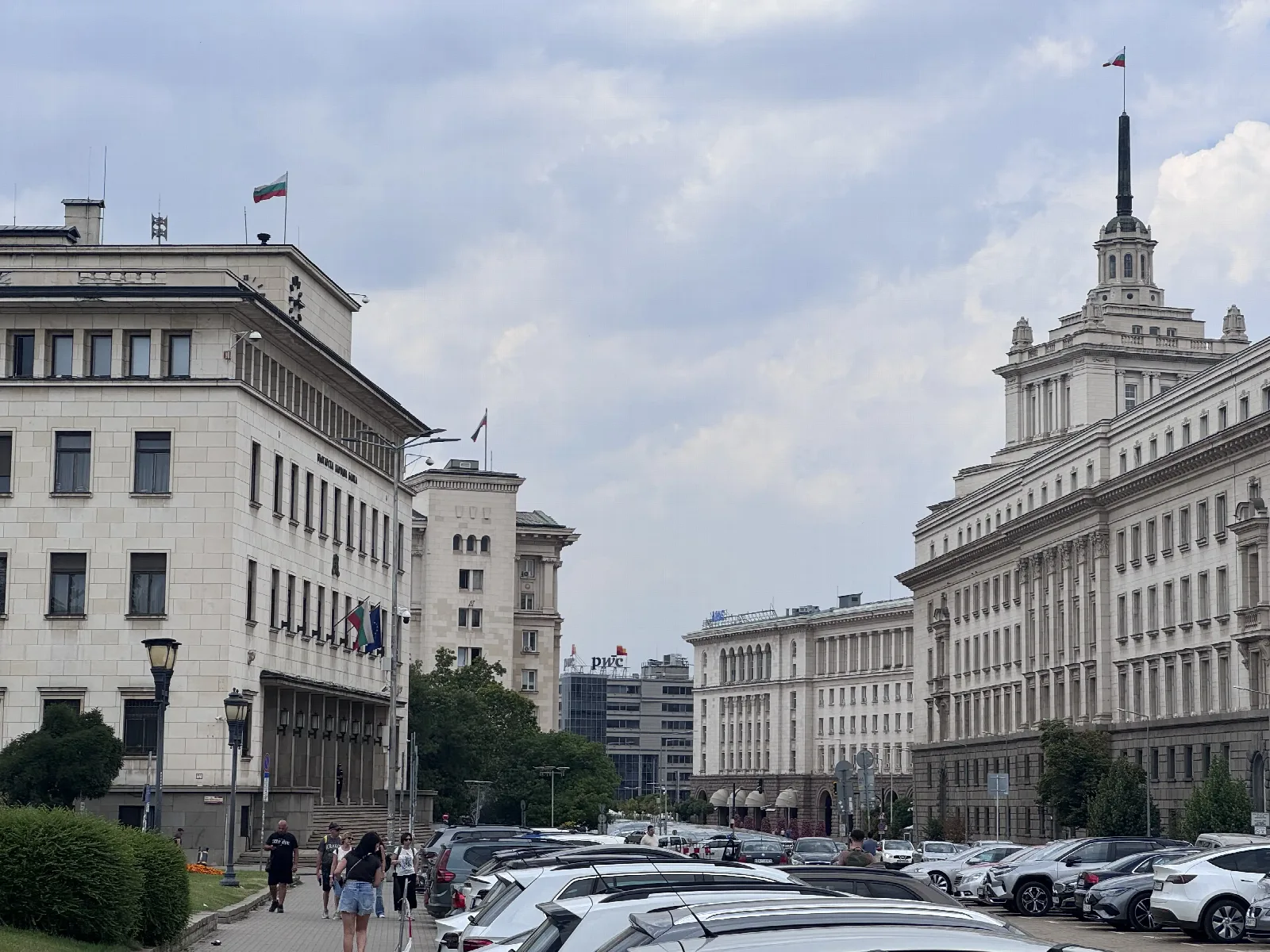
Parliament has passed at first reading amendments to the Higher Education Act, officially submitted by the Council of Ministers on August 10. The draft law, which affects financial parameters of tuition and conditions for providing scholarships, received the support of 134 members of parliament. There were no votes against, and 23 deputies abstained. Immediately after the text was adopted in the plenary hall, it was decided that the deadline for submitting additional proposals between the two readings would be shortened to three days.
Deputy Minister of Education Senya Terzieva explained to the members of parliament that one of the key changes is the reduction of the minimum threshold for maintenance costs included in the tuition fee, from the current 60 percent to 50 percent. The introduction of a cap on tuition fees for paid programs is also planned – they will not be allowed to increase by more than 20% compared to the levels set in the first year of study. Additionally, the bill provides greater freedom to higher education institutions by allowing academic councils to set application fees themselves, without depending on an administrative act from the Council of Ministers.
The discussion in the plenary hall focused on the controversial proposal for state budget scholarships to be granted exclusively to full-time students enrolled in state-subsidized programs. The sponsors argue this based on the nature of public funding rather than academic requirements. However, a number of members of parliament expressed critical positions:
- Pavel Popov of "Democratic Bulgaria" stated that the texts conflict with the principles of fairness and do not respect a binding court decision. He pointed out that the practice is in direct contradiction with an October 2025 Supreme Administrative Court ruling, which established that excluding students in paid programs is a form of unequal treatment. Popov noted that this danger had been pointed out by the majority of participants in the discussions, with the exception of the National Union of Student Councils.
- Nikolay Denkov of "We Continue the Change" emphasized that his parliamentary group would abstain, as limiting scholarships contradicts the Constitution and is a form of discrimination. He also expressed doubts regarding the methodology used to select the percentage ratios for maintenance costs.
- Krasimir Valchev of GERB-SDS spoke in defense of the proposals, pointing out that ever since the Higher Education Act has existed, scholarships have always been aimed at students enrolled in state-subsidized programs. He rejected the accusations of discrimination, arguing that the state uses its social tools to support access to state universities.
- Angel Yanchev of "Vazrazhdane" stated that their group would support the bill, reaffirming their position that scholarships should remain only for state-subsidized students.
- Fatima Yildiz of the Movement for Rights and Freedoms (DPS) also expressed support, emphasizing that education is a key national priority for her party.



Comments (3)
Автономия... да видим дали наистина ще я оставят на университетите или пак някой отгоре ще дърпа конците.
Ехе, кандидат-студентските кампании… все едно си спомням каква лудница беше в СУ тогава. Дано поне
Ами то с автономиите все тая работа, нали? Всеки път е едно и също