
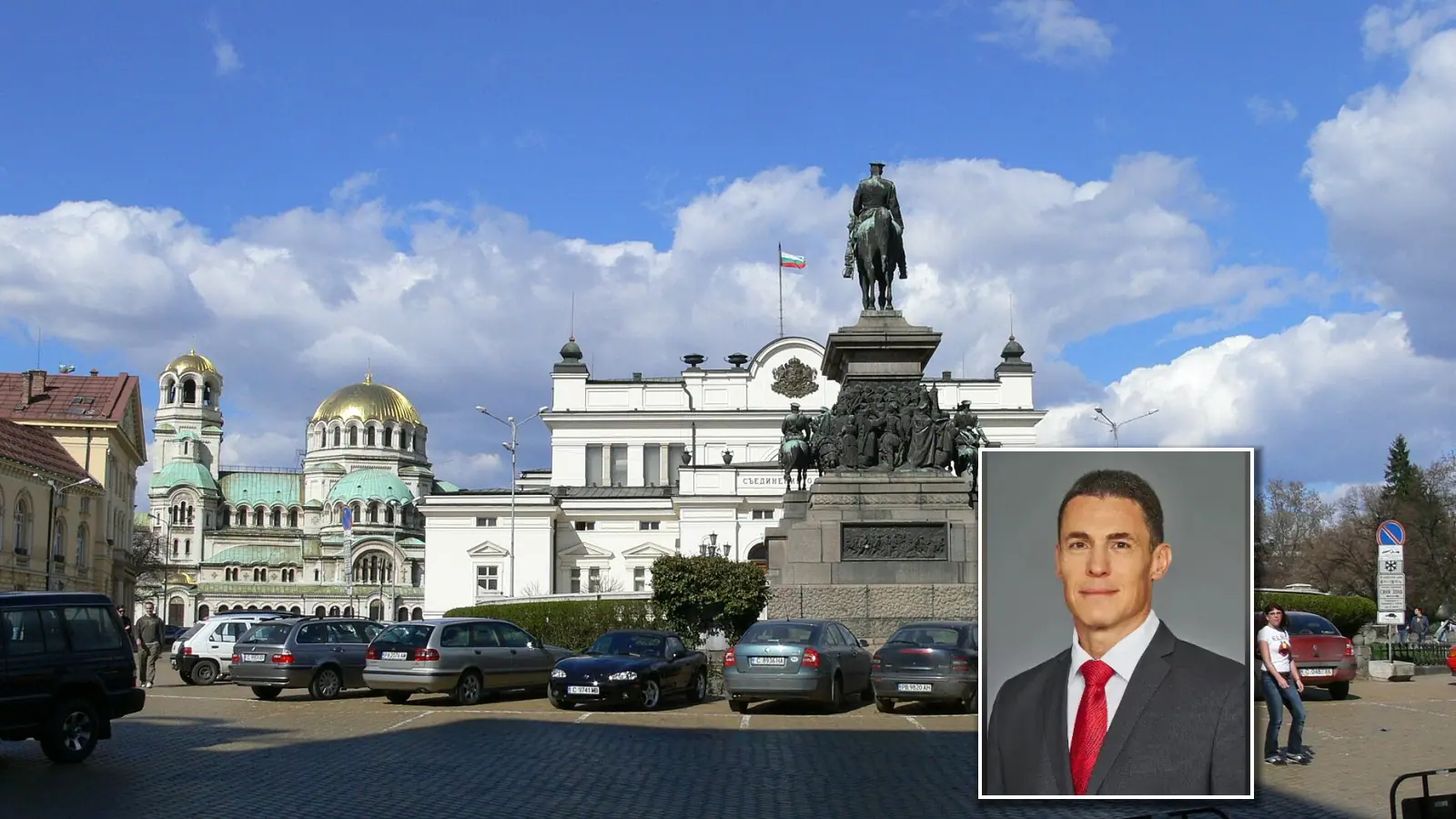
Bulgaria's Constitutional Court has refused to strike down the whole 2026 budget. Konstantin Prodanov, chair of the parliament's budget committee, told a briefing in parliament that the ruling is a win for financial stability and a complete failure of the opposition's attempt to sabotage fiscal policy.
The court announced its ruling on Tuesday. Temenuzhka Petkova of GERB-SDS told a briefing in parliament that it sets a serious precedent, because any future budget could run whatever deficit the government decides. She said the court ruled under political pressure, as some of its judges were appointed by Rumen Radev.
What happened before: Petkova: Constitutional Court ruling lets the cabinet run a deficit at will
The opposition had asked the court to cancel the whole law. The court's press office said only the texts that change how length of service is counted, and the new formula that ties junior magistrates' pay to MPs' pay, are unconstitutional.
Prodanov said the court confirmed that the budget law complies with the constitution and that the fiscal framework is stable and valid. He said the opposition made irresponsible demands. "The truth about the state of the country's finances cannot be unconstitutional," Prodanov said.
He said the 5.7% deficit in the budget results from the policy of earlier governments and the heavy legacy they left. Another reason, he added, is the current government's decision to show the facts: huge debts, hidden invoices and postponed spending.
Prodanov said the court was right not to back the request to "freeze" the minimum wage. A new mechanism for it is already in place, and under it the wage will rise for 2027.
Asen Vassilev had proposed that the length-of-service rule take effect on 1 January 2027. The Ministry of Labour and Social Policy had suggested 1 September 2026. Prodanov explained that the text was dropped because it has no financial effect in 2026, so there is no reason for it to be in this year's budget.
The committee chair said the court's problem with the magistrates' pay is that the changes are permanent, are made through the budget law and are tied to MPs' pay. He said the measure was proposed solely in the public interest.
Prodanov recalled that public sector pay reform began with a freeze on MPs' salaries. In his view, the logical next step is to review automatic pay rises and salaries in other sectors, including the judiciary. The governing parties will carry out the court's ruling, he said, but society should keep debating whether the automatic rise in these salaries is fair.
Replying to Petkova's criticism, Prodanov said the ruling was unanimous and that among the 11 judges are some whom the president at the time did not appoint.
Stefan Belchev, chair of the parliament's economic committee, also from Progressive Bulgaria, said opposition colleagues had tried to lecture on the rule of law. He said the budget needs expert work, not pre-election drama played to the public and the cameras.
"Today, the very people who were systematically late are using the law as a club, and this is not concern, we think it is a form of political hypocrisy," Belchev said.
Under the Public Finance Act, the draft budget must be submitted by 31 October. Belchev said the deadline has been broken since 2014, and GERB has missed it at least five times.


Comments (1)
Проданов ли? Този човек винаги е нещо.