

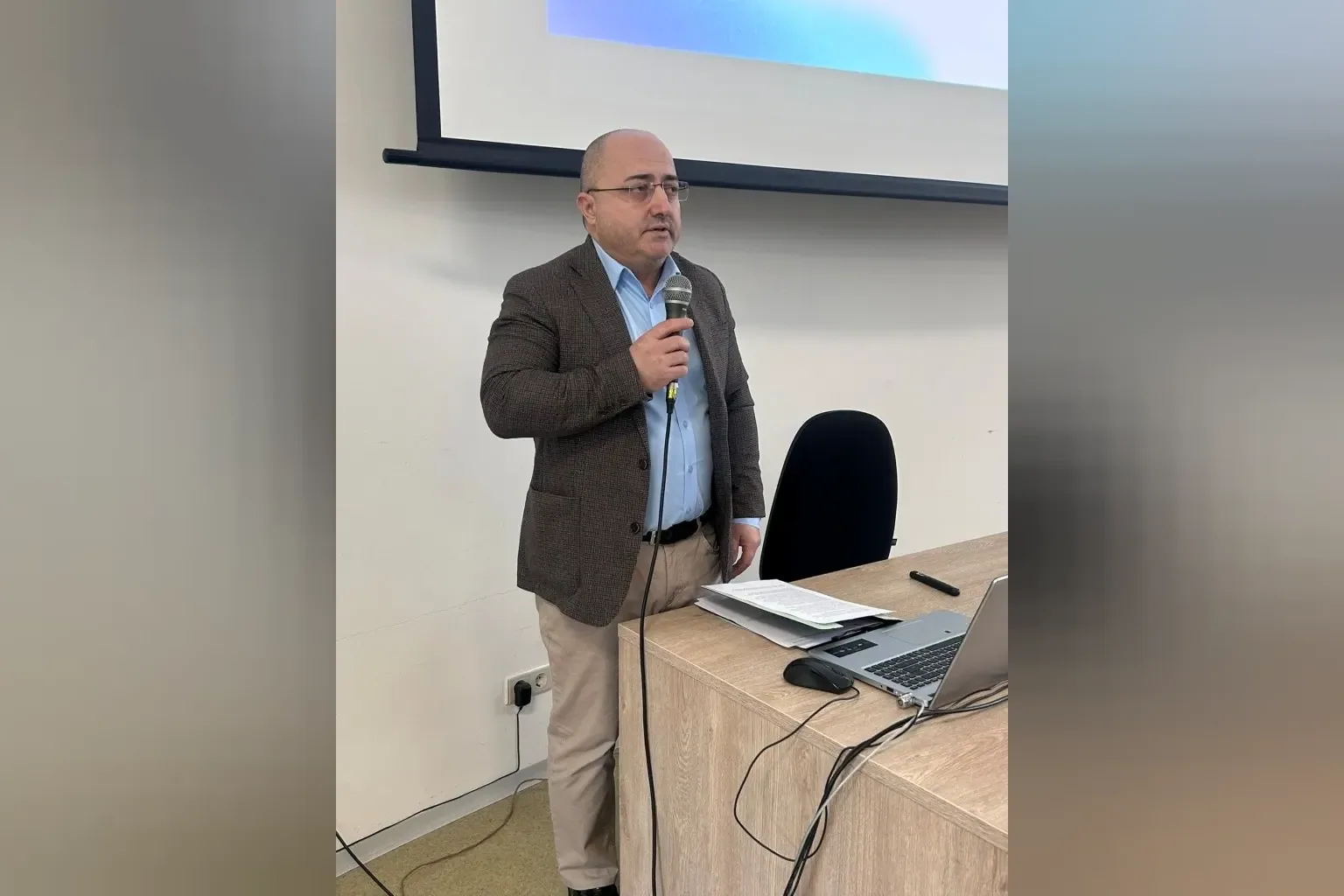
The labour ministry has asked the National Statistical Institute (NSI) to survey employers on which jobs are changing, being transformed or disappearing. Deputy minister Danail Rusev also said the ministry will launch a national adult training platform, which is already built. He spoke at a round table at the University of National and World Economy (UNWE) in Sofia.
It was the last of three talks under "Structural Dialogues 2026", organised by the German-Bulgarian Chamber of Industry and Commerce and the German embassy in Bulgaria. The first two were held in Stara Zagora on 5 November and in Blagoevgrad on 16 November. The Sofia topic was "Education for change: what policies and partnerships do regions need for a successful transformation?" Schools, business, trade unions and experts discussed what skills people in industrial and coal regions need for a stronger, more competitive economy.
Early NSI results show that the digital shift in Bulgaria so far mostly changes jobs rather than wiping them out. Rusev cited data showing that 81% of employers think business needs basic digital skills most.
The ministry pays for training for workers and the unemployed with national and EU money, including courses built around specific employer needs. Bulgaria has 1,200 digital clubs with access to courses and online learning materials. Next year the ministry plans to expand the courses and add practical skills for working with artificial intelligence to its digital programmes.
The ministry also plans to pay for people to have knowledge and skills gained at work and through informal learning recognised and certified. That way they will not have to study again.
Rusev said the energy and digital shifts are changing the economy and what employers expect from workers, and that industrial and coal regions feel this most. He said success depends not only on new technology and industries but also on whether people can develop, so education should be closer to business, and training and retraining should be easier to get. "It is especially important to use the experience of people working in traditional industries and give them a chance to build on it with new skills," the deputy minister said.
Assoc. Prof. Monika Moraliyska of UNWE's department of international economic relations and business, who summed up the Stara Zagora and Blagoevgrad talks, cited Eurostat data for 2025. Only 6% of Bulgarians aged 25 to 64 had studied or trained in the past four weeks, against about 14% on average in the EU. Among people aged 15 to 29, 13.8% in Bulgaria neither work nor study, compared with about 11% in the EU.
Moraliyska said that in regions going through restructuring, people struggle to find training and retraining that fits their skills and needs. Young people must be kept there, she said, and that depends on the kind of jobs, pay, social services and prospects, not just the number of jobs. At the talks, students asked for career guidance as early as secondary school. Experts proposed that schools, universities and employers work together, with paid internships and visits to companies.
She said education and regional development cannot be planned separately. Institutions, universities, trade unions and employers need to work as partners, she said, and people must be able to adapt, organise themselves and keep learning.
Violeta Ivanova, deputy director of the Institute for Social and Trade Union Research and Training at the CITUB trade union confederation, presented surveys of workers in regions hit by the energy transition. In two projects, the union mapped the skills, knowledge and attitudes of about 20,000 people directly or indirectly affected by the restructuring of coal regions. The indirectly affected are workers at repair, logistics and transport firms linked to the mines and energy companies. More than 70% of those directly affected are over 40.
Ivanova said training must take account of people's age, education and existing skills, because some have little or no education. Workers want to stay in the energy sector with new or improved skills, she said, not just be protected during the transition.
She said the surveys show the need to invest in people and in lasting, good-quality jobs. A main problem, she said, is the lack of transparency between investment plans and the jobs that actually open up. The cost of change should not fall only on people, Ivanova said.



Comments (0)
No comments yet.