
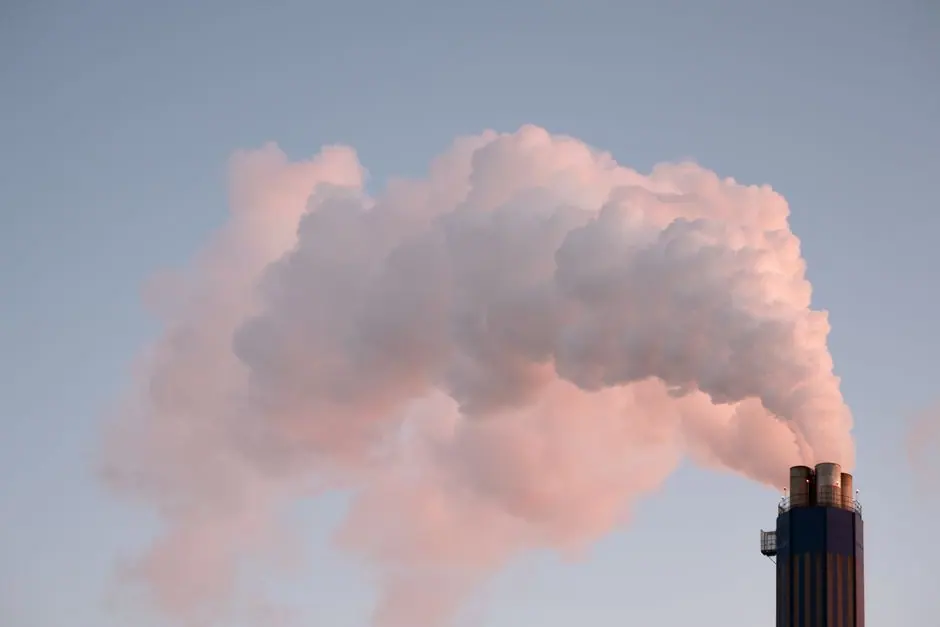
Burning fossil fuels will put about 38.2bn tonnes of CO2 into the air in 2026, 0.4% less than a year earlier. That is a forecast by scientists from the Global Carbon Budget project, not a measured result, and the fall is too small to change the trend. Add emissions from changes in land use, and the total rises from 42.8bn to 43.3bn tonnes.
The 2026 figures are preliminary. The report is a preprint, and a peer-reviewed version is still to come. The range of uncertainty around the 0.4% fall is not confirmed in the sources used.
Oil drives most of the fall. Emissions from oil are expected to drop by 1.9% and from natural gas by 0.3%, while coal emissions are set to rise by 0.6%. The authors call the drop in oil emissions "probably a short-term reaction" to the energy shock caused by the conflict with Iran. In the rest of the world, outside the big economies, emissions fall by 0.7%, again mostly from oil, probably because of higher prices and shortages of supply.
Wildfires and deforestation
The two numbers measure different things. Fossil emissions come from burning oil, gas and coal. The larger total also counts what goes into the air when land use changes, mostly when forests are cut down and burned. These estimates are less certain. For 2026 they come to about 5.1bn tonnes, and are rising because of wildfires on peat soils and forest decline in South East Asia, linked to the drought caused by El Niño.
Permanent deforestation produced about 3.8bn tonnes a year in 2016–2025. Planting and restoring forests takes up about half of that. China, the EU and the US together remove about 0.8bn tonnes a year, while in Brazil, Russia and Indonesia deforestation outweighs the carbon forests absorb.
As a result, the level of CO2 in the air keeps rising. The forecast for 2026 is 427.7 parts per million, which is 54% above the pre-industrial level. The ocean and land absorb part of what is emitted. New technologies that pull carbon out of the air cover less than half an hour of a year's fossil emissions.
China, the US, the EU and India
China, which produces about 32% of the world's fossil emissions, cuts them by 0.9%, even though its coal use grows by 0.3%. US emissions fall by 1.3%, mostly because the country burns less coal after a jump a year earlier. The EU is down 1.5% and Japan down 1%. India is the only big economy where emissions grow, by 4.4%, above its average of 3.5% a year over the past decade. International aviation and shipping each fall by 1%, and for aviation part of the reason is less activity in the Middle East.
Solar and wind saved about 4.1bn tonnes of emissions in 2025, and 4.6bn are expected in 2026, against 0.28bn in 2010. About 10% of the world's car fleet was electrified in 2025, or 6% if hybrids are not counted. Total emissions have grown by 0.3% a year over the past decade, against 1.7% a year in the decade before. And 59 countries emitted less in 2025 than in 2019, while their economies grew.
"A fall in emissions in one year is not a peak, unless it is caused by a structural change," says Glen Peters of Cicero. Lead author Pierre Friedlingstein of the University of Exeter says a cut that is partly due to geopolitical shocks is "not a sustainable solution for the climate". The authors say the growth of clean energy is not yet enough to bring a lasting fall. A lasting peak and decline "could be a few years away" if the rollout keeps speeding up.
The remaining budget for 1.5 degrees
The remaining budget for 1.5 degrees of warming is the amount of CO2 that can still be emitted with a 50% chance of staying under that limit. It is about 150bn tonnes. At the current pace, that is under four years' worth, and Our World in Data puts it at about 3.5 years.
The authors also expect El Niño in 2026 to significantly affect the amount of carbon absorbed by land.






Comments (0)
No comments yet.