
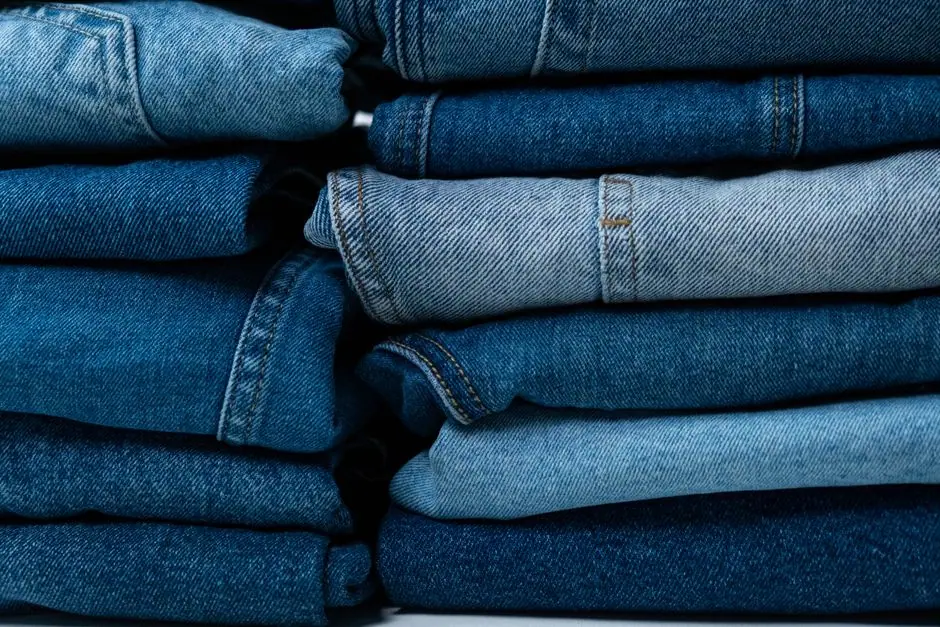
Canadian brand Triarchy has launched an autumn-winter collection of five styles dyed with the method of US startup WTRLSS. It is the first commercial collection to use the technology. The company says dyeing and finishing a pair of jeans takes about 20 millilitres of water, against about 75 litres in the usual process. The figures come from the maker, have not been checked by an independent institute, and cover only one stage of production.
The collection is made of 100% organic cotton, comes in three colours, and was designed and made in Los Angeles. The "Cowhide" pattern was created by scanning a cow's hide. The launch date is given as 15 October, and one report on the collection is dated 19 October 2026. Orders are pre-orders, and deliveries are planned for November.
Dyeing with a printer instead of indigo baths
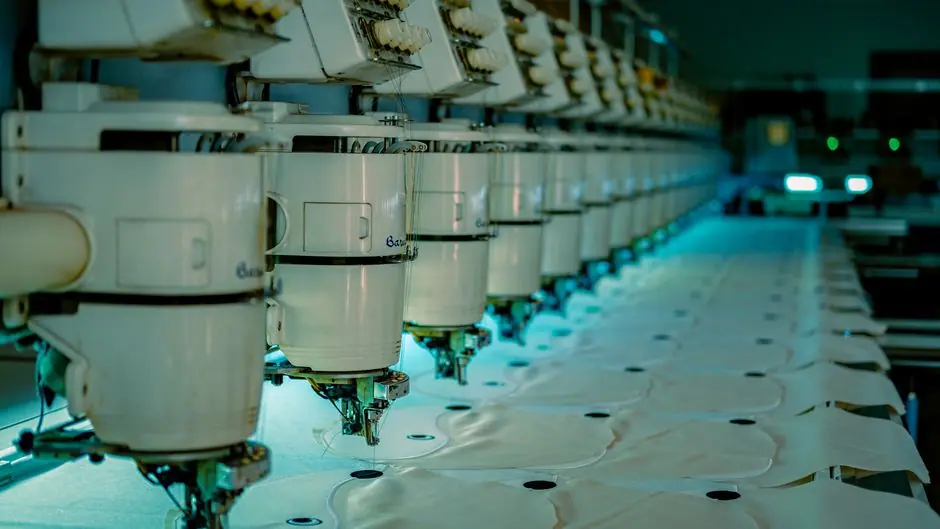
In the usual process, cotton yarn goes through indigo baths and the fabric is then woven. To get a faded look, the jeans are treated with bleach and lasers and washed many times. WTRLSS uses industrial inkjet printers to apply a patented, bio-based dye mix straight onto undyed fabric on a roll. Unlike ordinary digital printing, the dye bonds with the fibre, and the designer decides how deep the colour goes and how much it fades. The company calls its chemistry "MultiActiv". At Triarchy, colour and pattern are applied to the flat panels before cutting and sewing.
The brand can pick colours and washes late in the process, using one base fabric, instead of buying separate fabrics with a minimum order for each wash. "All we need is one good denim fabric and we can make a whole collection," says Triarchy co-founder and creative director Adam Tauenfliegel. Some limits remain: minimum orders for the garments themselves and delivery times still apply, and Triarchy has not given costs or order volumes.
Three figures for the savings: 99.9%, 99.97% and 99.99%
20 millilitres against 75 litres (75,000 millilitres) is about 0.03%, so the saving is about 99.97%. That sits between the two figures in circulation but matches neither. The company and trade reports say "up to 99.9%" less water and up to 90% less energy. Another report gives 99.99%, with the only water left being that in the dye itself. It speaks of about two tablespoons of water per pair, while the original source gives a baseline of 20 gallons, about 75 litres. The two figures round the same estimate, and the "up to" in the first is a ceiling, not a measured average.
There is also a third figure, different in meaning. The organisers of the Future Fabrics Expo in Brussels report "over 99% at scale" based on internal tests, while the company elsewhere speaks of "over 90% less water" than traditional production. The report does not say what the baseline is, which stage was measured, or whether the result was independently checked.
Rinsing and other stages are left out of the figure
Every finished Triarchy garment goes through a separate rinse before shipping. The company describes it as a single cycle that replaces repeated washes and treatments. The rinse is not counted in the water figure for dyeing, but it matters for the overall impact of production. How much water it uses has not been published.
Growing the cotton, making the fabric, transport and washing by customers are also left out. WTRLSS's estimates are not a full life-cycle analysis. There is also no data on machine speed, colour fastness, the cost of the chemistry or the price of the equipment. These decide whether the technology is only a niche for denim or a wider change. According to tests reported in one of the articles, the jeans last longer, but no numbers are given.
The first big production test is with Bangladesh's Ha-Meem Group, which works with Levi's and Gap. The Detroit organisation ISAIC is among the first users of the technology. Triarchy will show the collection to buyers at a wholesale trade show in February 2027, but no new distribution deals have been announced.

Comments (0)
No comments yet.