
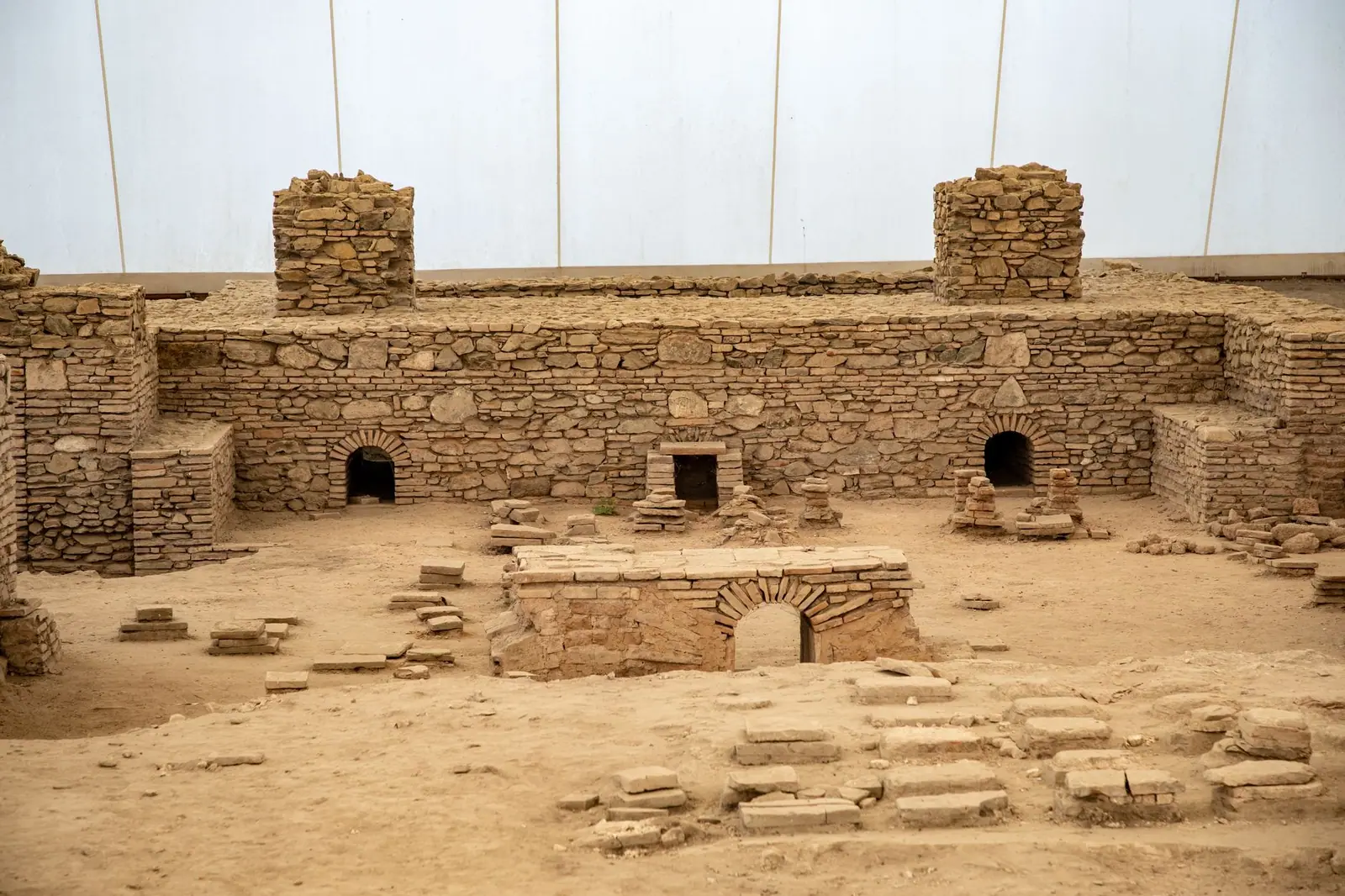
Archaeologists are digging through the underground channels of the Roman baths, the southern part of the complex and an early Christian basilica from the 4th-5th century in the ancient city of Ratiaria. The dig continues this year in three sectors.
Underground at Ratiaria lies a system built more than 1,700 years ago, linked to draining the Roman baths. So far the team has cleared more than 200 metres of it, and the various vaults and structures show how complex the engineering behind the baths was.
Associate professor Zdravko Dimitrov, who leads the dig, says this is the largest study of such structures ever carried out in Bulgaria. He says similar channels exist in the baths at Odessos and in one building in Serdica, but those digs were done decades ago, using different methods, and the sites are far smaller than the one at Ratiaria. Because of the size of the complex here, he explains, you can see a wide range of building styles in the underground galleries.
The dig's leader says the finds give a good sense of Roman engineering skill. Dimitrov trained as a construction technician before university. He admits he's personally struck by how well the ancient water and sewage system was planned and built. He's also struck by the fact that after 1,700 years, not a single part of it has failed. That, he adds, tells us a lot about construction methods in the 3rd and 4th centuries, during the Roman Empire.
Finds from the site include:
- pottery and coins from the 1st to the 6th century;
- everyday objects from the Roman baths.
Коментари (0)
Все още няма коментари.