
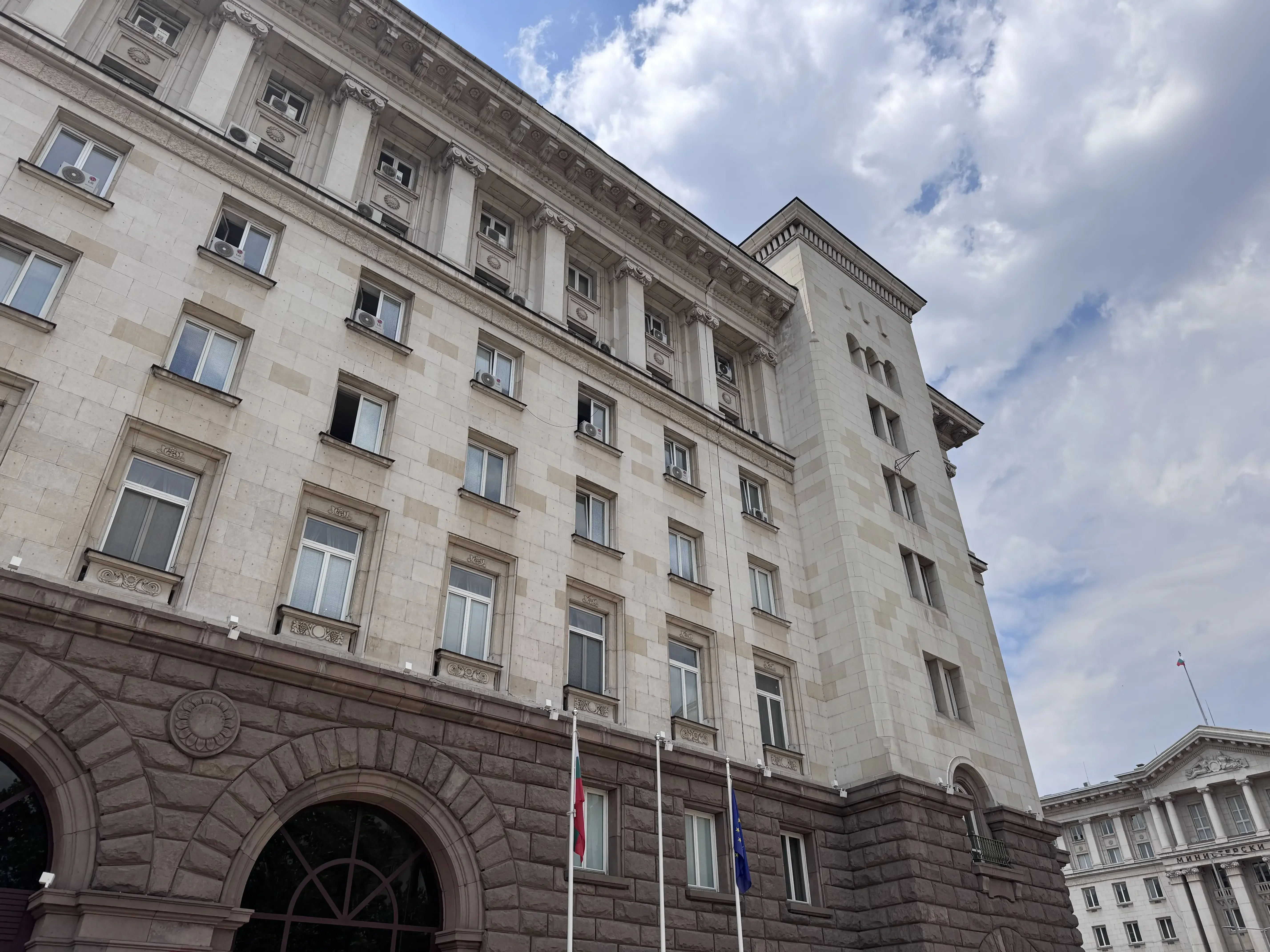
11 billion euros are needed for the renovation of residential buildings by 2035, and another 8 billion euros for non-residential buildings. This was announced by the caretaker Minister of Regional Development and Public Works Nikolay Naydenov during the presentation of the National Plan for Building Renovation by 2050.
He recalled that at the end of 2025 Bulgaria submitted a preliminary version of the plan to the European Commission and the final approval is expected by the end of this year, after the comments made by the Commission are reflected.
According to Naydenov, the country must renovate 79 million square meters of residential buildings by 2035, and for non-residential sites, the renovation of 15.4 square kilometers of built-up area is planned.
The Minister outlined several key measures to achieve the goals set in the plan.
The first is the successful implementation of the current programs in the expected volume. The next step is the transition from campaign financing to permanently operating schemes. According to the caretaker minister, short-term programs create uncertainty in society, while a clearly written and predictable program with a horizon until 2035 would give citizens "peace of mind and predictability".
Another important measure is the creation and capitalization of a National Decarbonization Fund. Naydenov stressed that the primary priority of the Fund will be the renovation of single-family residential buildings, but this "does not mean that attention will not be paid to multi-family residential buildings either".
Among the planned actions for the implementation of the goals is the construction of a network of "one-stop shop" service centers, whose task will be to coordinate and provide in a transparent manner all the important information that citizens need. In addition, better coordination between the main institutions is planned - the Ministry of Regional Development and Public Works, the Ministry of Energy, the Ministry of Environment and Water, the Ministry of Finance and the municipalities.
According to Naydenov, the implementation of the plan will lead to lower energy bills for households, a more attractive vision of cities and modernized public infrastructure, as well as the development of the construction sector and local economies and an increase in household incomes. According to him, the implementation of the goals set in the document is not only a "climate policy", but also an economic, social and energy policy that will improve the quality of life of people and will renew Bulgarian cities.
The Minister defined the energy renovation programs as some of the "most successful and recognizable" initiatives of the regional ministry, precisely because their effect is directly felt by citizens.
Deputy Minister of Regional Development and Public Works Dora Yankova pointed out that practical discussions on the actual implementation of the plan are now beginning, which will be held with representatives of the construction industry, local authorities and financial institutions.
According to her, this will probably turn into the "largest program for the renovation of the building stock", and through it Bulgaria declares its ambition to pursue a consistent policy for the renovation of buildings by 2050. Yankova stressed that buildings are the largest consumers of energy in the country, which is why their renovation is not only a technical challenge, but also an instrument for reducing household costs, for a better quality of life and for achieving energy independence.
The Executive Director of the Sustainable Energy Development Agency Ivaylo Aleksiev noted that private capital should also be attracted for the renovation of the building stock.
He pointed out that among the new elements in the plan is the introduction of an "energy renovation passport", which will allow owners to take the first steps towards renovation, as the passport provides for phased renovation, and not one-time comprehensive sanitation.
Aleksiev also stressed that the topic of using solar energy is also being seriously considered, including at the design stage of the buildings. According to him, new buildings should be designed in such a way as to facilitate the introduction of these technologies.
He added that a scheme for assessing the readiness of buildings for the integration of intelligent systems is also being introduced, which at this stage will be voluntary for application.
The Executive Director of the Energy Efficiency Center "EnEffect" Dragomir Tsanev commented that the goals set in the plan are ambitious, and according to him, energy consumption should decrease by 16 percent by 2030.
Tsveta Nanyova from the Bulgarian Facility Management Association pointed out that by 2050, 82,000 multi-family residential blocks and 1 million single-family houses should be renovated in relation to residential buildings.
She gave more details about the concept for a network of "one-stop shop" centers. According to her, the centers should function at three levels: the first are the existing regional information centers, which have the competence to inform building owners about funding opportunities and open European programs; the second is the municipal level, and the third - which is yet to be built and is the most important - will support households at all stages of the renovation - from submitting an application for funding, through the implementation of the activities, to guaranteeing the results achieved.


Comments (14)
Абе хора, стига вече с тия "бомби" и "огромни шансове"! Да, 11 милиарда евро звучат добре на хартия, ама да видим дали ще се види нещо реално. Помните ли как обещаваха магистрали, помните ли за Костинброд? Тая работа с европейските фондове е все тая - едно голямо бла, бъркане с пари и после никой не си признава отговорността като нещо се обърка.
Евала на Найденов! 11 милиарда за обновяване – това вече е нщо сериозно, а не празни приказки като преди
Абе хора, да видим дали ще е истина този път... 11 млрд., значително са, ама помня старите номера с европарите. Важното е да се стигне до обикновения човек - ба
Ей, наистина ли ще стане нещо полезно с тия пари? Да не
ей, хора, 11 милиарда... звучи яко, де! ама наистина ли ще е за хората или пак ще изчезнат някъде по пътя? сериозно, да видим дали този път наистина ще има промяна. тоя найденов нещо прави, ама помните си старите истории с европарите – все едно казват